
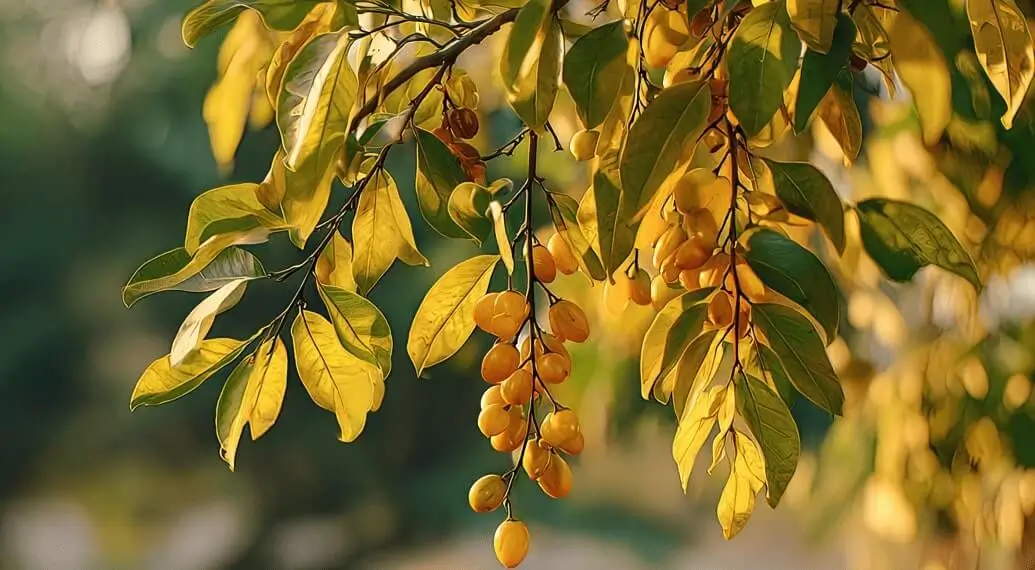
Yellow leaves on fruit trees in containers are one of the most common warning signs that something is affecting your plant’s health. From overwatering and nutrient deficiencies to poor drainage, pests, or environmental stress, several factors can cause container fruit trees to lose their healthy green foliage. Understanding the exact reason behind yellowing leaves is the first step toward restoring vigorous growth and improving fruit production. In this guide, you’ll learn the most common causes of yellow leaves on potted fruit trees, practical solutions to fix the problem quickly, and proven prevention tips to keep your container orchard healthy year-round.
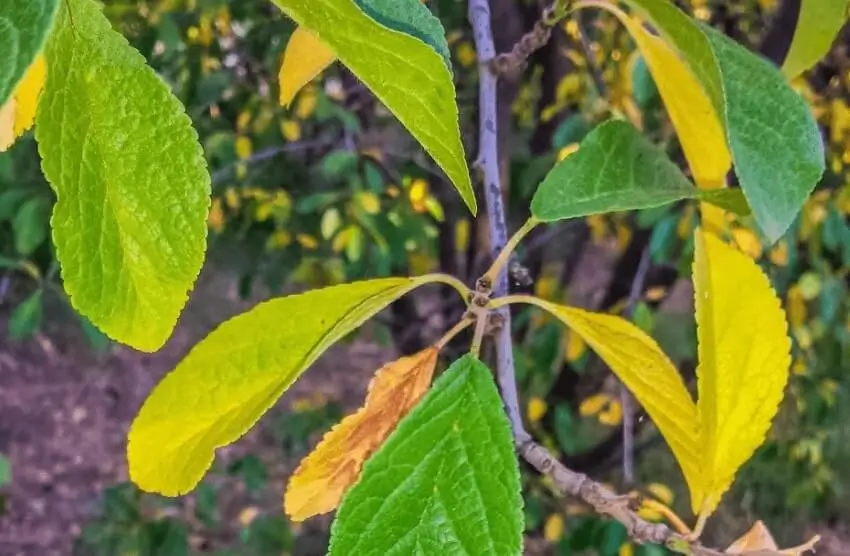
Why Yellow Leaves Matter in Container Fruit Gardening
Container fruit trees live in a much more restricted environment than trees planted in the ground. Their roots can’t search deeper into the soil for nutrients or moisture, and excess water has nowhere to go if drainage is poor.
Yellow leaves often indicate:
- Nutrient deficiencies
- Watering problems
- Root stress
- Environmental shock
If ignored, yellowing leaves can lead to:
- Reduced photosynthesis
- Flower and fruit drop
- Weak growth and poor harvests
Because fruit trees in pots are already under mild stress, early correction is essential. That’s why leaf colour is one of the most important health indicators for container-grown fruit trees.
Step-by-Step: How to Diagnose Yellow Leaves on Fruit Trees in Containers
Step 1: Identify the Yellowing Pattern
Different patterns point to different problems:
- Older leaves yellow first → Nutrient deficiency (often nitrogen or magnesium)
- Young leaves turn yellow, veins stay green → Iron deficiency.
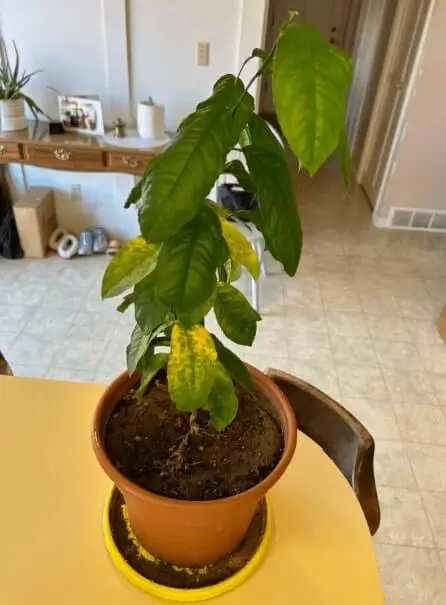
- The entire plant turns pale yellow → Overwatering or poor drainage.
- Yellow leaves with brown tips → Salt buildup or underwatering
Step 2: Check Watering Practices
Watering mistakes are the number one cause of yellow leaves in potted fruit trees.
Overwatering (Most Common)
- Roots suffocate due to a lack of oxygen.
- Leaves turn yellow and may drop suddenly.
- Soil feels constantly wet.
If this sounds familiar, review your watering routine using the guide on how often to water fruit trees in pots to avoid root stress.
Underwatering
- Leaves turn yellow, curl, and dry.
- Soil pulls away from the pot edges.
- Growth slows dramatically
Seasonal changes matter too — summer watering needs are very different from winter. Correctly adjusting timing can prevent repeat problems.
Step 3: Examine Soil Quality and Drainage
Poor soil equals poor nutrient uptake.
Common soil issues in containers:
- Compacted or heavy soil
- The old potting mix was reused for too long.
- No drainage holes in the container
Fruit trees need a well-draining, airy soil mix to keep roots healthy. If your tree has been in the same soil for over 2 years, refreshing the mix can dramatically improve leaf colour.
Step 4: Identify Nutrient Deficiencies
Nitrogen Deficiency
- Older leaves yellow evenly.
- Slow growth
- Small leaves
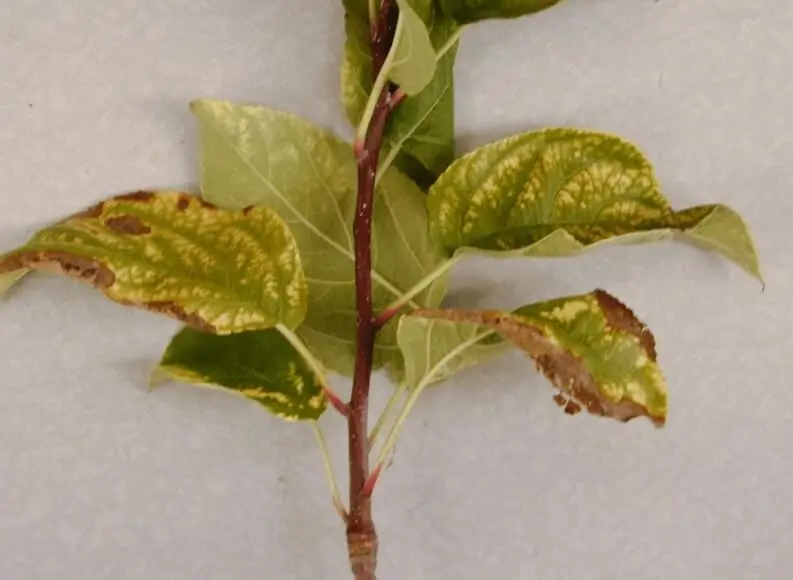
Iron Deficiency (Very Common in Containers)
- New leaves yellow, veins stay green.
- Common in alkaline soil or hard water areas
Magnesium Deficiency
- Yellowing between veins on older leaves
- Leaf edges remain green.
If fertilization timing is unclear, follow a structured plan, such as this complete guide on how often to fertilize fruit trees in pots, to avoid both deficiencies and excess feeding.
Step 5: Look for Root Bound Stress
When roots outgrow their container:
- Water drains too fast.
- Leaves yellow despite regular feeding
- Growth stalls
In this case, upgrading to the correct pot size is critical. Choosing the right container size for fruit trees allows roots to access nutrients and moisture consistently.
Best Practices to Fix Yellow Leaves on Fruit Trees in Containers
1. Correct Watering Technique
- Water deeply until the excess drains out
- Never leave pots sitting in standing water.
- Allow the top 2–3 inches of soil to dry before watering again.
2. Use Balanced Fertilizer
- Choose a slow-release fertilizer designed for fruit trees.
- Supplement with liquid feeding during active growth.
- Avoid over-fertilizing — more is not better.
Understanding the difference between fertilizer types also helps. This comparison of liquid vs granular fertilizer for fruit trees can guide better feeding decisions.
3. Improve Soil Drainage
- Use high-quality potting mix (not garden soil)
- Add perlite or pine bark for airflow.
- Ensure drainage holes are clear.
4. Repot When Necessary
- Repot every 2–3 years.
- Trim circling roots gently.
- Refresh the soil completely.
5. Protect From Environmental Stress
- Sudden temperature changes cause leaf yellowing.
- Cold nights stress tropical fruit trees.
- Wind exposure dries containers quickly.
Gradual acclimation when moving trees outdoors or indoors reduces shock.
Common Beginner Mistakes That Cause Yellow Leaves
- Watering on a fixed schedule instead of checking the soil
- Using decorative pots with no drainage
- Applying fertilizer to dry soil
- Ignoring seasonal changes
- Keeping the tree’s roots bound too long.
Avoiding these mistakes alone solves over 70% of yellow leaf problems in container fruit gardening.
Essential Tools and Supplies for Healthy Green Leaves
- Moisture meter (to prevent overwatering)
- Well-draining potting mix
- Slow-release fruit tree fertilizer
- Pots with adequate drainage
- Mulch to stabilize soil moisture
These small investments pay off with stronger growth and better fruiting.
FAQ: Yellow Leaves on Fruit Trees in Containers
Why are my fruit tree leaves turning yellow but not falling off?
This usually indicates early nutrient deficiency or mild overwatering. Correcting care quickly prevents leaf drop.
Can yellow leaves turn green again?
If caught early, new growth will return green. Severely yellowed leaves may not recover but can be pruned later.
Is yellowing normal in winter?
Some yellowing is normal during dormancy, especially in deciduous fruit trees. Evergreen citrus should stay mostly green.
Should I remove yellow leaves?
Remove only if they are fully yellow or damaged. Partially yellow leaves still provide energy.
Does hard water cause yellow leaves?
Yes. Hard water raises soil pH, leading to iron deficiency chlorosis in containers.
Conclusion: Restore Healthy Green Growth in Your Potted Fruit Trees
Yellow leaves on fruit trees in containers are your tree’s way of asking for help — and now you know how to listen. By checking watering habits, improving soil quality, correcting nutrient imbalances, and choosing the right container, you can reverse yellowing and build stronger, more productive plants.
Your next steps:
- Inspect soil moisture today.
- Evaluate pot size and drainage.
- Adjust fertilizing strategy
- Monitor new growth over the next 2–3 weeks.
With consistent care, your container fruit trees will reward you with vibrant green leaves, stronger growth, and better harvests — even in small spaces. 🌱
Thank you, I’ve just been searching for information about this subject for a while and yours is
the greatest I’ve found out so far. However, what concerning the conclusion?Are you certain concerning the supply?