
Fungal diseases are one of the most common challenges faced by container fruit tree growers, especially in small spaces where airflow and moisture can be harder to control. These infections can weaken your trees, reduce fruit production, and even cause long-term damage if left untreated. Understanding what causes fungal problems, how to recognize early symptoms, and applying effective, proven solutions will help you keep your potted fruit trees healthy, productive, and thriving year-round
Why Fungal Diseases Matter in Container Fruit Gardening
Growing fruit trees in pots offers flexibility, mobility, and space efficiency — but it also comes with unique disease risks.
Containers Create a High-Risk Environment
Container-grown fruit trees are more vulnerable to fungal diseases because:
- Water drains more slowly if soil or pots are poorly designed
- Roots stay confined, increasing stress
- Humidity builds up on balconies, patios, and indoors
- Airflow is often limited near walls or railings
Once fungi establish themselves in a pot, they spread faster than in garden soil because spores remain trapped in moist media.
Yield, Health, and Longevity Are at Stake
Untreated fungal diseases can:
- Reduce flowering and fruit set
- Cause premature leaf drop
- Weaken roots and branches
- Shorten the life of your fruit tree
If you’re already dealing with pests like sap-feeding insects, fungal problems often appear alongside them. For example, honeydew from insects can encourage sooty mold — a common secondary fungal issue. You may notice similar patterns discussed in our guide on ants invading fruit tree containers and how they protect harmful pests.
Common Fungal Diseases in Container Fruit Trees
Understanding symptoms is the first step toward effective treatment.
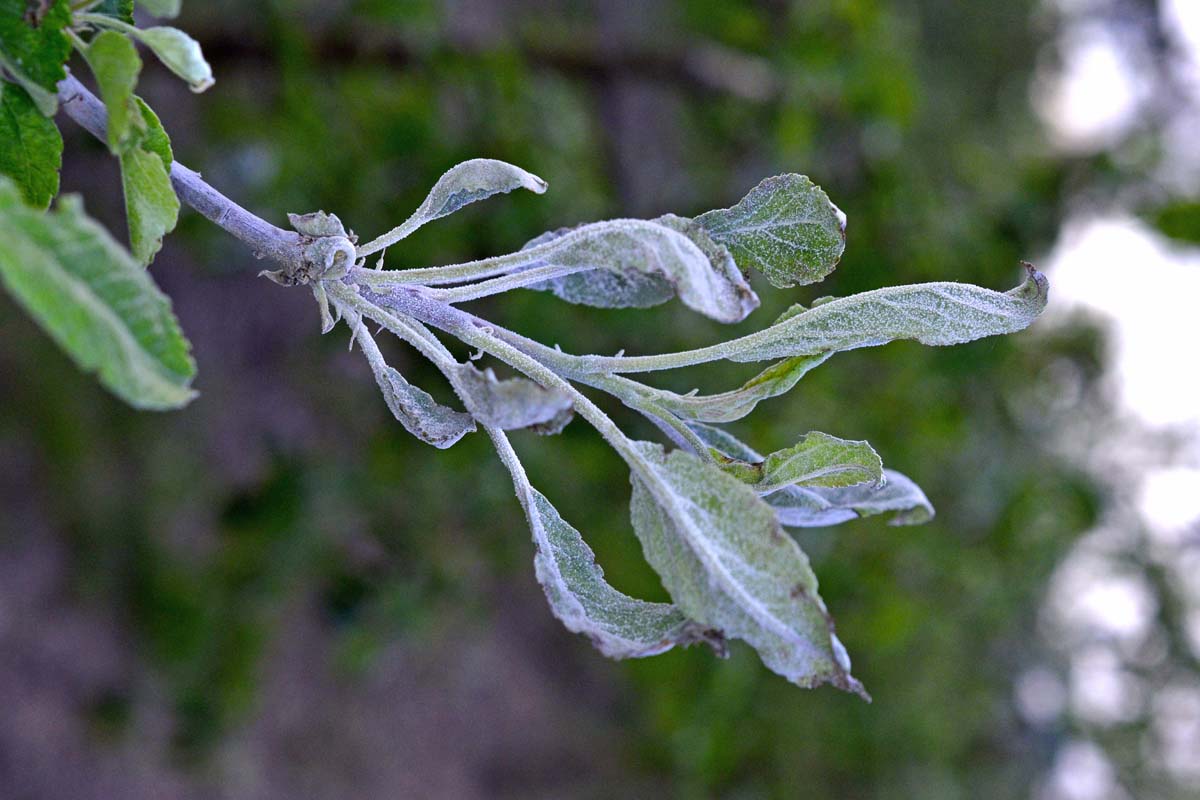
Powdery Mildew
- White or gray powder on leaves and stems
- Leaves may curl or yellow
- Common in warm, humid, low-airflow conditions
Root Rot
- Caused by waterlogged soil and poor drainage
- Leaves wilt despite moist soil
- Roots appear brown, mushy, and smell foul
Leaf Spot Diseases
- Brown, black, or yellow-spotted leaves
- Often caused by splashing water on foliage
- Can lead to defoliation if untreated
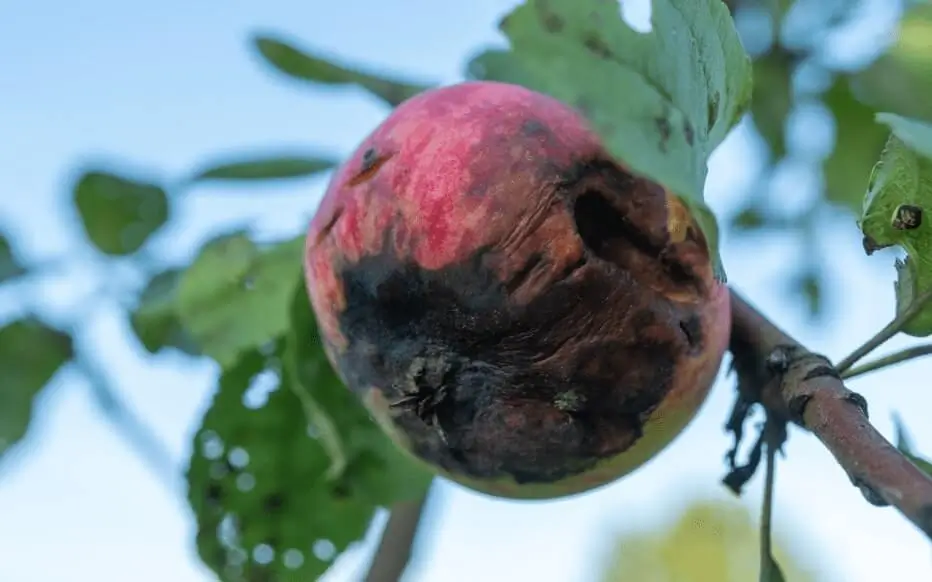
Anthracnose and Fruit Rots
- Dark, sunken lesions on fruit or stems
- Fruit may rot before ripening
- More common during prolonged wet weather
Many gardeners mistake fungal damage for insect problems. If you’re unsure, comparing symptoms with issues like whiteflies affecting balcony-grown fruit plants can help narrow down the cause.
What Causes Fungal Diseases in Container Fruit Trees?
Fungal spores are everywhere — disease occurs when conditions favor their growth.
1. Overwatering
Excess moisture is the number one cause of fungal diseases in containers. Wet soil deprives roots of oxygen and encourages pathogenic fungi.
2. Poor Drainage
Containers without drainage holes or with compacted soil trap water at the root zone, leading directly to root rot.
3. Lack of Air Circulation
Tightly spaced pots, corners, or enclosed balconies prevent leaves from drying after watering or rain.
4. Contaminated Soil or Pots
Reusing old potting mix or unclean containers can introduce fungal spores from previous plants.
5. Stressed Trees
Nutrient deficiencies, pest infestations, or improper pruning weaken trees, making them more susceptible to disease — similar to how stressed plants attract pests like spider mites or mealybugs.
Step-by-Step Solutions to Prevent and Treat Fungal Diseases

Step 1: Fix Watering Habits
- Water only when the top 2–3 cm of soil feels dry
- Avoid daily watering unless temperatures are extreme
- Never leave pots sitting in standing water
Step 2: Improve Drainage Immediately
- Ensure containers have multiple drainage holes
- Elevate pots slightly to allow water to escape
- Add perlite or coarse sand to improve soil structure
Step 3: Remove Infected Plant Parts
- Prune affected leaves, stems, and fruit
- Dispose of them — do not compost
- Sterilize pruning tools between cuts
Step 4: Apply Organic or Low-Toxicity Treatments
- Neem oil for early-stage fungal issues
- Potassium bicarbonate for powdery mildew
- Copper fungicide as a last resort for severe infections
Always spray in the early morning and avoid treating stressed plants during extreme heat.
Step 5: Repot if Root Rot Is Present
If roots are damaged:
- Remove the tree from its pot
- Trim away rotten roots
- Repot in fresh, sterile potting mix
- Use a clean container with excellent drainage
Best Soil, Containers, and Care Practices for Disease Prevention
Choose the Right Pot
- Use breathable materials like fabric or terracotta
- Avoid undersized containers that stay wet too long
- Match pot size to tree age and root mass
Use High-Quality Potting Mix
- Never use garden soil in containers
- Choose a fruit-tree-specific or well-draining mix
- Refresh soil every 1–2 years
Position for Airflow and Sun
- Place containers where leaves dry quickly after watering
- Ensure at least 6–8 hours of sunlight daily
- Rotate pots regularly for even exposure
Healthy growing conditions also reduce pest pressure. For example, well-drained soil discourages fungus gnats, a common issue discussed in our article on fungus gnats living in potting soil and how to eliminate them.
Common Mistakes Beginners Make
Overcorrecting with Chemicals
Using fungicides too frequently can:
- Harm beneficial microbes
- Stress the tree further
- Lead to resistance
Ignoring Early Symptoms
Small leaf spots or mild mildew often get dismissed — but early action prevents major outbreaks.
Crowding Containers
Placing pots too close together blocks airflow and traps humidity, accelerating fungal spread.
Reusing Infected Soil
Old soil often contains dormant fungal spores waiting for moisture.
Frequently Asked Questions (FAQ)
Can fungal diseases spread between container fruit trees?
Yes. Spores spread through water splashes, wind, tools, and close contact between pots.
Are fungal diseases more common indoors or outdoors?
They’re common in both, but indoor or enclosed balcony setups often have worse airflow, increasing risk.
Can I save a fruit tree with severe root rot?
Sometimes. If enough healthy roots remain and drainage is improved quickly, recovery is possible.
Is neem oil safe for fruit trees?
Yes, when used as directed. It’s most effective for early-stage fungal issues and prevention.
How often should I repot container fruit trees to prevent disease?
Every 1–2 years, or sooner if drainage declines or disease appears.
Conclusion: Keep Fungal Diseases Under Control — and Grow with Confidence
Fungal diseases in container fruit trees aren’t a sign of failure — they’re a signal that growing conditions need adjustment. By mastering proper watering, improving drainage, choosing the right containers, and acting early, you can prevent most fungal problems before they threaten your harvest.
Start by checking your pots today: assess soil moisture, airflow, and leaf health. Make small changes now, and your fruit trees will reward you with stronger growth, cleaner foliage, and healthier fruit season after season. Container gardening success isn’t about perfection — it’s about understanding and responding to what your plants need.