
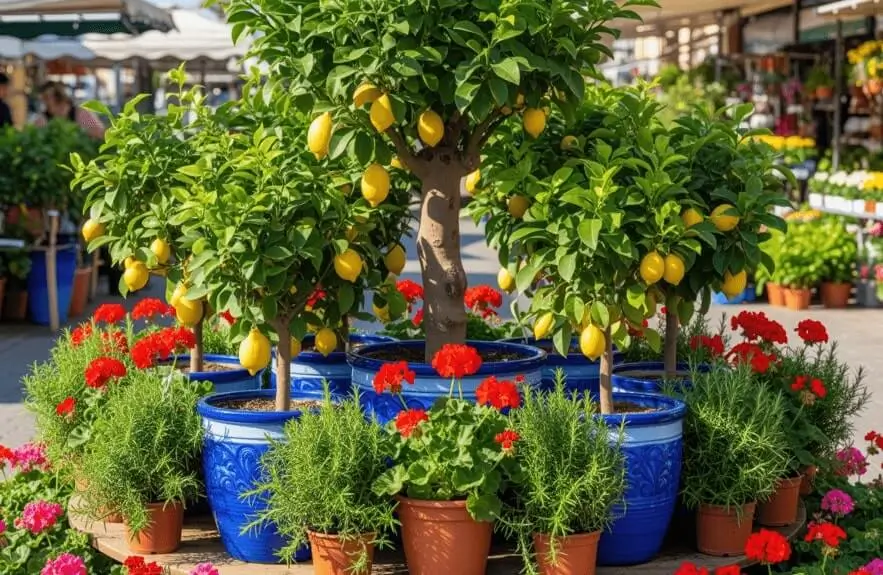
Fertilising fruit trees in containers is one of the most important steps for keeping your plants healthy, productive, and full of delicious fruit. Unlike trees grown in the ground, container fruit trees rely completely on the nutrients available inside their pots. Over time, watering washes nutrients away, making regular feeding essential for strong roots, healthy leaves, and better harvests.
In this complete guide, you’ll learn the best fertilisers for potted fruit trees, how often to feed them, common mistakes to avoid, and practical tips to keep your container garden thriving all season long.
🌱 Why Fertilisation Matters for Container Fruit Trees
Container trees depend entirely on you for nutrition. Since their roots are confined, they can’t reach deeper soil layers to find nutrients. Every watering session gradually washes nutrients out — a process known as nutrient leaching.
According to the University of California Agriculture & Natural Resources, container-grown fruit trees require consistent and balanced feeding to maintain productivity. The Royal Horticultural Society (RHS) also stresses that balanced fertilisation improves fruit yield, root health, and disease resistance.
If you’re just getting started with container fruit gardening, read this detailed guide on growing an abundant mini orchard in pots to pair your feeding strategy with innovative planting practices.
🍋 The Unique Nutrient Needs of Potted Fruit Trees
Container-grown fruit trees face unique nutritional challenges compared to those in open soil:
- Limited root space restricts nutrient access.
- Frequent watering leaches minerals from the potting mix.
- Low microbial activity means less natural nutrient recycling.
That’s why it’s essential to regularly feed your trees with NPK-balanced fertiliser and essential micronutrients like iron, zinc, and manganese.
⚖️ Understanding N-P-K Ratios
Every fertiliser label shows three numbers (for example, 10-10-10). These represent Nitrogen (N), Phosphorus (P), and Potassium (K) — the primary nutrients your trees need.
- Nitrogen (N): fuels leaf and branch growth.
- Phosphorus (P): develops roots and flowers.
- Potassium (K): improves fruit sweetness, size, and resilience.
During the active growing season, use a balanced fertiliser. As fruits develop, switch to a high-potassium mix to support ripening and disease resistance.
🌿 Organic vs. Synthetic Fertilisers
Organic fertilisers like compost, fish emulsion, and worm castings feed both your plants and the living soil. They release nutrients slowly and improve soil texture.
Synthetic fertilizers (granular or liquid) deliver nutrients fast and allow for precise dosing.
Many container gardeners combine both — using organic compost teas for baseline feeding and slow-release synthetic fertiliser for a consistent supply.
🏷️ Choosing the Right Fertiliser for Container Fruit Trees
Your fertiliser choice depends on tree type and age.
- Young trees need higher nitrogen (like 12-6-6) for foliage and root development.
- Mature, fruiting trees need more potassium and phosphorus (6-10-10).
Looking for the best trees to grow? Check out dwarf fruit trees in pots — these compact varieties thrive in containers and respond beautifully to regular fertilising.
You can also explore the best fruits for container gardening if you’re deciding which trees deserve a spot on your patio.
🕒 When and How Often to Fertilise
Each growth stage requires a specific feeding schedule:
- Spring: Use a balanced fertiliser as new growth appears.
- Summer: Apply every 4–6 weeks to sustain fruit formation.
- Fall: Switch to low-nitrogen fertiliser for ripening.
- Winter: Pause fertilisation as trees enter dormancy.
Avoid fertilising stressed or newly repotted trees — wait two to three weeks before feeding again.
🧴 Step-by-Step Feeding Method
- Water first — never fertilise dry soil.
- Measure correctly — follow the product’s dilution rates.
- Apply evenly around the pot edge.
- Water again lightly to help nutrients reach roots.
- Repeat consistently during active months.
Use slow-release pellets covered with mulch for convenience and moisture regulation.
🌾 Boosting Soil Health Naturally
Healthy container soil is your foundation for success. Improve it by:
- Mixing in compost or worm castings every few weeks.
- Brewing compost tea for a microbial boost.
- Mulching with bark or straw to preserve moisture.
- Refreshing soil annually during repotting.
Learn more about ideal fruit plants for containers here.
⚠️ Common Mistakes to Avoid
- Overfeeding: Causes leaf burn and salt buildup.
- Inconsistent schedules: Results in nutrient spikes and crashes.
- Wrong NPK ratio: Delays flowering or ripening.
- Poor drainage: Leads to root suffocation and nutrient lockout.
🍎 Advanced Tips for Better Harvests
To boost productivity:
- Try foliar feeding for rapid nutrient absorption.
- Install a fertigation system for consistent feeding.
- Add mycorrhizal fungi to enhance nutrient uptake.
- Adjust nutrients based on seasonal growth.
For small-space growers, don’t miss the complete guide on fruit gardening in small spaces to make the most of your balcony or patio orchard.
🌸 Conclusion
Fertilising fruit trees in containers is a simple routine that makes a huge difference. With the right mix of nutrients, organic support, and consistent care, your potted trees will reward you with luscious, homegrown fruit for years to come.
Start small, stay consistent, and keep experimenting — your mini orchard in containers can be just as productive as a full-sized garden.