
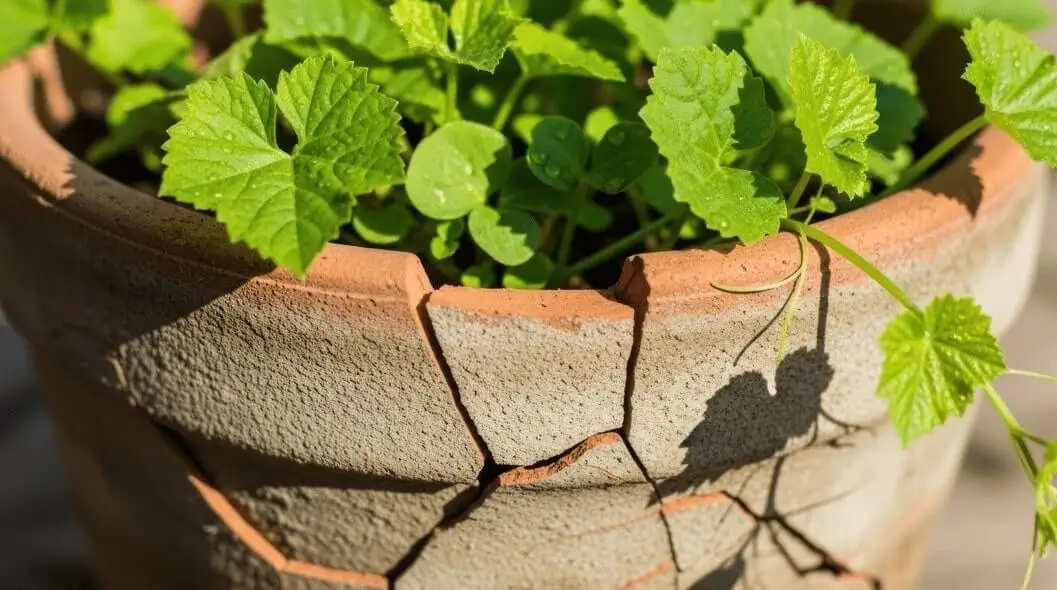
Container gardening gives you flexibility, control, and the ability to grow fruit trees even in limited spaces. However, one often overlooked problem—cracked pots—can silently damage roots and threaten the health of your trees. Whether caused by temperature changes, poor-quality containers, or accidental impact, cracked pots can lead to root exposure, dehydration, and long-term stress for your plants.
In this guide, you’ll learn why pots crack, how it affects your fruit trees, and the best ways to prevent and fix the problem before it becomes costly.
Why Cracked Pots and Root Damage Matter in Container Fruit Gardening
Container fruit trees depend entirely on their pots for stability, insulation, drainage, and root health. Unlike trees planted in the ground, their roots have no margin for error. When a pot cracks, several problems happen at once:
- Roots dry out faster, especially fine feeder roots responsible for nutrient uptake
- Temperature fluctuations increase, stressing roots in summer heat or winter cold
- Watering becomes inconsistent, leading to drought stress or root rot
- Structural stability is lost, increasing the risk of trees tipping over
Root damage directly affects flowering, fruit set, and overall vigor. Many issues gardeners blame on “poor soil” or “fertilizer problems” actually begin with container failure. If you’re growing fruit trees in pots, understanding this issue is essential.
If you’re new to container fruit growing, start by reviewing the basics in this guide on easy fruits to grow in containers, which explains how root health influences long-term success.
Common Causes of Cracked Pots in Container Fruit Trees
Understanding the cause helps you choose the right solution.
1. Freeze–Thaw Damage
Water expands when frozen. If moisture is trapped inside clay or ceramic pots during winter, it can cause cracks that worsen each season.
2. Root Overcrowding
As roots grow and circle the container, they push outward. Over time, pressure from a root-bound tree can crack plastic, ceramic, or thin terracotta pots.
Learn how to spot and fix this issue early in our article on signs your fruit tree is root bound in a container.
3. Low-Quality Containers
Thin plastic pots degrade under UV exposure. Cheap ceramic pots often lack proper firing strength and crack easily.
4. Improper Drainage
Poor drainage causes water buildup, increasing internal pressure and weakening pot walls. This is especially dangerous for fruit trees that need consistent moisture balance.
You can improve this by following best practices in how to improve drainage for potted fruit trees.
How Cracked Pots Cause Root Damage (And Why It’s So Dangerous)
Cracked pots don’t just leak water—they directly harm roots.
- Exposed roots dry out within hours
- Hairline cracks allow air pruning, killing feeder roots
- Pathogens enter through damaged roots, increasing disease risk
- Roots grow through cracks, making repotting traumatic
Once root damage begins, the tree struggles to absorb nutrients—even if you fertilize correctly. This often leads to yellowing leaves, weak growth, and poor fruiting.
Step-by-Step Solutions for Cracked Pots and Root Damage
Step 1: Assess the Damage
Remove the pot from its location and inspect:
- Are cracks superficial or structural?
- Are roots visible through the cracks?
- Is the pot unstable or leaking rapidly?
If roots are exposed, act immediately.
Step 2: Decide Whether to Repair or Replace
- Temporary fix: Wrap minor cracks with heavy-duty tape or garden fabric (short-term only)
- Best solution: Repot into a stronger container
If the tree is actively growing or fruiting, repot carefully to avoid shock.
Step 3: Safely Repot Without Causing More Root Damage
- Water the tree well the day before
- Gently slide the root ball out
- Trim only dead or circling roots
- Place into a container 5–8 cm wider
- Use fresh, well-draining potting mix
If you’re unsure about soil selection, see the best soil mix for container fruit trees.
Step 4: Stabilize and Protect
- Add mulch to insulate roots
- Elevate pots slightly to improve drainage
- Avoid dragging pots across hard surfaces
Choosing the Right Containers to Prevent Future Cracking
Not all pots are equal—especially for fruit trees.
Best Container Materials
- Thick plastic (UV-stabilized) – lightweight, affordable, durable
- Fabric grow bags – excellent drainage, zero cracking risk
- Wooden planters (lined) – good insulation, long lifespan
Containers to Use with Caution
- Thin terracotta (cracks easily)
- Decorative ceramic without drainage holes
- Cheap plastic exposed to full sun year-round
Always choose containers with multiple drainage holes and enough volume for root expansion.
Soil and Watering Tips to Protect Roots Long-Term
Even the best container will fail if soil and watering are wrong.
Soil Tips
- Use a chunky, airy mix (never garden soil)
- Add perlite or pumice for drainage
- Refresh soil every 1–2 years
Watering Tips
- Water deeply, not frequently
- Let the top few centimeters dry before watering again
- Reduce watering during winter dormancy
Poor watering habits are a leading cause of root stress—often mistaken for disease.
Common Mistakes Beginners Make with Cracked Pots and Root Damage
Avoid these costly errors:
- Ignoring hairline cracks
- Waiting too long to repot a root-bound tree
- Using decorative pots without drainage
- Repotting during extreme heat or cold
- Overwatering after repotting
Many of these mistakes are preventable with routine container checks—especially before and after winter.
Tools and Supplies That Make a Difference
Keep these essentials on hand:
- Sturdy replacement containers
- Quality potting mix
- Hand pruners for root trimming
- Pot feet or risers
- Mulch (pine bark or straw)
These small investments dramatically reduce the risk of cracked pots and root damage.
Frequently Asked Questions (FAQ)
Can a cracked pot be repaired permanently?
Minor cracks can be sealed temporarily, but replacement is the only reliable long-term solution for fruit trees.
Will exposed roots kill my fruit tree?
Yes, if left untreated. Fine feeder roots dry out quickly and die when exposed.
Is repotting stressful for fruit trees?
When done correctly and at the right time, repotting actually improves tree health.
What time of year is best to repot?
Early spring or early fall is ideal. Avoid extreme heat or freezing conditions.
Are fabric grow bags better than pots?
For many fruit trees, yes. They prevent cracking and improve root aeration.
Conclusion: Protect Roots Early for Healthier Container Fruit Trees
Cracked pots and root damage are silent threats—but completely preventable. By choosing durable containers, maintaining proper soil and drainage, and repotting before roots become overcrowded, you protect the foundation of your fruit tree’s health.
Make it a habit to inspect containers seasonally, especially after winter or rapid growth periods. If you notice early signs of cracking or root stress, act immediately. Healthy roots mean stronger growth, better flowering, and higher-quality fruit—no matter how small your growing space is.
Your container fruit trees will thank you with years of productive harvests.