
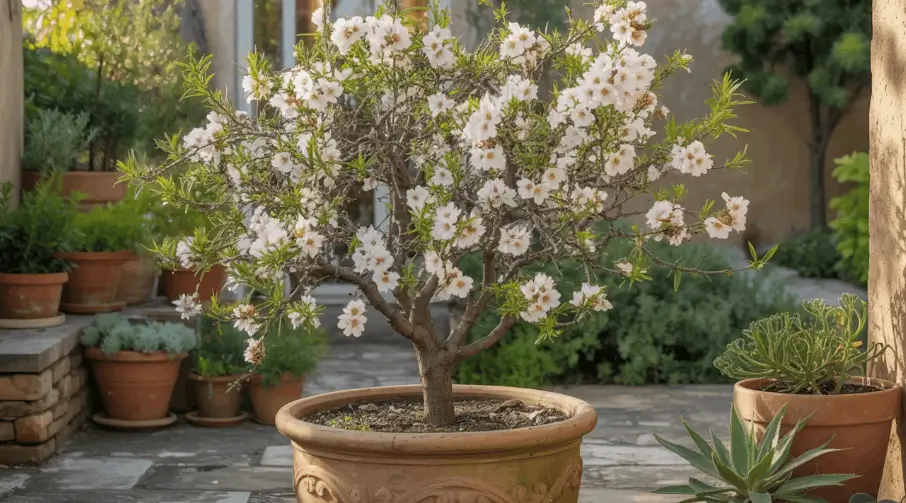
Growing an almond tree in a container is a rewarding way to enjoy beautiful blossoms and homegrown nuts even when you have limited space. Whether you have a small backyard, balcony, patio, or rooftop garden, container gardening makes it possible to grow almond trees successfully without a traditional orchard.
However, almond trees in pots require different care compared to trees planted in the ground. Beginners often struggle with problems like poor drainage, limited root space, watering mistakes, and weak fruit production.
This guide explains everything you need to know about growing an almond tree in a container, from choosing the right pot and soil to watering, pruning, fertilizing, and winter care.
Why Grow an Almond Tree in a Container?
Container-grown almond trees are ideal for small-space gardeners because they are easier to manage and move when necessary. A potted almond tree can also become a beautiful ornamental feature with its pink or white blossoms in spring.
Benefits of growing almond trees in containers include:
- Suitable for patios and balconies
- Easier protection from cold weather
- Better control over soil conditions
- Simpler pruning and size management
- Reduced risk of some soil-borne diseases
- Decorative appearance throughout the year
Dwarf or semi-dwarf almond varieties perform best in containers because they stay more compact and adapt better to restricted root space.
Choosing the Best Almond Tree Variety for Containers
Not all almond trees grow well in pots. Standard almond trees can become too large and difficult to manage over time.
For container gardening, choose:
Dwarf Almond Trees
Dwarf varieties naturally stay smaller and are easier to maintain in containers.
Self-Pollinating Varieties
Self-pollinating almond trees are ideal for beginners because you only need one tree to produce nuts.
Ornamental Almond Trees
Some gardeners grow flowering almond trees mainly for their blossoms rather than nut production.
When shopping for a tree, look for healthy young plants with:
- Strong central stems
- Green leaves without yellow spots
- No visible pests
- Healthy roots that are not tightly circling
Best Container Size for Almond Trees
One of the most important factors in growing a healthy almond tree in a container is choosing the right pot size.
Starting Pot Size
Young almond trees can begin in a container that is:
- 15–20 gallons
- At least 18–24 inches wide
- Deep enough for root development
As the tree matures, you may need to repot into a larger container.
Best Container Materials
Good options include:
- Terracotta pots
- Wooden planters
- Fabric grow bags
- Heavy plastic containers
Terracotta provides excellent airflow but dries out faster. Plastic retains moisture longer but may heat up in strong sun.
Drainage Is Essential
Always use containers with multiple drainage holes. Almond trees dislike soggy roots and can quickly develop root rot in poorly drained pots.
Best Soil for Almond Trees in Pots
Almond trees need loose, well-draining soil that retains some moisture without becoming compacted.
A good container soil mix should include:
- High-quality potting soil
- Compost
- Perlite or coarse sand for drainage
- Organic matter for nutrients
Avoid using heavy garden soil directly in containers because it compacts easily and limits airflow around roots.
Ideal Soil Conditions
Almond trees generally prefer:
- Slightly acidic to neutral soil
- Good aeration
- Fast drainage
- Moderate fertility
Refreshing the top layer of soil annually helps maintain healthy growth.
How Much Sunlight Does an Almond Tree Need?
Almond trees need full sun to grow properly and produce nuts.
Aim for:
- 6–8 hours of direct sunlight daily
- A warm, bright location
- Good air circulation around the tree
South-facing patios or balconies are usually ideal.
Insufficient sunlight may lead to:
- Weak growth
- Poor flowering
- Limited nut production
- Increased disease problems
How to Plant an Almond Tree in a Container
Planting correctly helps reduce transplant shock and encourages strong root development.
Step-by-Step Planting Guide
1. Prepare the Container
Fill the bottom with well-draining potting mix. Do not add rocks because they can interfere with drainage.
2. Inspect the Roots
Gently loosen tightly packed roots before planting.
3. Position the Tree
Place the almond tree at the same depth it previously grew in its nursery container.
4. Fill With Soil
Add soil around the roots and gently press to remove large air pockets.
5. Water Thoroughly
Water deeply after planting until excess moisture drains from the bottom.
6. Add Mulch
Apply a thin layer of mulch to help regulate moisture and temperature.
Keep mulch a few inches away from the trunk to prevent rot.
Watering an Almond Tree in a Container
Watering is one of the biggest challenges in container fruit gardening.
Because containers dry out faster than garden soil, almond trees in pots need more frequent monitoring.
How Often Should You Water?
The exact schedule depends on:
- Weather
- Pot size
- Tree size
- Sun exposure
- Soil type
Generally:
- Water more often during hot summer weather
- Reduce watering during winter dormancy
- Check soil moisture regularly
Best Watering Method
Water deeply until excess water drains from the bottom of the container.
Avoid shallow watering because it encourages weak surface roots.
Signs of Overwatering
Overwatering is common with potted almond trees.
Watch for:
- Yellow leaves
- Wilting despite wet soil
- Mushy roots
- Fungal problems
- Slow growth
Signs of Underwatering
Dry conditions may cause:
- Crispy leaf edges
- Dropping leaves
- Small nuts
- Stunted growth
The soil should remain slightly moist but never waterlogged.
Fertilizing Almond Trees in Containers
Container-grown trees lose nutrients more quickly because watering flushes minerals from the soil.
Regular feeding helps maintain healthy growth and nut production.
Best Fertilizer for Almond Trees
Choose balanced fertilizers designed for fruit trees.
Good options include:
- Slow-release granular fertilizers
- Organic fruit tree fertilizers
- Compost-based feeding programs
When to Fertilize
Feed almond trees:
- In early spring
- During active growth
- Lightly during summer if needed
Avoid heavy fertilizing late in the season because it may encourage tender growth before winter.
Signs of Nutrient Deficiency
Your almond tree may need feeding if you notice:
- Pale leaves
- Weak growth
- Small leaves
- Poor flowering
Too much fertilizer can also damage roots and reduce fruit production.
Pruning an Almond Tree in a Pot
Pruning keeps container almond trees manageable and healthy.
Without pruning, the tree may become too large for its container.
Benefits of Pruning
Proper pruning helps:
- Improve airflow
- Control size
- Encourage fruiting
- Remove dead branches
- Shape the tree
Best Time to Prune
Late winter or early spring is usually best before new growth begins.
Basic Pruning Tips
Remove:
- Dead branches
- Crossing limbs
- Weak growth
- Suckers near the base
Aim for an open structure that allows sunlight to reach all parts of the tree.
Pollination and Nut Production
Some almond trees require cross-pollination while others are self-fertile.
If your variety is not self-pollinating, you may need:
- Another compatible almond tree nearby
- Pollinator-friendly flowers
- Bees and beneficial insects
Poor pollination can result in:
- Few nuts
- Empty shells
- Flower drop
Common Problems With Almond Trees in Containers
Container-grown almond trees can experience several issues, especially if conditions are not ideal.
Yellow Leaves
Yellow leaves often result from:
- Overwatering
- Poor drainage
- Nutrient deficiencies
- Root stress
Check soil moisture first before adding fertilizer.
Leaf Curl
Leaf curl may be caused by:
- Stress
- Pests
- Fungal diseases
- Inconsistent watering
Remove damaged leaves and improve airflow around the tree.
Root Rot
Root rot is one of the most serious container problems.
It usually develops when:
- Drainage is poor
- Containers stay wet too long
- Soil becomes compacted
Prevention is far easier than treatment.
Poor Nut Production
Limited nut production may happen because of:
- Lack of sunlight
- Insufficient pollination
- Overcrowded roots
- Poor nutrition
- Excessive pruning
Pest Problems
Common pests include:
- Aphids
- Spider mites
- Scale insects
Regular inspection helps catch infestations early.
Repotting Almond Trees
Over time, almond trees can outgrow their containers.
Signs your tree needs repotting include:
- Roots circling the pot
- Water draining too quickly
- Stunted growth
- Reduced vigor
When to Repot
Late winter or early spring is usually the best time.
How to Repot
- Choose a slightly larger container
- Remove old compacted soil
- Trim damaged roots
- Refresh with new potting mix
- Water thoroughly after transplanting
Avoid jumping to an excessively large pot because overly wet soil can become a problem.
Winter Care for Potted Almond Trees
Container trees are more vulnerable to cold weather than in-ground trees because their roots are exposed.
Protecting Almond Trees in Winter
Depending on your climate, you may need to:
- Move containers to a sheltered location
- Wrap pots for insulation
- Reduce watering
- Protect blossoms from late frost
Cold winds can also dry out branches during winter.
Can Almond Trees Grow Indoors?
Almond trees generally perform best outdoors because they need:
- Strong sunlight
- Seasonal temperature changes
- Good airflow
Temporary indoor protection during severe weather is acceptable, but long-term indoor growing is usually difficult.
Best Companion Plants for Container Almond Trees
You can grow small companion plants around your almond tree to improve appearance and attract pollinators.
Good options include:
- Herbs
- Marigolds
- Lavender
- Low-growing flowers
Avoid overcrowding the container because almond roots need adequate space.
How Long Does It Take for an Almond Tree to Produce Nuts?
Most almond trees require patience.
Depending on the variety and growing conditions:
- Young trees may begin producing in 3–5 years
- Full production takes longer
Healthy care practices improve long-term productivity.
Beginner Mistakes to Avoid
Many container almond tree problems come from simple mistakes.
Avoid these common issues:
Using Small Containers
Restricted roots lead to poor growth.
Overwatering
Constantly wet soil can quickly damage roots.
Insufficient Sunlight
Without enough sun, flowering and nut production decline.
Ignoring Pruning
Unpruned trees become overcrowded and difficult to manage.
Poor Drainage
Drainage problems are one of the biggest causes of container tree failure.
Conclusion
Growing an almond tree in a container is an excellent option for gardeners with limited space who still want to enjoy beautiful blossoms and homegrown nuts. With the right container, proper soil, regular watering, and seasonal care, potted almond trees can thrive for many years.
Success comes from understanding the unique needs of container fruit gardening. Focus on drainage, sunlight, root space, and consistent maintenance. Small adjustments made early can prevent many common problems later.
For beginners, starting with a dwarf or self-pollinating almond variety makes the process much easier and more rewarding. Over time, your container almond tree can become both a productive fruit tree and a beautiful feature in your garden space.