
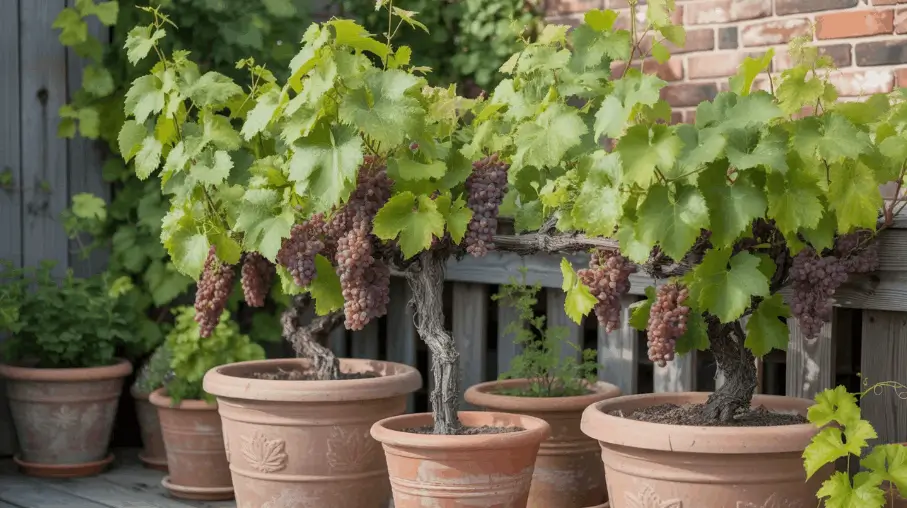
Growing grapes in pots is one of the best ways to enjoy fresh fruit in small spaces. Whether you have a balcony, patio, rooftop, or tiny backyard, container-grown grapevines can thrive when given the right care.
Many beginners assume grapes need a large vineyard or deep garden soil to produce fruit. In reality, several grape varieties grow surprisingly well in containers. With proper sunlight, pruning, watering, and support, a single potted grapevine can reward you with beautiful foliage and delicious harvests for years.
However, growing grapes in containers also comes with unique challenges. Poor drainage, overcrowded roots, weak support systems, and inconsistent watering are common problems that prevent healthy growth.
This guide explains everything beginners need to know about growing grapes in pots successfully, including choosing the right container, selecting the best soil, watering properly, pruning correctly, and avoiding common mistakes.
Why Growing Grapes in Pots Works Well
Container grape gardening is ideal for small-space growers because grapevines are naturally vigorous climbers. Instead of spreading across a large garden, they can be trained vertically on trellises, fences, railings, or wires.
Benefits of growing grapes in containers include:
- Perfect for balconies and patios
- Easier pest management
- Better control over soil quality
- Simple seasonal relocation
- Decorative foliage and edible harvests
- Great option for renters or urban gardeners
With the right setup, potted grapevines can stay productive for many years.
Best Grape Varieties for Pots
Not all grapevines perform equally in containers. Some varieties adapt much better to restricted root space and compact growing conditions.
Best Types of Grapes for Container Growing
Table Grapes
These are ideal for fresh eating.
Popular options include:
- Flame Seedless
- Thompson Seedless
- Himrod
- Reliance
Wine Grapes
These can also grow in containers if properly pruned.
Popular options include:
- Pinot Noir
- Cabernet Sauvignon
- Chardonnay
Muscadine Grapes
Excellent for warm climates and humidity tolerance.
Dwarf or Compact Grapevines
Some nurseries offer compact grape cultivars specifically bred for smaller spaces.
Choosing the Right Pot for Grapes
Container size is one of the most important factors in successful grape growing.
Best Pot Size for Grapevines
Young grapevines can start in smaller pots, but mature vines need larger containers to support root development.
Recommended sizes:
- Minimum: 15–20 gallons
- Better long-term option: 25 gallons or larger
A large pot helps:
- Prevent roots from drying out
- Reduce heat stress
- Improve stability
- Support healthy fruit production
Best Pot Materials
Different materials affect moisture and temperature differently.
Plastic Pots
Pros:
- Lightweight
- Affordable
- Retain moisture well
Cons:
- Heat up quickly in hot weather
Terracotta Pots
Pros:
- Attractive appearance
- Better airflow
Cons:
- Dry out faster
- Heavy to move
Fabric Grow Bags
Pros:
- Excellent drainage
- Good root aeration
Cons:
- Need more frequent watering
Drainage Is Essential
Always choose containers with multiple drainage holes.
Poor drainage causes:
- Root rot
- Yellow leaves
- Weak growth
- Fungal problems
Never allow grape pots to sit in standing water.
Best Soil for Growing Grapes in Pots
Grapevines dislike heavy, compacted soil.
The ideal potting mix should be:
- Well-draining
- Slightly loose
- Rich in organic matter
- Moisture-retentive but not soggy
Ideal Potting Mix Recipe
A beginner-friendly mix includes:
- High-quality potting soil
- Compost
- Perlite or coarse sand
- A small amount of bark fines
Avoid using garden soil directly in containers because it often compacts and drains poorly.
How Much Sunlight Do Potted Grapes Need?
Grapevines are sun-loving plants.
For healthy fruit production, they need:
- 6–8 hours of direct sunlight daily
- Warm growing conditions
- Good airflow around leaves
Without enough sunlight, grapevines may produce:
- Weak stems
- Small harvests
- Sour grapes
- Excess foliage with little fruit
South-facing balconies and patios are usually ideal.
How to Plant Grapes in Pots
Step-by-Step Planting Guide
1. Prepare the Container
Fill the pot with well-draining soil, leaving a few inches of space at the top.
2. Position the Vine
Place the grapevine in the center of the container.
Spread roots gently before covering them with soil.
3. Water Thoroughly
After planting, water deeply until excess water drains from the bottom.
4. Add Support Immediately
Install a trellis, stake, or wire support early to avoid disturbing roots later.
Best Support Systems for Container Grapes
Grapevines naturally climb and spread quickly.
Without support, vines become tangled and unhealthy.
Good Support Options
Trellis
One of the easiest systems for patios and balconies.
Wire System
Excellent for walls or fences.
Arch or Arbor
Adds decorative value while supporting growth.
Bamboo Stakes
Useful for young vines before full training begins.
Secure vines gently using soft ties to prevent stem damage.
Watering Grapes in Pots Properly
Watering mistakes are one of the biggest reasons container grapevines struggle.
How Often Should You Water?
Potted grapes usually need more water than garden-grown vines because containers dry faster.
Water when:
- The top 1–2 inches of soil feel dry
- Leaves begin slightly drooping in extreme heat
Signs of Underwatering
- Dry soil
- Crispy leaf edges
- Slow growth
- Small grapes
Signs of Overwatering
- Yellow leaves
- Soggy soil
- Root rot smell
- Wilting despite wet soil
Deep watering is better than shallow daily watering.
Fertilizing Grapevines in Containers
Container-grown grapes eventually use up nutrients in the potting mix.
Regular feeding helps maintain healthy growth and fruit production.
Best Fertilizer for Potted Grapes
Choose balanced fertilizers with moderate nitrogen.
Too much nitrogen causes:
- Excess leaves
- Weak fruiting
- Long, thin growth
Fertilizing Schedule
Early Spring
Apply compost or balanced fertilizer when growth begins.
Mid-Season
Feed lightly during active growth.
Avoid Late Heavy Feeding
Late fertilization encourages soft growth vulnerable to winter damage.
How to Prune Grapes in Pots
Pruning is absolutely essential for productive grapevines.
Without pruning, vines become overcrowded and produce fewer grapes.
Why Pruning Matters
Proper pruning:
- Controls size
- Improves airflow
- Encourages fruit production
- Prevents disease
- Keeps vines manageable in containers
Basic Beginner Pruning Method
Winter Pruning
During dormancy:
- Remove dead wood
- Cut back excessive growth
- Keep a manageable framework
Summer Pruning
During active growth:
- Remove weak shoots
- Trim overcrowded foliage
- Improve sunlight penetration
Don’t be afraid to prune heavily. Grapevines tolerate pruning very well.
Common Problems When Growing Grapes in Pots
Yellow Leaves
Possible causes:
- Overwatering
- Nutrient deficiency
- Poor drainage
Small or No Grapes
Usually caused by:
- Lack of sunlight
- Improper pruning
- Excess nitrogen fertilizer
Powdery Mildew
This fungal issue appears as white powder on leaves.
Prevent it by:
- Improving airflow
- Avoiding wet foliage
- Reducing overcrowding
Rootbound Plants
Over time, roots may outgrow the container.
Signs include:
- Stunted growth
- Rapid drying
- Reduced harvests
Repot every few years if necessary.
Seasonal Care for Potted Grapevines
Spring Care
- Resume fertilizing
- Begin regular watering
- Check supports and ties
Summer Care
- Monitor moisture closely
- Prune excessive growth
- Protect vines during heat waves
Fall Care
- Harvest grapes
- Reduce fertilizer
- Clean fallen leaves
Winter Care
Dormant grapevines still need protection in cold climates.
Options include:
- Moving pots to sheltered areas
- Wrapping containers
- Mulching the soil surface
Container roots freeze faster than garden-grown vines.
How Long Do Grapes Take to Produce Fruit?
Most grapevines begin producing small harvests within:
- 2–3 years after planting
Larger harvests usually develop as vines mature.
Patience is important because healthy grape production improves over time.
Can You Grow Grapes Indoors?
Growing grapes entirely indoors is difficult because vines need strong sunlight and seasonal changes.
However, grapes can grow:
- Near bright windows
- In sunrooms
- Under grow lights temporarily
Outdoor growing remains the best option for reliable fruit production.
Common Beginner Mistakes to Avoid
Using Small Pots
Tiny containers restrict root growth quickly.
Ignoring Pruning
Unpruned vines become messy and unproductive.
Overwatering
Constantly wet soil damages roots.
Poor Sunlight
Insufficient sun leads to weak fruiting.
Weak Support Structures
Heavy mature vines need strong support.
Avoiding these mistakes greatly improves long-term success.
Tips for Bigger and Sweeter Grapes
For better harvests:
- Give vines full sun
- Prune consistently
- Avoid overcrowding
- Water deeply
- Feed moderately
- Improve airflow
- Thin excess grape clusters if necessary
Healthy vines naturally produce sweeter fruit.
Are Grapes Easy to Grow in Containers?
Yes — grapes are surprisingly beginner-friendly once the basics are understood.
The key is creating stable growing conditions:
- Large containers
- Good drainage
- Strong sunlight
- Proper pruning
- Consistent watering
Once established, potted grapevines can become one of the most rewarding edible plants for small-space gardening.
Conclusion
Growing grapes in pots is an excellent solution for gardeners with limited space. A healthy container grapevine can provide beauty, shade, and fresh fruit while fitting comfortably on patios, balconies, and small gardens.
Success comes down to a few essential practices:
- Choose a large well-draining container
- Use quality potting soil
- Provide strong sunlight
- Water consistently
- Prune regularly
- Support vines properly
With patience and seasonal care, container-grown grapes can thrive for many years and produce satisfying harvests even in compact spaces.