
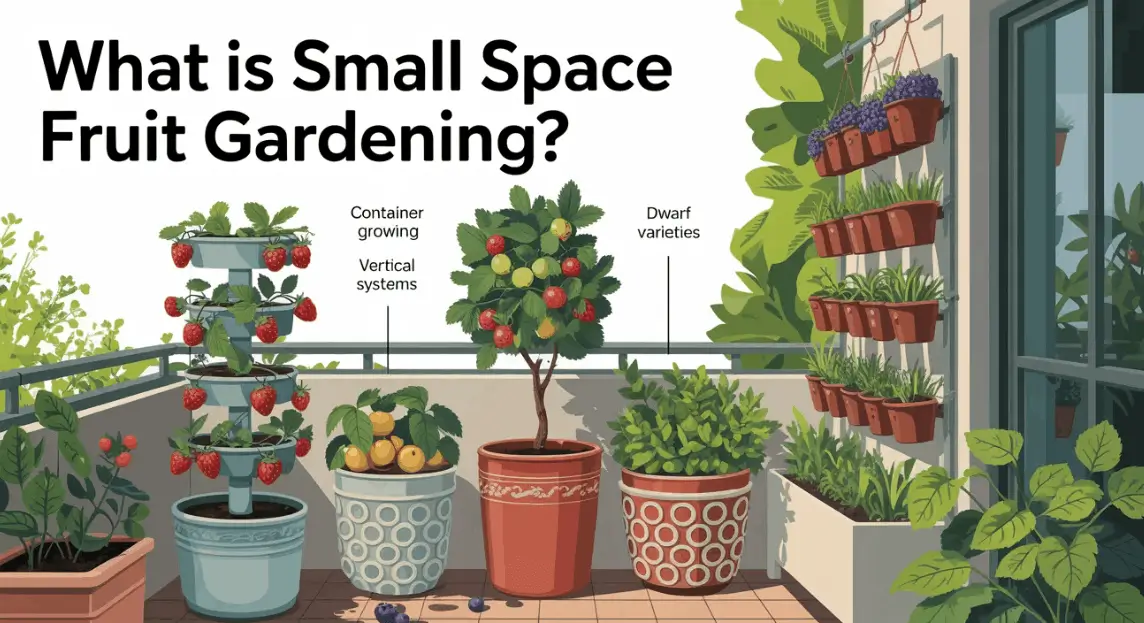
Growing your own fruit doesn’t require a large garden or a traditional orchard. In today’s world, many people live in apartments, small homes, or urban areas where outdoor space is limited. Fortunately, small space fruit gardening makes it possible to enjoy fresh, homegrown fruit even in the smallest environments.
Small space fruit gardening focuses on:
- Growing fruit trees in pots or containers
- Choosing compact or dwarf varieties
- Maximizing vertical and limited growing areas
- Using smart watering, soil, and pruning techniques
With the right approach, even a small balcony or patio can produce fresh fruit for years.
This guide explains exactly what small space fruit gardening is, how it works, and how beginners can start successfully.
Understanding Small Space Fruit Gardening
Small space fruit gardening is a method of growing fruit in limited spaces using containers or compact planting systems.
Instead of planting trees directly in the ground, gardeners grow fruit plants in:
- Containers
- Large pots
- Grow bags
- Raised beds
- Vertical structures
This method allows people living in apartments, urban homes, or small houses to enjoy homegrown fruit.
The key difference from traditional gardening is space efficiency.
Traditional fruit gardening:
- Large trees
- Planted directly in the ground
- Requires significant yard space
Small space fruit gardening:
- Compact trees
- Container-based systems
- Designed for tight areas
Because the trees stay smaller, they are easier to maintain, prune, water, and harvest.
Why Small Space Fruit Gardening Is Growing in Popularity
More people are turning to small space fruit gardening for several reasons.
1. Urban Living
Many people live in apartments or homes with little outdoor space. Containers make fruit growing possible even without a garden.
2. Easier Tree Management
Container trees are smaller and easier to control.
Gardeners can:
- Manage tree size
- Move plants when needed
- Control soil quality
3. Faster Results
Many container fruit trees produce fruit earlier than traditional trees because they remain compact and focused on fruiting.
4. Flexible Growing Locations
Small space fruit gardens can exist in:
- Balconies
- Rooftops
- Small patios
- Courtyards
- Tiny backyard corners
- Indoor sunny spaces
Best Fruits for Small Space Gardening
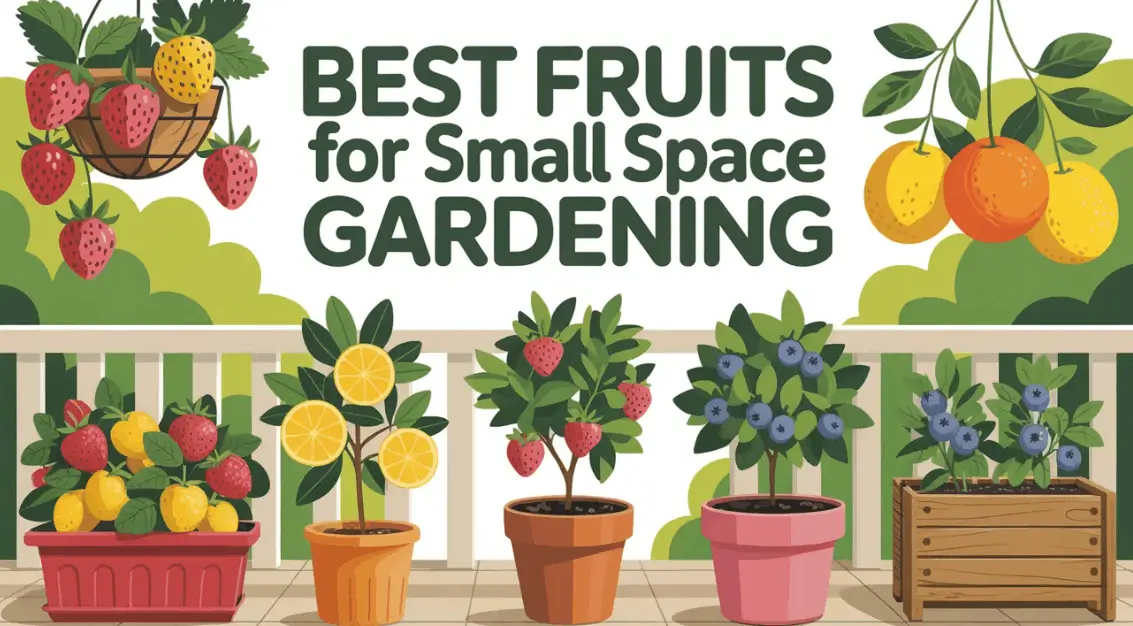
Not every fruit tree grows well in small spaces. Some species adapt extremely well to containers.
Citrus Trees
Citrus trees are among the most popular choices for small gardens.
Common container citrus include:
- Lemon trees
- Lime trees
- Calamondin
- Dwarf orange trees
They grow well in pots and produce fruit reliably with enough sunlight.
Fig Trees
Fig trees are naturally compact and adapt very well to container growing.
Benefits of figs in small spaces:
- Tolerate pruning
- Thrive in containers
- Produce fruit quickly
Apple Trees (Dwarf Varieties)
Dwarf apple trees are specifically bred to stay small.
Advantages:
- Compact size
- Easy harvesting
- Suitable for large pots
Strawberry Plants
Strawberries are ideal for tight spaces.
They grow well in:
- Hanging baskets
- Vertical towers
- Small containers
Blueberries
Blueberries thrive in containers when given the correct soil conditions.
They are perfect for balconies and patios.
Key Principles of Small Space Fruit Gardening
Successful small space fruit gardening follows several important principles.
1. Choosing the Right Container
Containers must be large enough for healthy root growth.
Most fruit trees need:
- 15–25 gallon containers
- Good drainage holes
- Durable materials
Larger containers provide:
- Better moisture stability
- Healthier roots
- Stronger fruit production
2. Using the Right Soil
Container fruit trees cannot rely on natural ground soil.
They require a well-draining potting mix designed for container gardening.
Good fruit tree soil should:
- Drain excess water easily
- Retain moisture without becoming soggy
- Contain organic matter
Healthy soil supports strong root development and consistent fruit production.
3. Maximizing Sunlight
Fruit trees require plenty of sunlight to grow and produce fruit.
Most container fruit plants need:
6–8 hours of direct sunlight per day.
Best locations include:
- South-facing balconies
- Sunny patios
- Rooftop gardens
- Bright backyard corners
Without enough sunlight, trees may grow slowly or fail to produce fruit.
4. Managing Tree Size
One advantage of container fruit gardening is size control.
Trees can be kept compact through:
- Pruning
- Dwarf rootstocks
- Strategic container sizing
Regular pruning encourages:
- Better airflow
- Strong branches
- Higher fruit production
Common Challenges in Small Space Fruit Gardening
While container fruit gardening is rewarding, beginners may encounter several challenges.
Understanding these early helps prevent frustration.
Limited Root Space
Containers restrict root growth.
This can lead to:
- Slower growth
- Nutrient depletion
- Faster drying soil
Solutions include:
- Using larger containers
- Repotting when needed
- Refreshing soil periodically
Faster Water Loss
Container plants dry out faster than garden soil.
Especially during warm weather, pots may require frequent watering.
Beginners often underestimate how quickly containers lose moisture.
Nutrient Depletion
Because containers contain limited soil, nutrients get used up faster.
Regular feeding helps maintain plant health.
Temperature Stress
Containers heat up faster than ground soil.
Roots can become stressed in very hot weather.
Light-colored pots or shaded container sides can help regulate temperature.
Smart Techniques for Small Space Fruit Gardening
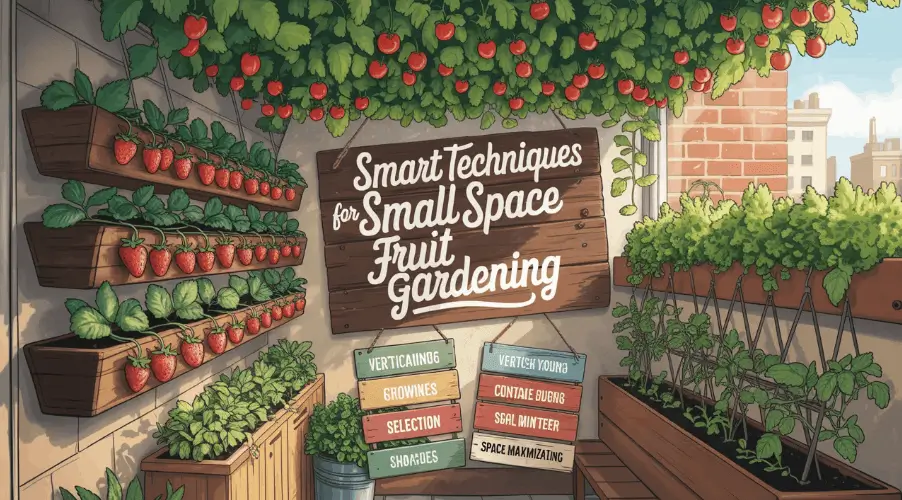
Several techniques make small fruit gardens far more productive.
Vertical Growing
Vertical gardening uses height instead of width.
Examples include:
- Wall-mounted planters
- Tiered plant stands
- Trellises
- Stacked container systems
This allows gardeners to grow more plants in less space.
Strategic Plant Placement
Place larger fruit trees where they receive the most sunlight.
Smaller plants can fill remaining areas.
Example layout:
- Tall container trees in the back
- Smaller pots in the front
- Hanging baskets above
Multi-Season Planning
Small spaces benefit from planting fruits that produce at different times.
This allows continuous harvest throughout the year.
Example rotation:
- Strawberries in spring
- Citrus in summer
- Figs in late summer
Beginner Mistakes in Small Space Fruit Gardening
Many beginners make similar mistakes when starting container fruit gardens.
Avoiding these mistakes can save time and frustration.
Using Containers That Are Too Small
Small pots restrict root development and reduce fruit production.
Fruit trees need larger containers than most beginners expect.
Poor Drainage
Without drainage holes, water accumulates and causes root problems.
Always use containers with multiple drainage holes.
Overwatering
Container gardeners sometimes water too often.
Signs of excessive watering include:
- Yellow leaves
- Weak growth
- Root issues
Choosing the Wrong Fruit Tree
Large standard fruit trees may struggle in containers.
Always choose:
- Dwarf varieties
- Compact fruit trees
- Container-friendly species
How to Start a Small Space Fruit Garden
Starting a small fruit garden is easier than most people expect.
Follow these simple steps.
Step 1: Evaluate Your Space
Look at your available growing area.
Check:
- Sunlight hours
- Balcony or patio size
- Wind exposure
Sunlight is the most important factor.
Step 2: Choose Beginner-Friendly Fruits
Start with plants that grow well in containers.
Examples include:
- Lemon trees
- Figs
- Strawberries
- Blueberries
These fruits are easier for beginners.
Step 3: Select Large Containers
Choose sturdy containers with enough root space.
Most fruit trees need large pots to thrive long-term.
Step 4: Use High-Quality Potting Soil
Never use regular garden soil in containers.
Container mixes provide better drainage and root health.
Step 5: Water Consistently
Container fruit trees need regular watering.
Keep soil moist but not waterlogged.
How Small Space Fruit Gardening Improves Food Independence
Growing fruit in small spaces allows people to produce their own food even in urban environments.
Benefits include:
- Fresh fruit at home
- Reduced grocery dependence
- Better food quality
- Gardening enjoyment
Even a few containers can produce meaningful harvests throughout the season.
Over time, small fruit gardens often expand as gardeners gain experience.
Long-Term Benefits of Small Space Fruit Gardening
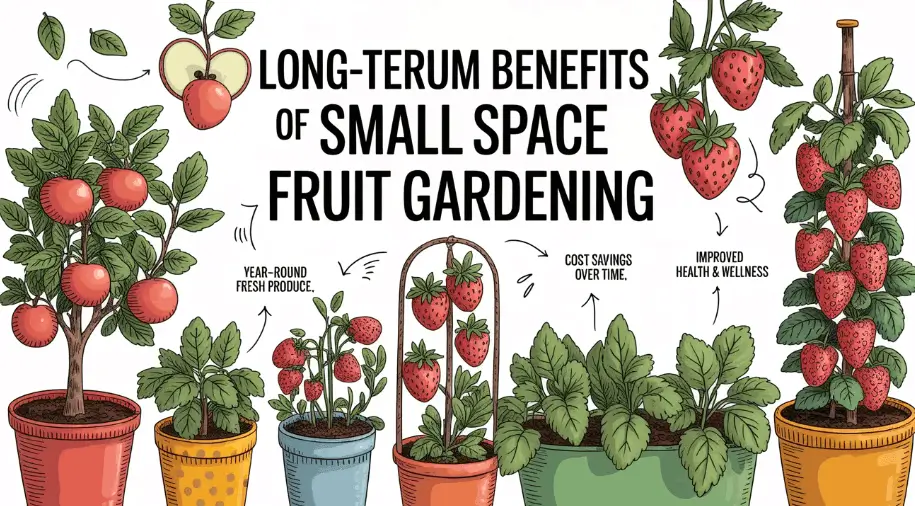
Once established, small fruit gardens become surprisingly productive.
Benefits include:
Sustainable Fruit Production
Perennial fruit plants produce harvests for many years.
Low Maintenance Systems
Once trees are established, care becomes easier.
Yearly Harvest Improvements
Container fruit trees often produce more fruit each year as they mature.
Flexible Garden Layout
Containers allow easy garden rearrangement.
Plants can be moved for:
- Better sunlight
- Seasonal changes
- Weather protection
Conclusion
Small space fruit gardening makes it possible to grow fresh fruit even when outdoor space is limited. By using containers, compact fruit varieties, and smart planting strategies, beginners can successfully grow productive fruit plants on balconies, patios, rooftops, or small yards.
The key principles are simple:
- Choose container-friendly fruit plants
- Use large containers with good drainage
- Provide enough sunlight
- Maintain consistent watering and soil health
With the right setup, a small space can become a productive mini fruit garden that provides fresh harvests year after year.
Small space fruit gardening proves that you do not need a large orchard to enjoy homegrown fruit. Even the smallest growing area can support healthy, thriving fruit plants when managed correctly.