
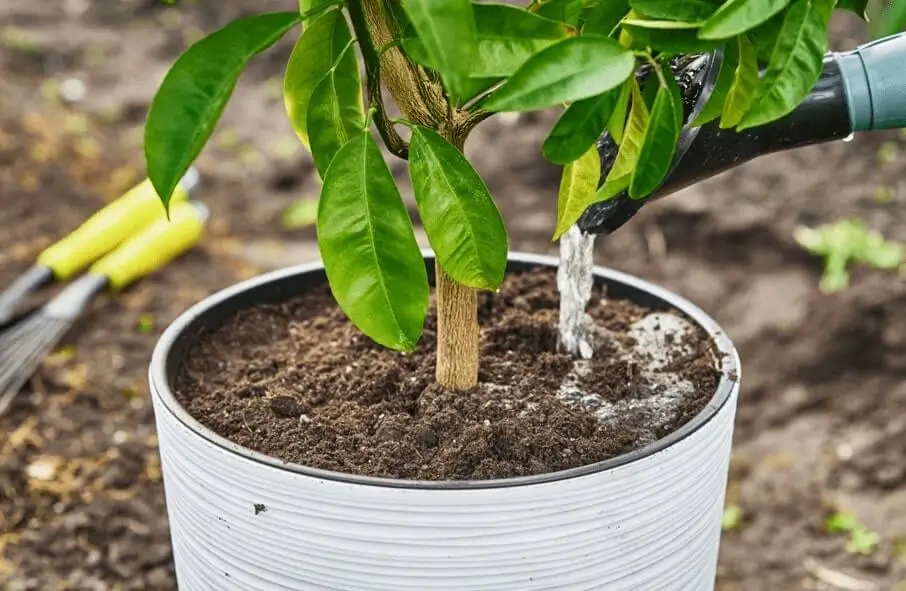
Growing citrus trees in containers is a rewarding way to enjoy fresh lemons, oranges, or limes even in small spaces. However, proper watering is the key to keeping your tree healthy, productive, and free from common problems like root rot or fruit drop. In this beginner-friendly guide, you’ll learn exactly how to water citrus trees in containers, how often to do it, and how to adjust your routine based on climate, season, and soil conditions.
Why Proper Watering Matters for Container-Grown Citrus Trees
Container citrus trees live in a very different environment than in-ground trees. Their root systems are confined, their soil volume is limited, and moisture levels change quickly.
Unique challenges of watering citrus in pots
- Limited soil buffer: Containers can’t store excess moisture for long
- Faster drying: Sun, wind, and heat affect pots more than garden soil
- Drainage dependency: Poor drainage causes rapid root suffocation
- Seasonal sensitivity: Citrus responds quickly to watering stress
When watering is inconsistent, citrus trees often show symptoms like:
- Yellowing leaves (especially older ones)
- Leaf curl or sudden leaf drop
- Flower drop before fruit sets
- Dry, sour, or undersized fruit
If you’re also growing other fruit trees in pots, you’ll notice similar patterns. For example, the principles explained in our guide on watering large fruit trees in containers apply closely to citrus as well—especially for mature lemon or orange trees in big pots.
Understanding Citrus Water Needs in Containers
Before learning how to water, you need to understand what affects water demand.
Factors that determine how often to water
- Container size
- Small pots dry out quickly
- Large containers hold moisture longer but still need deep watering
- Pot material
- Terracotta dries faster than plastic
- Fabric grow bags lose moisture rapidly
- Soil mix
- Well-draining citrus soil dries evenly
- Dense or compacted soil traps water
- Weather conditions
- Hot, windy days increase water loss
- Cool, cloudy weather reduces water needs
- Tree size and growth stage
- Actively growing or fruiting trees need more water
- Dormant or semi-dormant trees need less
If your tree is exposed to strong airflow, check out our detailed breakdown on how wind affects watering needs of container fruit trees, as wind can double water loss even in mild temperatures.
Step-by-Step: How to Water Citrus Trees in Containers Correctly
Step 1: Check soil moisture the right way
Never water on a fixed schedule alone.
Use one of these methods:
- Insert your finger 2–3 inches into the soil
- Use a wooden skewer (dry = time to water)
- Lift the pot to feel its weight
Water only when the top few inches feel dry, but the soil below is still slightly cool.
Step 2: Water deeply, not lightly
Shallow watering causes:
- Weak root systems
- Salt buildup in soil
- Stress during hot days
Correct method:
- Water slowly until it flows from the drainage holes
- Pause briefly, then water again
- Discard runoff water from saucers
This deep-soak method encourages roots to grow downward, improving drought resistance.
Step 3: Adjust watering by season
Spring
- Increase watering as growth resumes
- Trees begin flowering and need consistent moisture
Summer
- Water more frequently
- Daily checks may be necessary during heatwaves
Fall
- Gradually reduce watering
- Allow soil to dry slightly more between waterings
Winter
- Water sparingly
- Only water when soil is mostly dry
For a full seasonal approach, our complete container fruit tree watering guide explains how watering changes throughout the year.
How Often Should You Water Citrus Trees in Pots?
There’s no single answer—but here’s a practical guideline:
| Season | Average Frequency |
|---|---|
| Spring | Every 3–5 days |
| Summer | Every 1–3 days |
| Fall | Every 5–7 days |
| Winter | Every 10–14 days |
Always adjust based on:
- Pot size
- Weather
- Soil drainage
Best Soil and Containers for Proper Citrus Watering
Ideal soil mix for container citrus
A good citrus mix should:
- Drain freely
- Hold moisture without staying soggy
- Allow oxygen to reach roots
Recommended components:
- High-quality potting mix
- Pine bark fines
- Perlite or pumice
- Small amount of compost
Avoid garden soil—it compacts and suffocates roots.
Choosing the right container
The container matters as much as the soil.
Best features:
- Multiple drainage holes
- Size appropriate to tree (no overpotting)
- Stable material that won’t tip
If you’re unsure about sizing, our article on choosing the right container size for fruit trees explains how pot size directly affects watering and root health.
Common Mistakes Beginners Make When Watering Citrus Trees
1. Watering too often
Constantly wet soil leads to:
- Root rot
- Fungus gnats
- Nutrient lockout
2. Letting pots sit in water
Standing water suffocates roots within hours.
3. Using poorly draining soil
Even perfect watering fails in bad soil.
4. Ignoring weather changes
Cloudy or windy days drastically alter water needs.
5. Treating all fruit trees the same
Citrus needs consistent moisture—not extremes.
Advanced Tips for Healthier Citrus Through Better Watering
- Mulch the soil surface to slow evaporation
- Water in the morning to reduce disease risk
- Flush soil monthly to remove fertilizer salts
- Group containers to reduce moisture loss
If your tree still struggles, the issue may not be water alone. Nutrient imbalance often mimics watering problems.
FAQ: Watering Citrus Trees in Containers
How do I know if my citrus tree is overwatered?
Yellow leaves, mushy roots, sour smell from soil, and slow growth are classic signs.
Can I use drip irrigation for container citrus?
Yes, but only with adjustable emitters and frequent checks to avoid oversaturation.
Should I mist citrus trees instead of watering?
No. Misting does not replace root watering and can encourage disease.
Do citrus trees need more water when fruiting?
Yes. Fruiting increases water demand, but soil must still dry slightly between waterings.
Is rainwater better than tap water for citrus?
Rainwater is ideal because it’s free of salts and chlorine, but tap water is fine if soil is flushed regularly.
Conclusion: A Simple Watering System for Thriving Container Citrus
Watering citrus trees in containers doesn’t have to be confusing. Focus on deep watering, good drainage, and seasonal adjustments, and your trees will reward you with glossy leaves, fragrant blossoms, and flavorful fruit.
Your next steps:
- Check your soil mix and drainage today
- Start monitoring moisture instead of watering on schedule
- Adjust watering frequency with the seasons
With consistency and observation, you’ll quickly master container citrus care—and enjoy healthy harvests year after year.