
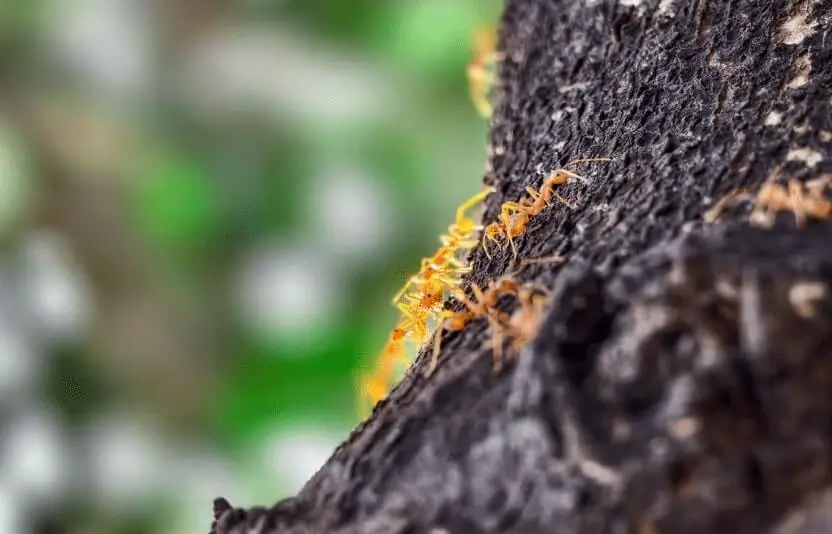
Ants in fruit tree containers may seem harmless at first, but they can quickly become a serious nuisance for home gardeners. These tiny insects are often attracted to potted fruit trees due to moisture, food sources, and the presence of other pests like aphids. While ants don’t usually damage plants directly, they can protect harmful insects and disrupt the overall health of your container-grown trees. Understanding why ants appear, the problems they cause, and how to control them effectively is essential for maintaining thriving, productive fruit trees in pots.
Why Ants in Fruit Tree Containers Matter for Small-Space Gardening
Ants are not just wandering visitors in container gardens. When you see consistent ant activity on a potted fruit tree, it usually means something is wrong.
Ants and Their Hidden Partners
Ants are attracted to honeydew, a sticky substance produced by pests like aphids, scale insects, and mealybugs. In exchange for honeydew, ants protect these pests from predators, helping infestations spread faster.
This is especially problematic in containers because:
- Pests multiply quickly in confined spaces
- Natural predators are limited on balconies and patios
- Stress spreads faster from roots to canopy
If you’ve already dealt with aphids on potted fruit trees or noticed sticky leaves, ants are likely making the problem worse.
Direct Damage to Potted Fruit Trees
While ants rarely eat leaves or fruit directly, they can:
- Nest inside containers, disturbing roots
- Increase soil dryness through tunneling
- Farm pests that weaken new growth and flowers
In small-space fruit gardening, every stress factor matters. Managing ants early protects both plant health and harvest quality.
Common Reasons Ants Appear in Fruit Tree Containers
Understanding why ants are present is key to removing them permanently.
1. Sap-Sucking Insects (The #1 Cause)
Ants are almost always a symptom, not the root problem. Check for:
- Aphids clustered on new shoots
- Scale insects on stems and branches
- Mealybugs in leaf joints
If ants are present, inspect closely—or review how to control scale insects on fruit trees to break the ant–pest cycle.
2. Sweet Residues and Fallen Fruit
Overripe fruit, spilled compost tea, or sugary fertilizers attract ants. Containers concentrate these smells more than garden soil.
3. Dry, Compact Soil
Ants prefer dry conditions. Containers that dry out between watering become ideal nesting spots—especially lightweight plastic pots.
4. Warm Pot Materials
Black plastic or thin containers heat up quickly, creating a perfect microclimate for ant colonies.
How to Get Rid of Ants in Fruit Tree Containers (Step-by-Step)
Step 1: Eliminate the Real Attraction
Before targeting ants directly, remove what’s drawing them:
- Rinse leaves with water to remove honeydew
- Treat sap-sucking pests using neem oil or insecticidal soap
- Prune heavily infested shoots
If pests persist, check your soil health—fungus-related issues like fungus gnats in container soil often coexist with ant activity.
Step 2: Block Ant Access to the Tree
Ants usually climb up from the ground.
Effective barriers include:
- Sticky bands around the trunk (above soil level)
- Petroleum jelly applied on a wrap (not directly on bark)
- Double-sided tape with a paper backing
These stop ants without harming beneficial insects.
Step 3: Treat the Container and Soil
For ants nesting in pots:
- Sprinkle food-grade diatomaceous earth on dry soil surfaces
- Lightly dust container edges and drainage holes
- Reapply after watering
Avoid soaking soil immediately—DE only works when dry.
Step 4: Use Natural Ant Repellents
Safe, beginner-friendly options:
- Cinnamon powder on soil surface
- Citrus peel tea poured around the pot (not the trunk)
- Coffee grounds mixed into the topsoil layer
These repel ants without harming roots or microbes.
Step 5: Adjust Watering Practices
Ants hate moist environments.
- Water deeply and evenly
- Avoid letting containers dry completely
- Use mulch (pine bark, coco coir) to stabilize moisture
Consistent moisture discourages ants and supports healthy roots.
Preventing Ants Long-Term in Container Fruit Gardening
Choose the Right Container Setup
- Use heavier pots (ceramic or thick resin)
- Elevate containers on pot feet to improve airflow
- Ensure multiple drainage holes
Self-watering containers can help maintain consistent moisture—but inspect regularly.
Maintain Pest-Free Growth
Ant prevention starts with pest control. Regularly inspect leaves, especially undersides. If you’ve battled mites before, revisit strategies for spider mites on fruit trees to avoid repeat issues.
Encourage Natural Balance
- Avoid over-fertilizing with high-nitrogen feeds
- Prune lightly to improve airflow
- Rinse foliage monthly to remove residue buildup
Healthy plants are less attractive to both pests and ants.
Common Mistakes Beginners Make with Ants in Fruit Tree Containers
Using Chemical Ant Killers
Many commercial ant products:
- Harm beneficial soil microbes
- Stress root systems
- Leave residues on edible fruit
Natural methods work better—and safer—in containers.
Ignoring the Pest-Ant Connection
Killing ants without treating aphids or scale guarantees they’ll return.
Letting Soil Go Bone-Dry
Dry soil invites ants and weakens fine feeder roots.
Treating Only Once
Ant control requires consistency. Barriers, repellents, and inspections must be maintained for lasting results.
Tools, Soil, and Care Tips That Help Prevent Ants
Helpful tools & materials:
- Neem oil spray (preventive + treatment)
- Food-grade diatomaceous earth
- Sticky barrier tape
- Mulch suitable for containers
Soil tips:
- Use well-aerated, organic potting mixes
- Avoid compacted garden soil in pots
- Refresh topsoil annually
Care routine:
- Weekly leaf inspection
- Monthly foliage rinse
- Seasonal pruning and soil refresh
These habits reduce stress—and stressed trees attract pests and ants.
Frequently Asked Questions About Ants in Fruit Tree Containers
Why do ants keep coming back to my potted fruit tree?
Because the underlying cause—usually sap-sucking pests or dry soil—hasn’t been fully addressed. Remove pests and stabilize moisture to stop repeat visits.
Are ants harmful to fruit trees in pots?
Indirectly, yes. Ants protect pests that weaken growth, reduce flowering, and lower fruit production.
Can I use vinegar to kill ants in containers?
Avoid vinegar in pots. It can damage roots and beneficial microbes. Use diatomaceous earth or barriers instead.
Do ants mean my fruit tree is unhealthy?
Often, yes. Ants usually indicate pest pressure or environmental stress, not a healthy balance.
Will ants damage fruit directly?
Rarely—but they increase pest damage, which affects fruit size, sweetness, and yield.
Conclusion: Take Control of Ants and Protect Your Potted Fruit Trees
Ants in fruit tree containers are a warning sign—but also an opportunity. By identifying the real cause, improving container care, and using natural, proven solutions, you can stop ants without harming your plants or harvest.
Start today by inspecting leaves, removing pests, and blocking ant access. Maintain even moisture, avoid sugary residues, and stay consistent with preventive care. With these steps, your container fruit trees will stay healthier, more productive, and ant-free—season after season.