
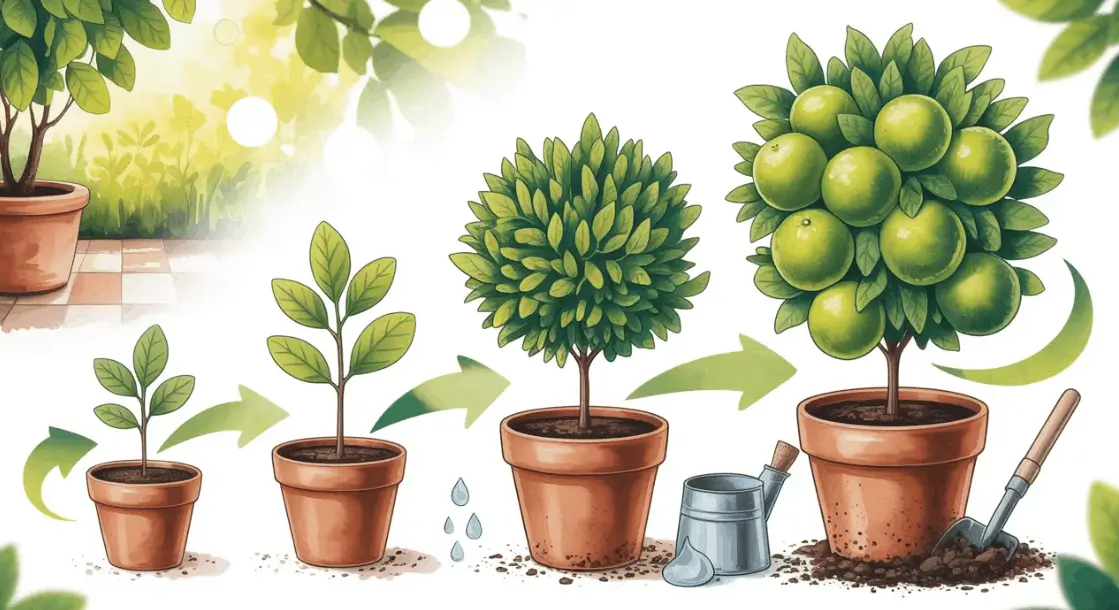
Imagine picking fresh limes straight from your own plant at home. Growing a lime tree in a pot makes this possible, even in small spaces. This simple method is ideal for beginners who want to start container gardening and enjoy fresh fruit.
The challenge most beginners face is not knowing how to adapt traditional gardening methods to containers. Lime trees have specific needs, and when those aren’t met in a pot, growth slows, leaves yellow, or fruit never appears.
This guide will walk you step-by-step through everything you need to know—from choosing the right pot to harvesting healthy limes—so you can grow a thriving lime tree even in a small space.
Why Grow a Lime Tree in a Pot?
Growing a lime tree in a container is ideal for small-space gardeners because it gives you full control over the environment.
Key Benefits:
- Perfect for balconies and patios
- Moveable (you can adjust sunlight exposure easily)
- Better control over soil and watering
- Easier pest management
- Works in colder climates (you can bring it indoors)
If you’ve struggled with outdoor fruit trees before, container growing is often much easier to manage.
Choosing the Right Lime Tree Variety
Not all lime trees grow well in pots. The key is to choose dwarf or compact varieties that adapt to container life.
Best Lime Trees for Pots:
- Dwarf Key Lime (Mexican Lime) – compact and very productive
- Bearss Lime (Persian Lime) – slightly larger but manageable in containers
- Kaffir Lime – great for leaves (used in cooking) and grows well in pots
👉 If you’re a beginner, start with a dwarf Key Lime—it’s the easiest to manage and fruits earlier.
Picking the Right Pot (Critical for Success)
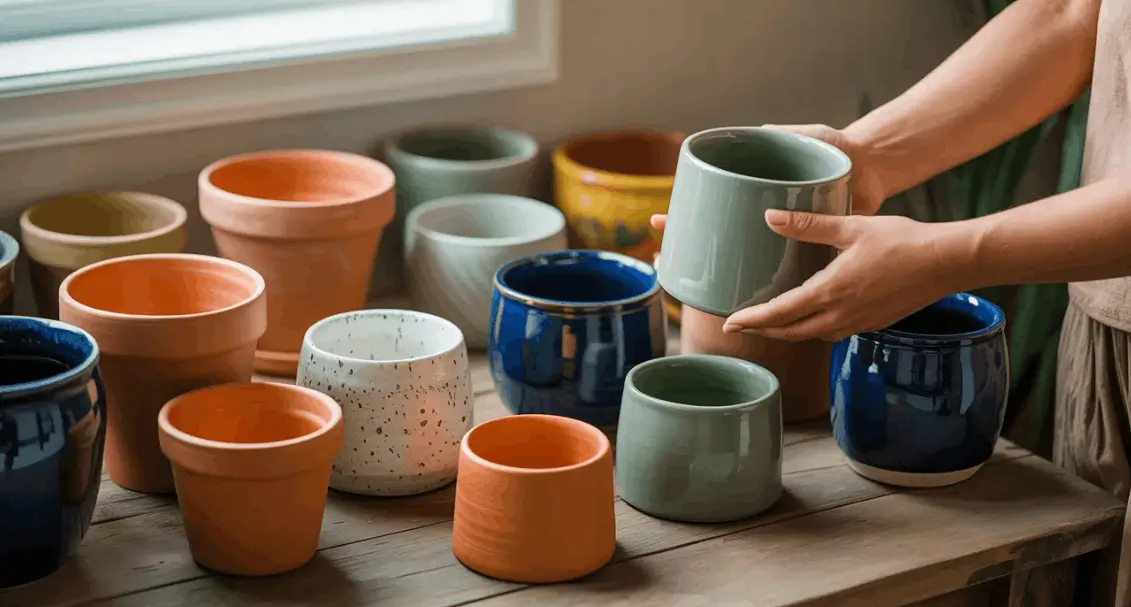
The pot you choose directly affects your tree’s health.
Ideal Pot Size:
- Start with 12–16 inches (30–40 cm) wide
- Upgrade to 18–24 inches (45–60 cm) as the tree grows
Must-Have Features:
- Drainage holes (non-negotiable)
- Deep enough for root growth
- Stable (to prevent tipping)
Best Materials:
- Terracotta: breathable but dries faster
- Plastic: retains moisture longer
- Fabric pots: excellent drainage and root health
👉 Tip: Always place a saucer underneath, but don’t let water sit in it.
The Best Soil for Lime Trees in Containers
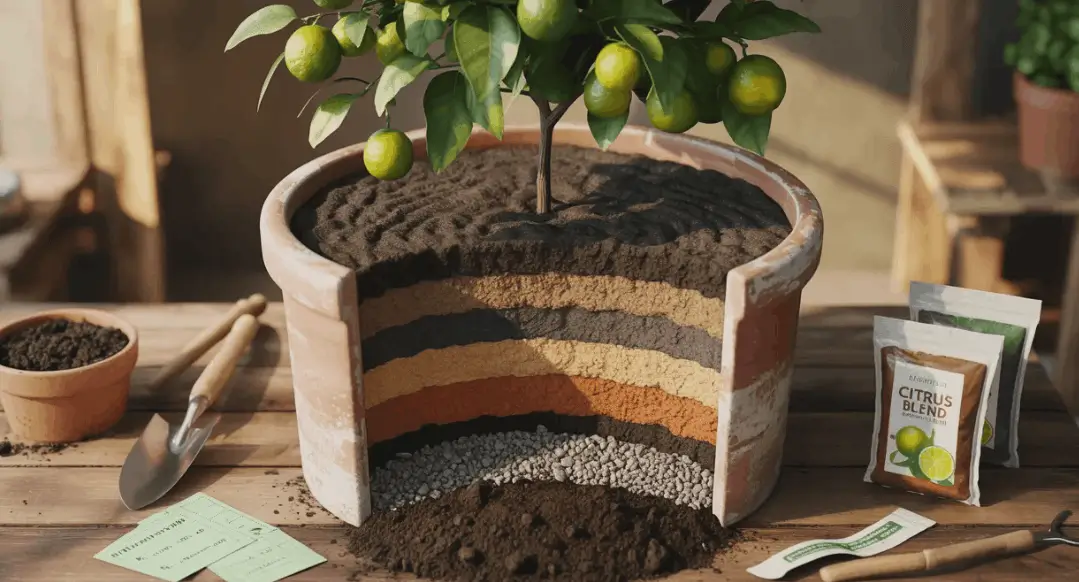
Regular garden soil won’t work in pots—it becomes compacted and suffocates roots.
Ideal Soil Mix:
Use a well-draining citrus potting mix or create your own:
- 50% high-quality potting soil
- 25% perlite or sand (for drainage)
- 25% compost or organic matter
What You’re Aiming For:
- Light and airy texture
- Fast drainage
- Slightly acidic pH (around 6–7)
👉 If water stays on top of the soil for more than a few seconds, it’s too dense.
How Much Sunlight Does a Lime Tree Need?
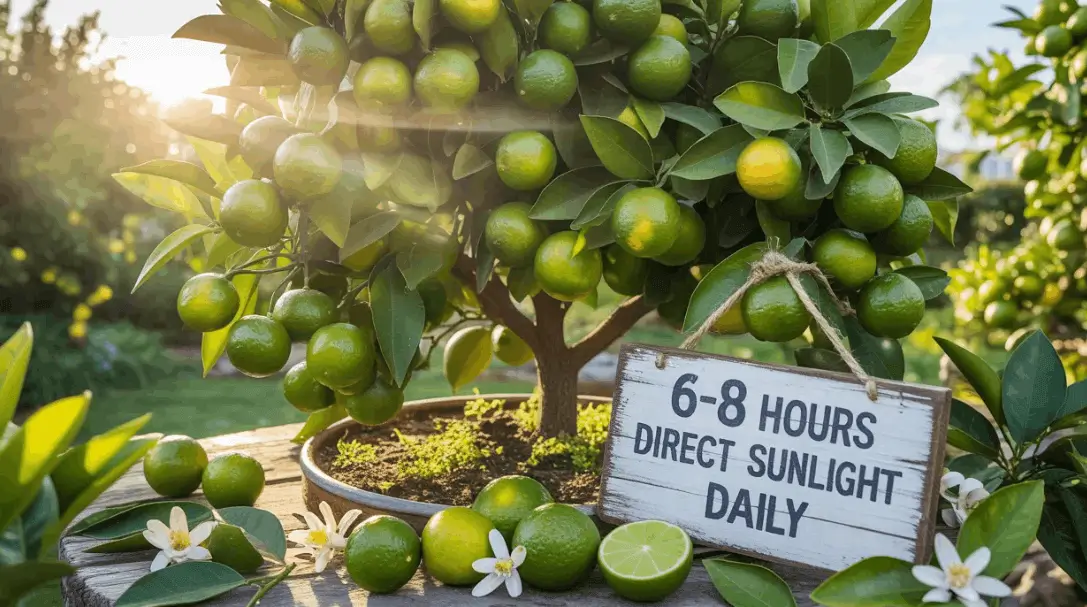
Lime trees LOVE sunlight—and this is where many beginners go wrong.
Sunlight Requirements:
- 6–8 hours of direct sunlight daily
- South-facing spots are ideal
If You Grow Indoors:
- Place near the brightest window
- Rotate the pot weekly for even growth
👉 Without enough sunlight, your tree may:
- Drop leaves
- Stop growing
- Fail to produce fruit
Watering a Lime Tree in a Pot (The Right Way)
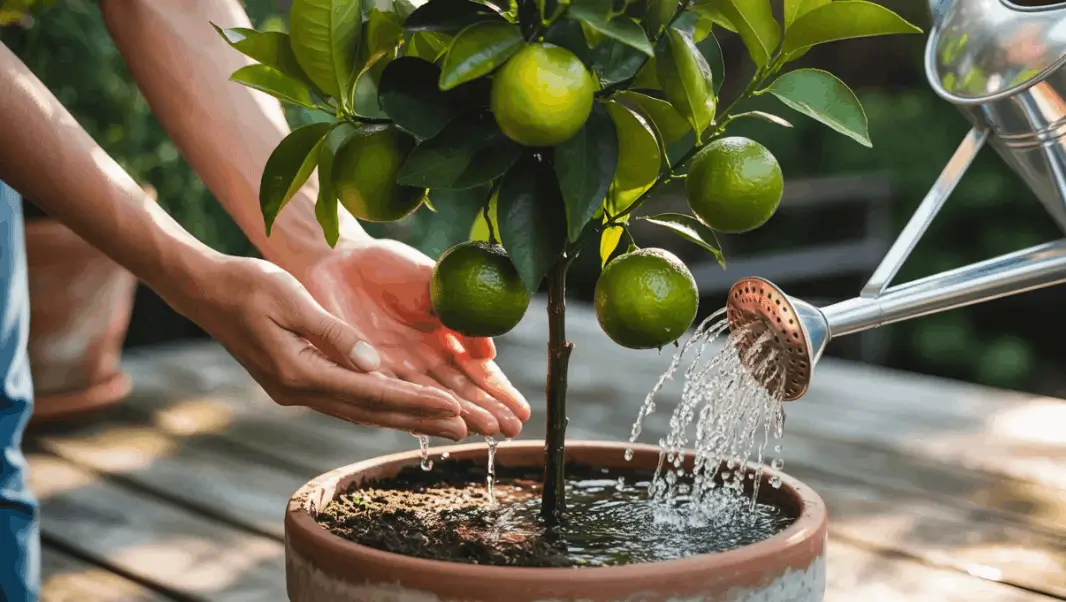
Watering is the #1 mistake beginners make.
Golden Rule:
Water deeply, but not too often.
How to Water Properly:
- Water until it drains from the bottom
- Wait until the top 2–3 cm of soil is dry before watering again
Signs of Overwatering:
- Yellow leaves
- Mushy soil
- Root rot smell
Signs of Underwatering:
- Dry, curling leaves
- Soil pulling away from pot edges
👉 Tip: Stick your finger in the soil—this simple test is very reliable.
Fertilizing Your Lime Tree for Healthy Growth
Container trees rely on you for nutrients—they can’t “search” for them like in the ground.
What to Use:
- Citrus-specific fertilizer
- Balanced fertilizer (like 10-10-10)
Feeding Schedule:
- Every 2–4 weeks during growing season (spring & summer)
- Reduce feeding in fall
- Stop or minimize in winter
Key Nutrients:
- Nitrogen (leaf growth)
- Potassium (fruit development)
- Magnesium (prevents yellow leaves)
👉 If leaves turn yellow but veins stay green, your tree may need magnesium.
Pruning and Shaping Your Lime Tree
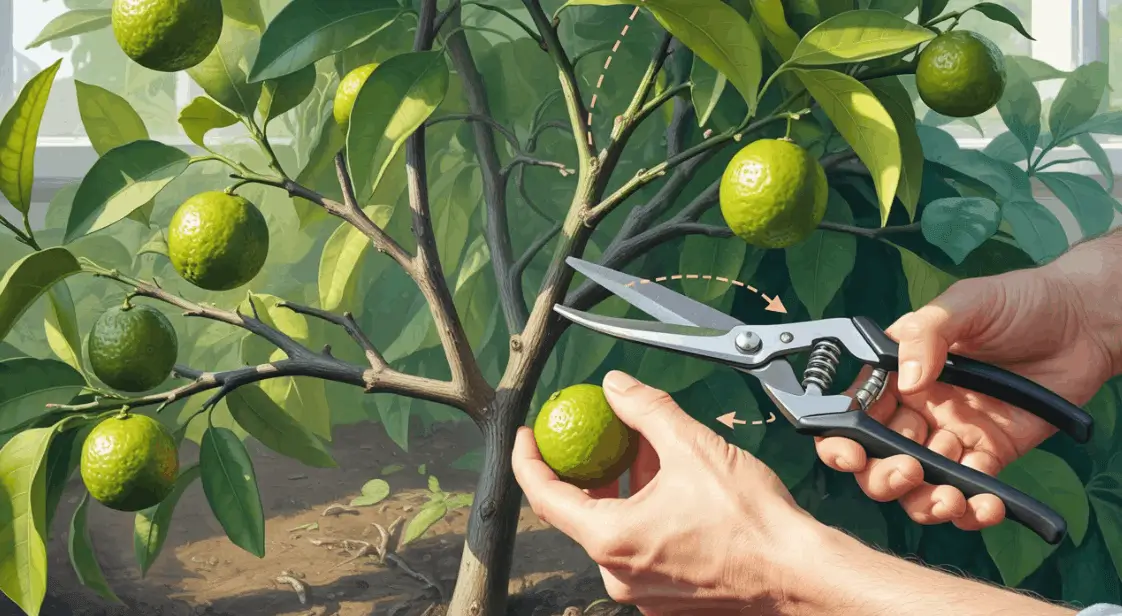
Pruning keeps your tree compact and productive.
When to Prune:
- Early spring or after fruiting
What to Remove:
- Dead or weak branches
- Crossing branches
- Excess growth that makes the tree too tall
Benefits:
- Better airflow
- More sunlight penetration
- Improved fruit production
👉 Keep your tree small and manageable—it’s easier to care for.
Common Problems (And How to Fix Them)
1. Yellow Leaves
Causes:
- Overwatering
- Nutrient deficiency
Solution:
- Adjust watering
- Add fertilizer or magnesium
2. No Fruit Production
Causes:
- Not enough sunlight
- Tree too young
- Lack of nutrients
Solution:
- Increase sun exposure
- Be patient (some trees take 1–2 years)
- Fertilize regularly
3. Pests (Aphids, Spider Mites)
Signs:
- Sticky leaves
- Tiny insects
- Webbing
Solution:
- Spray with water + mild soap
- Wipe leaves regularly
4. Leaf Drop
Causes:
- Sudden temperature change
- Stress (moving location)
Solution:
- Keep conditions stable
- Avoid frequent repositioning
When and How to Repot Your Lime Tree
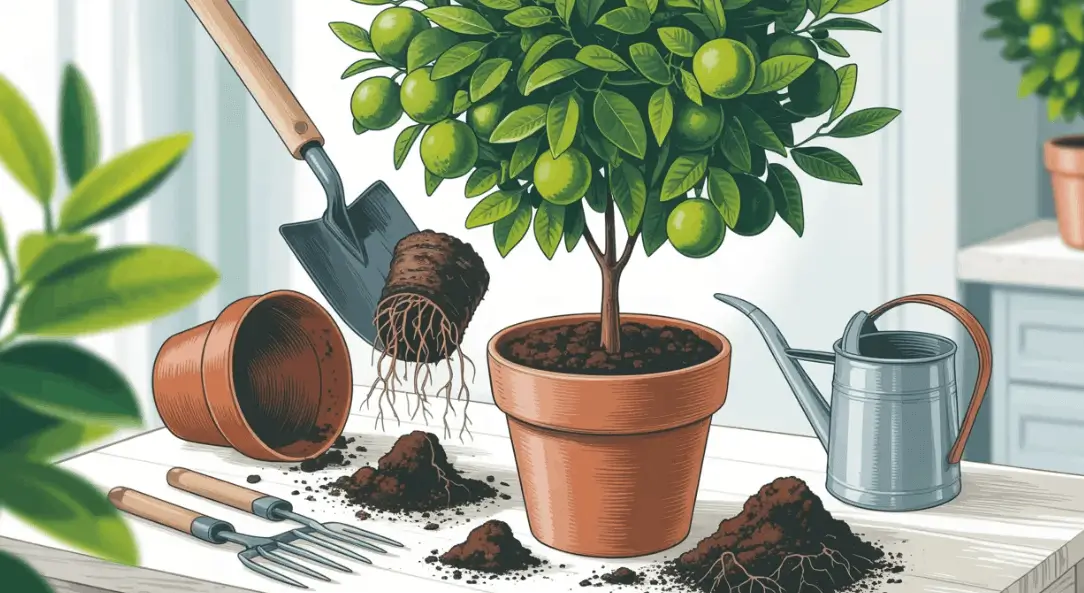
Your tree will outgrow its pot over time.
Signs It Needs Repotting:
- Roots coming out of drainage holes
- Soil dries too fast
- Growth slows down
How to Repot:
- Choose a pot 2–4 inches larger
- Gently remove the tree
- Loosen roots slightly
- Add fresh soil and replant
👉 Best time: Spring (active growth period)
Growing Lime Trees Indoors vs Outdoors
Outdoors:
- Best growth and fruiting
- Needs warm temperatures
Indoors:
- Requires strong sunlight
- Slower growth
- May need humidity support
👉 If temperatures drop below 10°C (50°F), bring your tree indoors.
How Long Does It Take to Get Limes?
Patience is key.
Timeline:
- Grafted trees: 1–2 years
- Seed-grown trees: 3–5+ years
Fruit Ripening:
- Limes are usually ready when:
- Slightly soft
- Bright green (or slightly yellow depending on variety)
Simple Beginner Mistakes to Avoid
- Using pots without drainage holes
- Overwatering “just to be safe”
- Keeping the tree in low light
- Forgetting to fertilize
- Using heavy garden soil
Avoid these, and you’re already ahead of most beginners.
Final Thoughts: Grow Your Own Limes Successfully
Growing a lime tree in a pot is one of the most rewarding things you can do in a small space. It’s not just about fruit—it’s about having a living, productive plant that adds beauty and freshness to your home.
Key Takeaways:
- Choose a dwarf lime variety
- Use a well-draining pot and soil
- Provide plenty of sunlight
- Water carefully (not too much, not too little)
- Feed regularly during the growing season
Start simple, stay consistent, and your lime tree will reward you with healthy growth—and eventually, fresh, homegrown limes.