
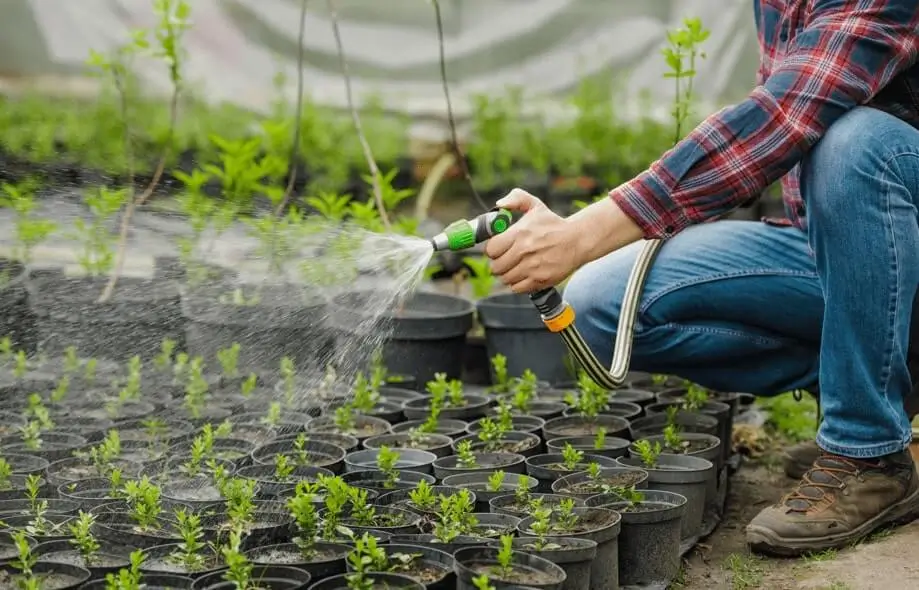
Watering large container fruit trees correctly is one of the most important skills every container gardener must master. Unlike trees planted in the ground, container-grown fruit trees depend entirely on you for consistent moisture. Too little water can lead to stress and poor fruit production, while too much can cause root rot and serious damage. In this complete beginner’s guide, you’ll learn exactly how to water large container fruit trees properly, avoid common mistakes, and keep your trees healthy, productive, and thriving all season long.
Why Proper Watering Matters for Large Container Fruit Trees
Large container fruit trees depend entirely on you for water. Unlike trees planted in the ground, they can’t send roots deeper in search of moisture. Once the pot dries out, the tree feels it immediately.
Correct watering directly affects:
- Root health – Roots need oxygen as well as moisture
- Fruit size and quality – Inconsistent watering causes fruit drop and cracking
- Leaf health – Wilting, yellowing, or leaf burn often start with watering issues
- Long-term productivity – Chronic stress reduces yields year after year
If you’ve ever wondered why a healthy-looking tree suddenly drops fruit or struggles in summer, the answer is often hidden in your watering routine. Understanding how water behaves in large containers is the foundation of success.
What Counts as a “Large” Container for Fruit Trees?
Before discussing watering schedules, it’s important to define what “large container” means in fruit gardening.
Generally, a large container is:
- 20–30 gallons (75–115 liters) for dwarf fruit trees
- 30–50+ gallons (115–190+ liters) for semi-dwarf varieties
Larger containers hold more soil, which means:
- Slower drying compared to small pots
- Deeper root systems
- Less frequent—but deeper—watering
However, large does not mean “low maintenance.” These containers still dry faster than ground soil, especially in warm, windy, or sunny conditions.
Key Factors That Affect Watering Large Container Fruit Trees
There is no single watering schedule that works for every tree. Instead, watering depends on several interacting factors.
1. Container Size and Material
- Plastic or resin pots retain moisture longer
- Terracotta and fabric pots dry out faster
- Taller containers dry slower than wide, shallow ones
Larger volumes buffer against rapid drying—but once dry, they require a lot more water to rehydrate fully.
2. Soil Mix Quality
A well-draining soil mix is critical. Heavy garden soil compacts in containers and holds water too long.
A good container fruit tree mix should:
- Drain freely
- Hold moisture without staying soggy
- Contain organic matter for water retention
If you want to learn how to assess moisture properly, see this guide on checking soil moisture for potted fruit trees to avoid guessing.
3. Tree Size and Growth Stage
- Young trees use less water
- Fruiting trees need more consistent moisture
- Leaf-heavy growth increases water demand
During flowering and fruit development, even short dry periods can reduce yields.
4. Weather and Exposure
- Hot, sunny balconies increase evaporation
- Wind strips moisture from leaves and soil
- Rain rarely penetrates dense canopies fully
In exposed locations, you may need to water more often—even with large containers.
Step-by-Step: How to Water Large Container Fruit Trees Correctly
This simple method works for most beginners and helps prevent both under- and overwatering.
Step 1: Check Moisture Before Watering
Never water on a fixed schedule alone.
Use one of these methods:
- Finger test: Insert your finger 2–3 inches into the soil
- Wooden stick: If it comes out damp, wait
- Moisture meter (optional for beginners)
If the top layer is dry but the root zone is still moist, wait another day.
Step 2: Water Slowly and Deeply
When you water, do it thoroughly.
- Pour water slowly over the soil surface
- Allow water to soak in before adding more
- Continue until water flows from drainage holes
This ensures the entire root ball is hydrated, not just the surface.
Step 3: Empty Saucers After Watering
Standing water suffocates roots.
Always:
- Let excess water drain completely
- Empty trays or saucers after 10–15 minutes
Consistently wet feet are a common cause of root rot in container fruit trees.
Step 4: Adjust Frequency, Not Volume
For large containers:
- Water less often, but deeply each time
- Increase frequency during heat waves
- Reduce frequency during cool or cloudy periods
If you’re unsure how much water a tree really needs, this guide on how much water fruit trees need in containers explains it in detail.
Seasonal Watering Guide for Large Container Fruit Trees
Spring: Steady and Moderate
- New growth increases water demand
- Soil dries faster as temperatures rise
- Water when the top few inches dry
Avoid soaking cold soil—roots are still waking up.
Summer: High Demand, High Risk
- Expect watering every 1–3 days in hot weather
- Early morning watering is best
- Mulch the surface to reduce evaporation
During extreme heat, you may need to water daily—even for very large pots. For seasonal adjustments, see this detailed guide on watering fruit trees in summer.
Autumn: Gradual Reduction
- Growth slows
- Evaporation decreases
- Reduce frequency but don’t let soil dry completely
Consistent moisture helps trees prepare for dormancy.
Winter: Minimal but Essential
- Trees still need some water
- Overwatering is more dangerous than underwatering
- Water only when soil is mostly dry
For cold months, follow this guide on watering fruit trees in winter to avoid root damage.
Common Watering Mistakes Beginners Make
Watering Too Often “Just in Case”
Constantly damp soil leads to:
- Root rot
- Fungal disease
- Weak, shallow roots
Large containers should dry slightly between waterings.
Only Wetting the Surface
A quick splash does more harm than good.
- Encourages shallow roots
- Leaves deep roots dry
- Causes stress during heat
Always water deeply.
Ignoring Drainage Problems
Even perfect watering fails if:
- Drainage holes are blocked
- Soil is compacted
- Containers sit in standing water
If your tree shows stress signs, review these signs of underwatering in fruit trees—many look similar to overwatering symptoms.
Using the Same Routine All Year
Seasonal changes matter. A summer schedule can kill a tree in winter.
Helpful Tools and Techniques for Easier Watering
Mulching Large Containers
A 2–3 inch layer of:
- Bark chips
- Straw
- Coconut coir
reduces evaporation and stabilizes soil moisture.
Drip Irrigation for Containers
Drip systems are ideal for balconies and patios.
Benefits:
- Slow, consistent watering
- Less waste
- Reduced stress during hot weather
If space is limited, explore drip irrigation solutions for balconies designed for container fruit trees.
Self-Watering Systems (Use Carefully)
Self-watering containers can help but must:
- Have excellent drainage
- Be monitored closely
- Match tree size
Learn when they work—and when they don’t—in this guide to self-watering systems for container fruit trees.
FAQ: Watering Large Container Fruit Trees
How often should I water a large potted fruit tree?
There is no fixed schedule. Most large containers need watering every 2–5 days in warm weather and much less in cool seasons. Always check soil moisture first.
Can I overwater a fruit tree in a large container?
Yes. Size doesn’t prevent overwatering. Poor drainage and constant wet soil can kill roots even in very large pots.
Should I water until water runs out the bottom?
Yes. This ensures the entire root zone is hydrated and helps flush excess salts from the soil.
Is morning or evening watering better?
Morning is best. It reduces evaporation and lowers disease risk compared to evening watering.
Do fruit trees need more water when fruiting?
Yes. Inconsistent watering during fruit development can cause fruit drop, cracking, or poor flavor.
Conclusion: A Simple System for Watering Success
Watering large container fruit trees doesn’t need to be complicated—but it does need to be intentional. Focus on deep watering, good drainage, and seasonal adjustments, and your trees will reward you with healthy growth and reliable harvests.
Your next steps:
- Check your container drainage today
- Test soil moisture before your next watering
- Adjust frequency based on weather, not habit
- Add mulch to reduce water stress
With the right approach, even beginners can master watering and enjoy thriving fruit trees—no garden required.