
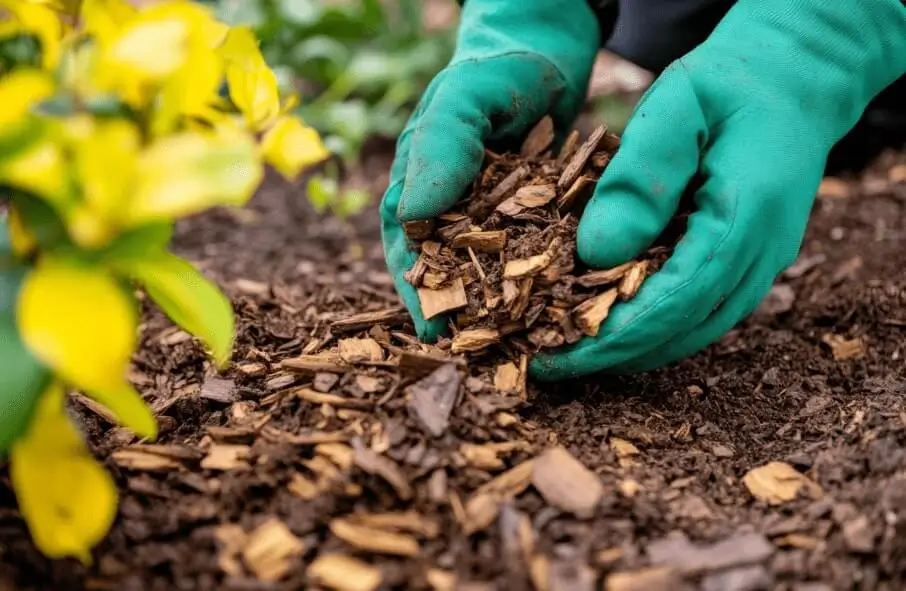
Water conservation is one of the biggest challenges in container fruit gardening, especially during hot weather and dry seasons. Containers dry out much faster than garden soil, causing fruit trees and plants to lose moisture quickly. One of the easiest and most effective ways to reduce watering frequency is by using mulch. Mulching helps retain soil moisture, regulate temperature, and keep fruit plants healthier with less effort. In this beginner-friendly guide, you’ll learn how mulching works, the best mulch types for container fruit plants, and smart strategies to save water while improving plant growth.
Why Mulching Matters for Container Fruit Gardening
Container fruit gardening has unique challenges that make mulching especially important.
Containers Lose Water Faster Than the Ground
Unlike in-ground soil, containers:
- Have limited soil volume
- Heat up quickly in the sun
- Are exposed on all sides to air and wind
This leads to rapid evaporation—sometimes within hours on hot days. Mulch acts like a protective blanket, slowing evaporation and keeping moisture where roots can use it.
Mulching to Reduce Watering Improves Root Health
Fruit trees and plants prefer even moisture, not cycles of soaking and drying. Mulch helps by:
- Reducing moisture fluctuations
- Preventing fine feeder roots from drying out
- Lowering soil temperature during heat waves
Healthier roots mean better nutrient uptake, stronger growth, and improved fruiting.
A Key Companion to Smart Watering Practices
Mulching works best alongside proper watering techniques. If you’re learning how much water containers actually need, combining mulch with proper watering depth and frequency for fruit trees helps you avoid both underwatering and waste.
Bonus Benefits Beyond Water Savings
Mulching also:
- Suppresses weeds that compete for water
- Protects soil structure from compaction
- Improves soil health over time (with organic mulches)
- Keeps containers cleaner by reducing soil splash
Mulching to Reduce Watering: How It Works (The Science, Simply Explained)
Understanding why mulch works helps you use it correctly.
Evaporation Control
Bare soil loses water when heat and airflow pull moisture from the surface. Mulch:
- Shades the soil
- Breaks airflow across the surface
- Slows heat transfer
Result: Less evaporation, longer-lasting moisture.
Temperature Regulation
Dark pots can overheat quickly. Mulch buffers soil temperature by:
- Insulating roots during hot days
- Reducing nighttime temperature swings
This is especially valuable for citrus, figs, berries, and dwarf fruit trees in containers.
Improved Water Penetration
Mulched soil absorbs water more evenly. Instead of running off or evaporating immediately, water:
- Soaks deeper
- Reaches more of the root zone
- Stays available longer
If you’re experimenting with self-watering containers for fruit plants, mulch dramatically improves their efficiency.
Step-by-Step: How to Mulch Container Fruit Plants Correctly
Step 1: Choose the Right Mulch for Containers
Not all mulch is equal—especially in pots.
Best organic mulches for container fruit gardening:
- Straw or hay (seed-free)
- Shredded bark or pine bark fines
- Coconut coir or husk chips
- Wood chips (small-sized, aged)
- Leaf mold or chopped dry leaves
Mulches to avoid in containers:
- Large wood chunks (hold too much moisture)
- Fresh sawdust (ties up nitrogen)
- Plastic sheeting (traps heat and blocks airflow)
Step 2: Water Thoroughly First
Always mulch after watering deeply. Moist soil beneath mulch:
- Locks in hydration
- Prevents dry pockets
- Allows roots to benefit immediately
This pairs perfectly with deep watering techniques for container fruit trees, ensuring water reaches the full root zone.
Step 3: Apply the Correct Mulch Depth
For containers, more is not always better.
Ideal mulch depth:
- Small pots (under 10 gallons): 1–2 inches
- Medium to large pots (10–25+ gallons): 2–3 inches
Keep mulch:
- 1–2 inches away from the trunk or stem
- Loose, not compacted
Step 4: Maintain and Refresh
Organic mulch breaks down over time (a good thing!). Refresh:
- Every 2–3 months in warm seasons
- When mulch thins or soil becomes visible
Decomposing mulch feeds soil microbes and improves long-term soil structure.
Best Mulch Types for Popular Container Fruit Plants
Citrus Trees (Lemon, Orange, Lime)
- Best mulch: Pine bark, coconut husk
- Benefit: Excellent moisture control without soggy soil
Berries (Strawberries, Blueberries, Raspberries)
- Best mulch: Straw, pine needles, leaf mold
- Benefit: Cool roots and reduced watering during fruiting
Figs, Pomegranates, Stone Fruits
- Best mulch: Wood chips, shredded bark
- Benefit: Stable moisture during hot weather
Tropical & Subtropical Fruits
- Best mulch: Coir, chopped leaves
- Benefit: Prevents rapid drying in warm climates
Common Mistakes Beginners Make When Mulching Containers
1. Mulching Dry Soil
Applying mulch on dry soil traps dryness inside. Always water first.
2. Mulch Piled Against the Trunk
This can cause:
- Stem rot
- Fungal diseases
- Pest issues
Keep a clear gap around the stem.
3. Using the Wrong Mulch Material
Heavy or water-retentive mulches can cause root rot—especially if combined with poor drainage. If drainage is a concern, review how to prevent root rot in container fruit trees before mulching.
4. Ignoring Climate and Season
- Hot climates: Mulch thicker and lighter-colored
- Cool seasons: Reduce depth slightly to avoid overly wet soil
5. Thinking Mulch Replaces Watering Entirely
Mulching to reduce watering does not mean eliminating watering—it means watering less often, but more effectively.
Tools, Soil, and Container Tips That Maximize Mulch Benefits
Choose the Right Pot Size
Larger containers:
- Hold moisture longer
- Work better with mulch
- Reduce watering frequency naturally
Use Well-Draining Potting Mix
Mulch works best with a balanced mix:
- Good water retention
- Excellent drainage
Avoid garden soil in pots—it compacts and holds water unevenly.
Combine Mulch with Smart Irrigation
Mulch enhances:
- Drip irrigation systems
- Watering spikes
- Self-watering reservoirs
Together, they form a low-effort, water-efficient system ideal for balconies and small spaces.
FAQ: Mulching to Reduce Watering in Container Fruit Gardening
Does mulching really reduce how often I need to water?
Yes. Proper mulching can reduce watering frequency by 30–50%, depending on climate, container size, and plant type.
Can I use compost as mulch in containers?
Yes, but apply it thinly (1 inch). Compost is nutrient-rich but can hold excess moisture if applied too thick.
Is inorganic mulch better than organic mulch?
For containers, organic mulch is usually better because it improves soil health. Inorganic mulch may reflect heat but doesn’t benefit the soil.
Should I remove old mulch before adding new mulch?
Not always. If the old mulch is decomposing and mold-free, you can top it up. Remove compacted or moldy layers first.
Can mulch cause pests in containers?
Rarely, if applied correctly. Avoid overly wet mulch and keep it away from stems to prevent pest attraction.
Do indoor container fruit plants need mulch?
Yes—especially near windows where soil dries quickly. Use finer mulch like coir or leaf mold.
Conclusion: Make Mulching Your Secret Weapon for Easier Watering
Mulching to reduce watering is one of the simplest, most effective upgrades you can make in container fruit gardening. With the right materials and proper technique, mulch helps you conserve water, protect roots, and maintain healthier plants—without adding complexity to your routine.
Start today by choosing a suitable mulch, watering deeply, and applying a proper layer to your containers. Combine this practice with smart watering habits and good drainage, and you’ll enjoy stronger growth, better fruiting, and fewer daily watering chores.
Less stress for you, less stress for your plants—and more time to enjoy the fruits of your garden. 🌱🍓