
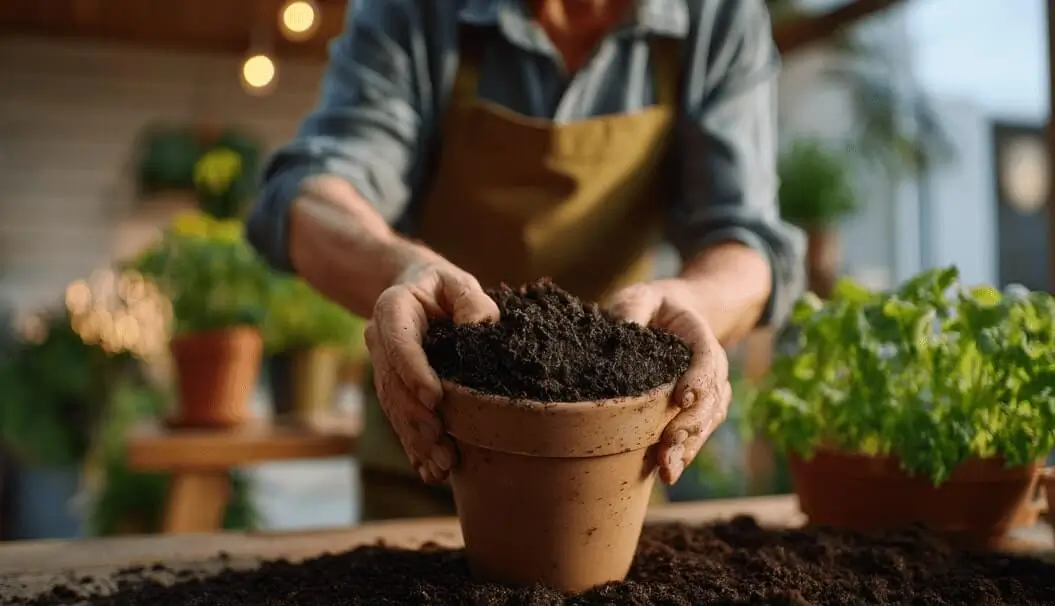
Old potting soil doesn’t always need to be thrown away. In many cases, you can refresh and reuse it to grow healthier container fruit plants while saving money and reducing waste. Over time, potting soil loses nutrients, becomes compacted, and may hold water poorly, making it harder for fruit plants to thrive. By restoring structure, nutrients, and drainage, you can bring tired soil back to life and keep your container garden productive season after season.
Why Refreshing Old Potting Soil Matters for Container Fruit Gardening
Container fruit plants rely entirely on the soil inside the pot. Unlike garden beds, they can’t access nutrients or beneficial microbes beyond that limited space. When soil degrades, fruit production and root health suffer quickly.
Old potting soil typically faces four main issues:
- Nutrient depletion after a full growing season
- Poor drainage and compaction that suffocates roots
- Salt buildup from fertilizers and hard water
- Loss of beneficial microorganisms
Refreshing soil restores balance—improving aeration, nutrient availability, and water retention. This is especially important for fruit trees and shrubs grown in pots, which need consistent nutrition over multiple seasons.
If you’re already familiar with building the best soil for fruit in pots, refreshing old soil uses the same principles—just applied to what you already have.
Can You Reuse Old Potting Soil Safely?
Yes—as long as the soil isn’t diseased or heavily infested with pests.
You should discard old potting soil if:
- Plants died from fungal or bacterial diseases.
- You see persistent root rot, mould, or foul smells.
- The soil is full of insect larvae that won’t die off.
You can safely reuse and refresh soil if:
- Plants were generally healthy.
- Soil smells earthy, not sour.
- No visible pests or disease symptoms remain.
For fruit containers, refreshed soil works well for:
- Citrus trees
- Figs
- Strawberries
- Blueberries (with pH adjustments)
- Dwarf apple and peach trees
Step-by-Step: How to Refresh Old Potting Soil Properly
Step 1: Remove Old Roots and Debris
Start by emptying the containers into a large bin or onto a tarp.
- Break up clumps by hand.
- Remove old roots, stems, and leaves.
- Discard any thick, woody roots.
This prevents decaying material from stealing nitrogen from new plants.
Step 2: Loosen and Rebuild Soil Structure
Over time, potting soil becomes dense and compacted. To restore proper texture:
Add aeration materials such as:
- Perlite or pumice (20–30%)
- Coarse sand (small amounts)
- Coco coir for moisture balance
Good structure prevents the drainage problems many beginners face. If water tends to pool on the surface, revisit these drainage improvement techniques for containers to ensure roots stay oxygenated.
Step 3: Replenish Organic Matter and Nutrients
Old soil lacks nutrition. Refresh it with slow, natural inputs rather than relying only on synthetic fertilizers.
Best soil amendments:
- Finished compost (20–30%)
- Worm castings (10–15%)
- Aged leaf mould or well-rotted manure (small amounts)
Using worm castings for fruit trees in pots is especially effective—they boost microbial life and provide gentle, long-lasting nutrients without burning roots.
Step 4: Correct Nutrient Balance (NPK)
Even with compost, fruit plants need balanced nutrition.
Before planting:
- Mix in a slow-release organic fertilizer.
- Aim for balanced or fruit-specific NPK ratios.
Understanding nitrogen, phosphorus, and potassium helps you avoid overfeeding or deficiencies. Too much nitrogen leads to leafy growth with little fruit.
Step 5: Adjust Soil pH (Critical for Fruit Plants)
Old soil often drifts out of the optimal pH range.
Typical fruit preferences:
- Citrus & figs: slightly acidic to neutral
- Blueberries: acidic (pH 4.5–5.5)
- Apples & stone fruit: pH 6.0–6.8
Use a simple soil test kit and adjust accordingly. For long-term success, always target the best soil pH for fruit trees before replanting.
Optional: Sterilize Old Potting Soil (When Needed)
If you’re unsure about pests or pathogens:
- Solarize soil by sealing it in black plastic under full sun for 4–6 weeks.
- Avoid oven baking for large batches—it kills beneficial microbes.
After sterilization, always reintroduce compost or worm castings to restore life.
Common Mistakes Beginners Make When Refreshing Old Soil
1. Reusing Soil Without Amendments
Old soil alone is not enough—plants will starve.
2. Overloading Compost
Too much organic matter can lead to water retention and root rot.
3. Ignoring Salt Buildup
Flush soil with water before reuse to remove fertilizer salts.
4. Overfertilizing After Refreshing
Fresh compost already contains nutrients. Learn to spot the signs of overfertilizing fruit trees to avoid damage.
5. Forgetting Drainage Holes
Even perfect soil fails in containers without proper drainage.
Tools and Supplies You’ll Need
- Large mixing bin or tarp
- Hand gloves
- Perlite or pumice
- Compost or worm castings
- Soil pH test kit
- Slow-release organic fertilizer
Optional but helpful:
- Mesh screen for sifting
- Wheelbarrow for large batches
When Should You Refresh Potting Soil?
Best times:
- Early spring before planting
- Late winter for perennial fruit trees
- Between crop rotations
For long-term container plants, refresh at least the top third of soil every year, and fully refresh every 2–3 years.
FAQ: Refreshing Old Potting Soil
Can I reuse last year’s potting soil?
Yes, if plants were healthy. Refresh it with compost, aeration materials, and nutrients before reuse.
How many times can potting soil be reused?
With proper refreshing, soil can be reused for several seasons, especially for container fruit trees.
Should I mix new soil with old soil?
Yes. A 50/50 blend of refreshed old soil and new potting mix works well for sensitive plants.
Is it safe to reuse soil from vegetable pots for fruit trees?
Generally, yes, as long as no disease is present and nutrients are replenished.
Can I refresh soil without compost?
You can, but compost or worm castings significantly improve results and soil life.
Conclusion: Turn Old Soil into Productive Soil Again
Learning how to refresh old potting soil is one of the smartest skills for container fruit gardeners. Instead of wasting money and resources, you can rebuild soil structure, restore nutrients, and create a healthy environment for roots to thrive. By removing debris, improving aeration, adding organic matter, balancing nutrients, and correcting pH, old soil becomes better than new.
Next steps: Refresh your soil before the next planting cycle, monitor drainage and feeding closely, and adjust seasonally. Healthy soil is the foundation of juicy harvests—especially when growing fruit in pots and small spaces. 🍎🌱