
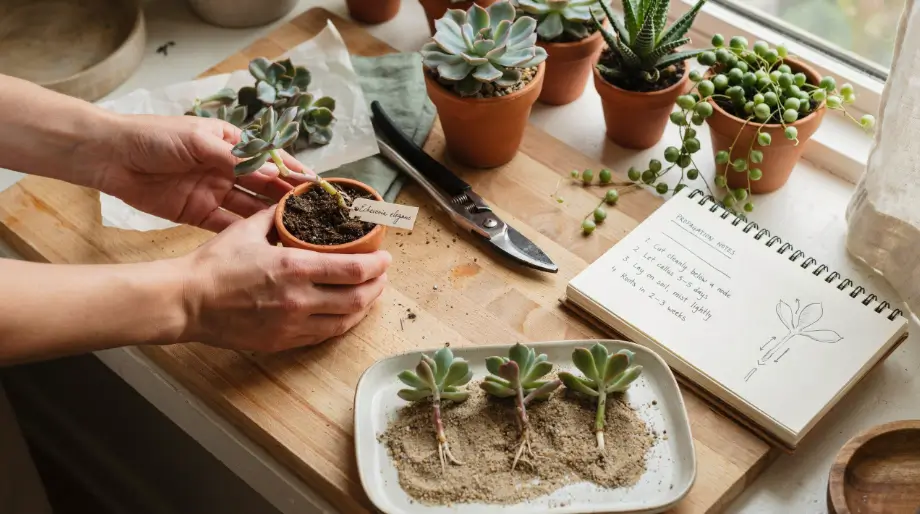
Succulents are among the easiest plants to multiply at home. Whether you want to expand your collection, replace damaged plants, or create more greenery for containers and small spaces, learning how to propagate succulents is a valuable gardening skill.
The best part is that most succulents can produce new plants from a single leaf, stem cutting, or offset. With a little patience and the right conditions, even beginners can successfully grow dozens of new plants from one healthy succulent.
In this guide, you’ll learn the most effective propagation methods, common mistakes to avoid, and practical tips for achieving high success rates.
What Does Succulent Propagation Mean?
Propagation is the process of creating new plants from an existing one.
Instead of growing succulents from seed, propagation allows gardeners to reproduce plants using:
- Leaves
- Stem cuttings
- Offsets (baby plants)
- Division
This method is faster, easier, and more reliable than growing from seeds.
Why Propagate Succulents?
Many gardeners choose propagation because it offers several benefits:
- Creates new plants for free
- Replaces damaged or leggy succulents
- Fills containers more quickly
- Helps save unhealthy plants
- Expands your collection without buying more plants
For small-space gardeners, propagation is an affordable way to grow a larger succulent display.
Best Time to Propagate Succulents
Most succulents propagate best during their active growing season.
Generally, the ideal times are:
- Spring
- Early summer
During these months, plants recover faster and develop roots more quickly.
Avoid propagating during:
- Winter dormancy
- Extended periods of cold weather
- Extremely hot summer conditions
Materials You’ll Need
Before getting started, gather the following:
- Healthy succulent plant
- Clean scissors or pruning shears
- Small containers or trays
- Well-draining succulent soil
- Spray bottle (optional)
- Gardening gloves
Using clean tools helps prevent disease and improves success rates.
Method 1: How to Propagate Succulents from Leaves
Leaf propagation is one of the most popular methods.
Many succulent varieties can produce roots and new plants from a single leaf.
Step 1: Choose a Healthy Leaf
Select a mature, healthy leaf from the lower part of the plant.
Look for leaves that are:
- Firm
- Plump
- Undamaged
- Disease-free
Avoid shriveled, broken, or yellowing leaves.
Step 2: Remove the Leaf Properly
Gently twist the leaf from the stem.
The entire leaf must detach cleanly.
If part of the leaf remains attached to the stem, successful propagation becomes less likely.
Step 3: Let the Leaf Callus
Place the leaf in a dry location away from direct sunlight.
Allow the cut end to dry and form a callus.
This process usually takes:
- 2–5 days
Callusing helps prevent rot when roots begin developing.
Step 4: Place on Soil
Lay the leaf on top of well-draining succulent soil.
Do not bury it.
The leaf should simply rest on the soil surface.
Step 5: Wait for Roots and New Growth
Within several weeks, small roots may appear.
Soon after, a tiny rosette will begin forming.
At this stage:
- Keep the soil lightly moist
- Avoid overwatering
- Provide bright indirect light
Step 6: Allow the Parent Leaf to Dry Naturally
The original leaf will gradually shrink as it provides energy to the new plant.
Do not remove it until it becomes completely dry.
Method 2: How to Propagate Succulents from Stem Cuttings
Stem cuttings are often faster and more reliable than leaf propagation.
This method works particularly well for:
- Jade plants
- Sedum
- Echeveria
- Graptopetalum
Step 1: Select a Healthy Stem
Choose a stem that is:
- Healthy
- Firm
- Free from pests
A cutting 3–6 inches long is usually ideal.
Step 2: Make a Clean Cut
Use sterilized scissors or pruning shears.
Cut just below a leaf node.
Remove a few leaves from the lower portion of the cutting.
Step 3: Allow the Cutting to Callus
Place the cutting in a dry area for several days.
The cut end should dry completely before planting.
Callusing reduces the risk of stem rot.
Step 4: Plant the Cutting
Insert the callused end into succulent soil.
Keep the cutting upright and stable.
Avoid watering immediately after planting.
Step 5: Encourage Root Development
After several days, begin watering lightly.
Roots typically develop within:
- 2–4 weeks
A gentle tug on the cutting can indicate root growth.
If you feel resistance, roots have likely formed.
Method 3: Propagating Succulents from Offsets
Many succulents naturally produce baby plants known as offsets or pups.
These small plants grow around the base of the parent plant.
Common Succulents That Produce Offsets
Examples include:
- Aloe
- Haworthia
- Sempervivum
- Agave
Step 1: Remove the Parent Plant
Carefully lift the plant from its container.
Brush away excess soil.
Step 2: Separate the Offset
Locate the connection between the offset and parent plant.
Use clean scissors if necessary.
Try to keep roots attached to the offset.
Step 3: Let the Cut Areas Dry
Allow any wounds to callus for a day or two.
This helps prevent infections and rot.
Step 4: Plant the Offset
Place the offset into its own container filled with well-draining soil.
Water lightly after several days.
The new plant should establish itself quickly.
Method 4: Propagating Succulents Through Division
Some succulents grow in clusters and can be divided into multiple plants.
Division works well for mature specimens that have become crowded.
How to Divide Succulents
- Remove the plant from its pot.
- Gently separate root sections.
- Ensure each section has roots attached.
- Allow damaged roots to dry briefly.
- Replant each division separately.
This method provides nearly instant new plants.
Ideal Conditions for Successful Succulent Propagation
Even healthy cuttings struggle if growing conditions are poor.
Light Requirements
Provide:
- Bright indirect sunlight
- Filtered natural light
Avoid harsh afternoon sun, which can scorch young plants.
Soil Requirements
Use a well-draining mix.
A good succulent soil should:
- Drain quickly
- Remain airy
- Prevent standing water
Heavy garden soil often causes root rot.
Temperature
Most succulents root best between:
- 65°F and 80°F (18°C–27°C)
Protect young propagations from frost and extreme heat.
Humidity
Low to moderate humidity works best.
Excessive humidity can encourage fungal problems.
Common Succulent Propagation Mistakes
Many propagation failures happen because of simple mistakes.
Overwatering
This is the most common issue.
Too much moisture can cause:
- Rotting leaves
- Mushy stems
- Root failure
Always allow soil to dry between waterings.
Using Damaged Leaves
Broken or unhealthy leaves often fail to produce roots.
Choose only healthy plant material.
Planting Before Callusing
Fresh cuts are vulnerable to rot.
Always allow cut surfaces to dry first.
Insufficient Light
Low light conditions can lead to:
- Weak growth
- Stretching
- Slow root development
Bright indirect light produces healthier plants.
Expecting Immediate Results
Propagation takes time.
Some succulents root within weeks, while others may take months.
Patience is essential.
Signs Your Succulent Propagation Is Successful
Watch for these positive signs:
- Tiny roots emerging
- New leaves forming
- Firm, healthy growth
- Stable stem cuttings
- Visible rosettes developing
These indicators show that the plant is establishing itself successfully.
Frequently Asked Questions
How long does succulent propagation take?
Most succulents begin rooting within 2–6 weeks.
Full plant development may take several months depending on the species and growing conditions.
Can I propagate succulents in water?
Some stem cuttings can root in water.
However, soil propagation is generally more reliable and reduces the risk of rot.
Should I water succulent leaves immediately?
No.
Allow leaves to callus first.
Once roots appear, provide only light moisture as needed.
Can every succulent be propagated from leaves?
No.
Some species propagate easily from leaves, while others perform better from stem cuttings or offsets.
Why are my succulent leaves turning black?
Blackening often indicates rot caused by:
- Overwatering
- Poor airflow
- Excess humidity
Reduce moisture and improve drainage.
Conclusion
Learning how to propagate succulents is one of the easiest ways to multiply plants and build an attractive collection without spending extra money. Whether you use leaves, stem cuttings, offsets, or division, the key is starting with healthy plant material and providing the right growing conditions.
Remember to allow cuttings to callus, use well-draining soil, avoid overwatering, and provide bright indirect light. With patience and consistent care, even beginner gardeners can successfully turn one succulent into many thriving plants.