
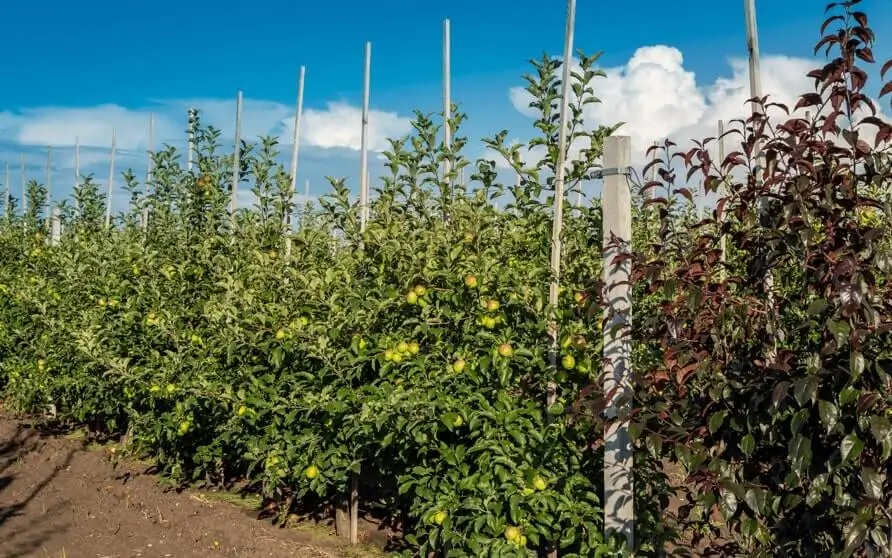
Uneven growth in potted fruit trees is a common issue for container gardeners. You might notice one side growing taller, branches leaning toward one direction, or an unbalanced canopy. While it may seem like a minor cosmetic problem, uneven growth can reduce fruit production, weaken the tree structure, and make your plant more vulnerable to stress. Understanding the root causes and applying the right fixes can help restore symmetry and encourage healthy, productive growth.
Why Fruit Trees Growing Unevenly Matters in Container Gardening
When fruit trees grow unevenly, the problem is more than cosmetic. In containers, balance is critical for both plant health and safety.
Uneven growth can cause:
- Structural weakness – One-sided growth increases the risk of branch breakage.
- Reduced fruit production – Energy is diverted to shoots instead of flowers and fruit.
- Poor root-to-shoot balance – Leading to stress and nutrient inefficiency.
- Top-heavy containers – Making pots prone to tipping in wind or storms.
Container-grown fruit trees rely entirely on you for light positioning, root space, nutrients, and pruning. Even small mistakes can amplify growth imbalances much faster than in-ground trees. That’s why recognizing and correcting uneven growth early is essential for success in patios, balconies, and small gardens.
Main Causes of Fruit Trees Growing Unevenly
Understanding the cause is the key to fixing the problem permanently. Below are the most common reasons fruit trees grow unevenly in containers.
1. Uneven Sunlight Exposure (The #1 Cause)
Fruit trees need 6–8 hours of direct sunlight daily. In containers, light often comes from one dominant direction — a wall, fence, or balcony railing blocks the rest.
Signs this is the issue:
- Strong growth on the sunny side
- Weak, stretched growth on the shaded side
- Tree leaning toward the light
This is extremely common on balconies and patios.
2. Root Binding and Restricted Root Growth
When roots become crowded, they cannot support uniform top growth. Often, one side of the root ball becomes denser, causing uneven nutrient uptake.
You may notice:
- One side growing faster than the other
- Slowed overall growth
- Water running straight through the pot
If you’ve never checked the roots, read this guide on signs your fruit trees are dying in pots to rule out severe root stress.
3. Uneven or Incorrect Pruning
Pruning mistakes can easily create imbalance:
- Cutting back only one side
- Leaving strong vertical shoots (water sprouts)
- Avoiding pruning altogether
Over time, the strongest branches dominate and suppress weaker ones.
4. Nutrient Imbalance or Poor Soil Distribution
If fertilizer is applied unevenly or soil quality varies within the pot, growth will follow nutrients.
Common triggers:
- Surface-feeding on one side
- Compact soil zones
- Old potting mix breaking down unevenly
If your soil drains poorly or smells bad, it’s worth reviewing this article on bad smells coming from potting soil.
5. Grafting and Rootstock Influence
Many fruit trees are grafted. Sometimes the graft union or rootstock favors one side, especially if the tree was trained poorly when young. This is less common but can contribute to asymmetry.
Step-by-Step: How to Fix Fruit Trees Growing Unevenly
Step 1: Rotate the Container Regularly
This is the simplest and most effective fix.
- Rotate the pot ¼ turn every 7–10 days
- Keep rotations consistent
- Mark the pot so you remember direction changes
This alone often corrects uneven growth within one growing season.
Step 2: Rebalance Light Exposure
If rotation isn’t enough:
- Move the container to a more open location
- Increase reflective light using light-colored walls
- Avoid placing trees too close to solid barriers
For small spaces, even a few extra hours of balanced light makes a big difference.
Step 3: Prune to Restore Balance (The Right Way)
Pruning should weaken the strong side and encourage the weak side.
How to do it:
- Cut back the longest, strongest branches by 20–30%
- Avoid pruning weak branches heavily
- Remove vertical shoots that steal energy
If you’re unsure about container pruning basics, this article on how to manage fruit trees in containers explains safe pruning principles for beginners.
Step 4: Check Roots and Repot if Necessary
If the tree hasn’t been repotted in 2–3 years:
- Gently remove it from the pot
- Inspect for circling or dense roots
- Loosen and trim roots evenly
- Repot in fresh, well-draining mix
Choose a pot that’s 2–4 inches wider, not dramatically larger.
If you’ve noticed cracking containers or stress symptoms, review how cracked pots can damage fruit tree roots before repotting.
Step 5: Feed Evenly and Consistently
- Use slow-release fertilizer mixed throughout the soil
- Water evenly around the entire root zone
- Avoid pouring fertilizer in one spot
Balanced nutrition supports balanced growth.
Tools, Containers, and Care Tips That Prevent Uneven Growth
Best Containers for Balanced Growth
Choose containers that:
- Are wide rather than narrow
- Have multiple drainage holes
- Are heavy enough to prevent tipping
Fabric pots and thick plastic containers often perform better than thin ceramic ones.
Soil Mix Matters More Than You Think
Use a mix that:
- Drains well
- Retains moderate moisture
- Doesn’t compact over time
Avoid garden soil in containers — it almost guarantees uneven growth.
Training and Support
- Use stakes temporarily to correct lean
- Tie loosely to avoid restricting growth
- Remove supports once balance improves
Common Mistakes Beginners Make
- Ignoring the problem early — uneven growth worsens over time
- Overfeeding the weak side — this often stresses roots instead
- Pruning randomly — without a balance strategy
- Using pots that are too small
- Never rotating containers
Fixing uneven growth is about consistency, not drastic action.
FAQ: Fruit Trees Growing Unevenly
Why is my fruit tree growing more on one side?
Most often, it’s due to uneven sunlight exposure. Containers receive light from one direction, causing the tree to grow toward it.
Can uneven growth reduce fruit production?
Yes. Uneven growth leads to poor branch structure and less energy for flowering and fruiting.
Should I prune the weak side or the strong side?
Always prune the strong side more. The goal is to slow dominant growth and allow weaker branches to catch up.
How long does it take to fix uneven growth?
Minor imbalance can improve in one season. Severe cases may take 1–2 growing seasons with proper care.
Does uneven growth mean my tree is unhealthy?
Not necessarily. Many healthy trees grow unevenly due to environmental factors, especially in containers.
Conclusion: Restore Balance and Grow Stronger Fruit Trees
Fruit trees growing unevenly is a common challenge in container gardening, but it’s not a permanent problem. By correcting light exposure, rotating containers, pruning strategically, and maintaining healthy roots, you can restore balance and set your tree up for long-term success.
Start with small, consistent changes — rotation, light, and careful pruning — and observe how your tree responds. Balanced growth leads to stronger branches, better fruiting, and a safer, more attractive container tree.
With the right approach, your fruit tree won’t just grow evenly — it will thrive.