
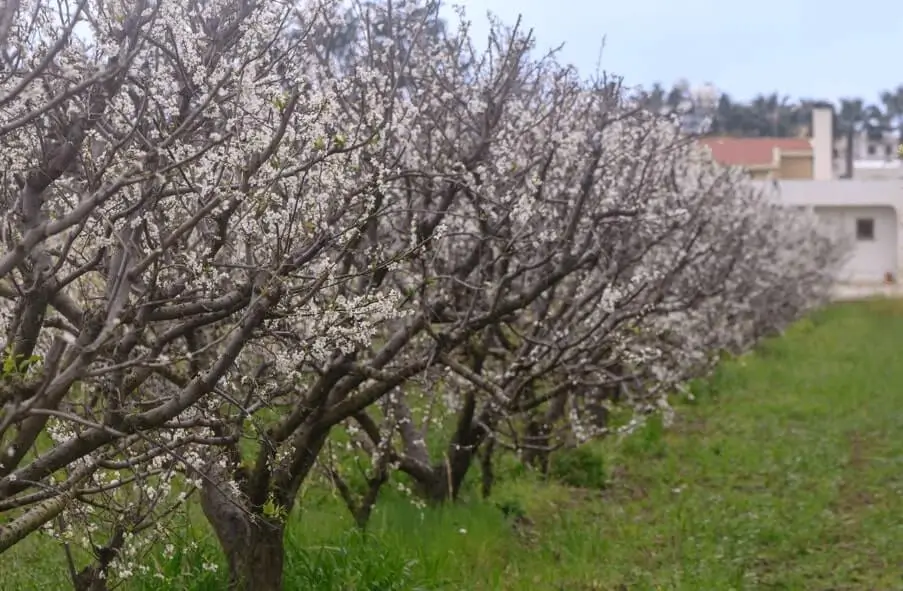
Seeing your fruit tree covered in beautiful blossoms can feel like a big success—until those flowers fall off and no fruit follows. This is a common issue for home gardeners, especially in container or small-space setups. While flowering is a great sign of plant health, fruit production depends on several critical factors such as pollination, environmental conditions, nutrition, and proper care.
In this guide, you’ll discover the most common reasons why your fruit trees bloom but fail to produce fruit, along with practical and proven solutions to help you turn those flowers into a healthy, productive harvest.
Why Fruit Trees Flowering but No Fruit Matters in Container Gardening
When fruit trees are grown in the ground, they have access to deep soil, natural pollinators, and stable temperatures. Container-grown fruit trees don’t have those advantages.
If your fruit tree flowers but produces no fruit, it usually means one or more essential fruiting requirements are missing. In containers, small imbalances—like incorrect watering or poor airflow—can stop fruit development entirely.
Key reasons this problem matters more in pots:
- Roots are confined, making nutrient and water balance critical
- Pollination is often limited on balconies or indoors
- Temperature stress affects containers faster than garden soil
- Pruning mistakes have a stronger impact on small trees
Understanding these limits is the first step toward consistent fruit production.
The Most Common Reasons Fruit Trees Flower but Don’t Produce Fruit
1. Lack of Proper Pollination
Pollination is the number one reason fruit trees flower but don’t fruit.
Many fruit trees need pollen to move from one flower to another to form fruit. In containers, especially on balconies, pollinators may be scarce.
Common pollination problems include:
- Self-sterile varieties planted alone
- No bees or insects nearby
- Indoor or screened growing spaces
- Flowering during cold or rainy weather
If you’re growing fruit trees in containers, especially indoors or on high balconies, you may need to assist pollination manually.
👉 Learn how to attract and manage pests naturally in small spaces by reading natural pest prevention methods for container gardens.
2. Excess Nitrogen = Leaves but No Fruit
One of the most overlooked causes of fruit trees flowering but no fruit is too much nitrogen.
Nitrogen promotes leafy growth. While leaves are important, excessive nitrogen tells the tree to focus on growth instead of reproduction.
Signs of nitrogen overload:
- Dark green, lush leaves
- Rapid shoot growth
- Few or no fruit after flowering
Many beginners unknowingly overfeed with general-purpose fertilizers. For fruiting, trees need balanced nutrients, not just nitrogen.
If you suspect fertilizer issues, check your feeding routine and consider switching to a fruit-specific formula. You can also review safe fertilizer and treatment options for edible plants to avoid common mistakes.
3. Improper Pruning at the Wrong Time
Pruning is essential—but pruning incorrectly can remove next season’s fruit buds.
Some fruit trees, like apples and pears, form fruit on old wood, while others fruit on new growth. Pruning at the wrong time can eliminate flowering or fruiting potential.
Common pruning mistakes:
- Heavy pruning in late winter or spring
- Removing fruiting spurs
- Shaping too aggressively in containers
If your tree flowers but never sets fruit, review when and how you prune. Light, strategic pruning is best for container fruit trees.
4. Water Stress During Flowering
Fruit trees are extremely sensitive to water stress during flowering and early fruit set.
Both overwatering and underwatering can cause flowers to drop before fruit forms.
In containers, this problem is amplified because:
- Pots dry out faster
- Drainage issues are common
- Root systems are limited
Best practices:
- Water deeply but consistently
- Avoid soggy soil
- Ensure containers have drainage holes
If you struggle with watering balance, explore choosing the right containers and drainage for fruit trees to improve root health.
5. Temperature Extremes and Weather Stress
Flowers are fragile. Even short exposure to stress can stop fruit development.
Common weather-related issues:
- Cold snaps during bloom
- Heat waves causing flower drop
- Strong winds damaging blossoms
Container fruit trees are more exposed because pots heat up and cool down quickly. During flowering:
- Move containers to sheltered locations
- Protect from strong wind
- Avoid sudden temperature changes
Step-by-Step Solutions to Fix Fruit Trees Flowering but No Fruit
Step 1: Confirm Pollination Needs
Check whether your fruit tree is:
- Self-fertile
- Partially self-fertile
- Requires a second variety
If pollinators are limited, hand-pollinate using a small brush or cotton swab. Gently transfer pollen between flowers during bloom.
Step 2: Adjust Fertilization for Fruiting
Switch from high-nitrogen feeds to:
- Balanced or low-nitrogen fertilizers
- Potassium-rich fruiting formulas
Feed lightly before flowering and avoid fertilizing heavily during bloom.
Step 3: Improve Sunlight Exposure
Most fruit trees need 6–8 hours of direct sunlight daily.
In small spaces:
- Rotate containers weekly
- Move pots to the sunniest spot
- Avoid shade from walls or railings
Insufficient light often results in flowers without fruit.
Step 4: Fine-Tune Watering Practices
Use this simple rule:
- Water when the top 2–3 cm of soil is dry
- Water slowly until it drains from the bottom
Mulching the surface of containers helps retain moisture and stabilize roots.
Step 5: Correct Pruning Strategy
If unsure, follow these pruning principles:
- Light pruning only for container trees
- Remove dead or crossing branches
- Avoid pruning during flowering
For beginners, minimal pruning is safer than over-pruning.
Common Beginner Mistakes That Prevent Fruit Formation
- Overfeeding with nitrogen-rich fertilizers
- Growing only one tree that needs cross-pollination
- Ignoring pollination in balconies or indoors
- Overwatering “just to be safe”
- Pruning too aggressively
If pests or disease weaken the tree, flowering may occur but fruit won’t set. Learn how to spot early warning signs in how to identify pests on fruit trees early.
Tools, Soil, and Container Tips That Improve Fruiting
Choosing the right setup makes a huge difference for container fruit trees.
Soil:
- Well-draining, organic-rich potting mix
- Avoid garden soil in containers
Containers:
- Minimum 30–50 liters for most fruit trees
- Drainage holes are essential
Helpful tools:
- Moisture meter
- Soft pruning shears
- Small paintbrush for pollination
Healthy roots = better flowers = more fruit.
FAQ: Fruit Trees Flowering but No Fruit
Why do my fruit trees flower every year but never produce fruit?
This usually means poor pollination, excess nitrogen, or incorrect pruning. Review pollination needs and fertilizer use first.
Can a fruit tree be too young to produce fruit?
Yes. Many fruit trees flower before they are mature enough to set fruit. Some need 2–5 years before consistent harvests.
Does weather affect fruit set after flowering?
Absolutely. Cold, heat, wind, and rain during bloom can cause flower drop and prevent fruit formation.
Should I remove flowers to encourage future fruit?
For very young trees, yes. Removing flowers allows energy to go into root and branch development for better future yields.
Can indoor fruit trees produce fruit?
Yes, but only with sufficient light and manual pollination. Indoor trees often flower but fail to fruit without assistance.
Conclusion: Turn Flowers Into Fruit With the Right Care
If your fruit trees are flowering but no fruit is forming, don’t give up. This is one of the most common—and fixable—problems in container fruit gardening. By improving pollination, adjusting fertilizer, managing water carefully, and avoiding pruning mistakes, you can dramatically increase fruit set.
Start by observing your tree during flowering. Make small, targeted changes rather than drastic ones. With the right balance, those beautiful blooms will finally turn into the harvest you’ve been waiting for.
Your fruit tree is already doing half the job—now you know how to help it finish the rest. 🌱🍎
Magnificent goods from you, man. I’ve understand your stuff previous
to and you are just too fantastic. I actually like what you’ve acquired here,
certainly like what you are stating and the way in which you say it.
You make it entertaining and you still care for to keep it smart.
I can’t wait to read much more from you. This is really
a great site.