
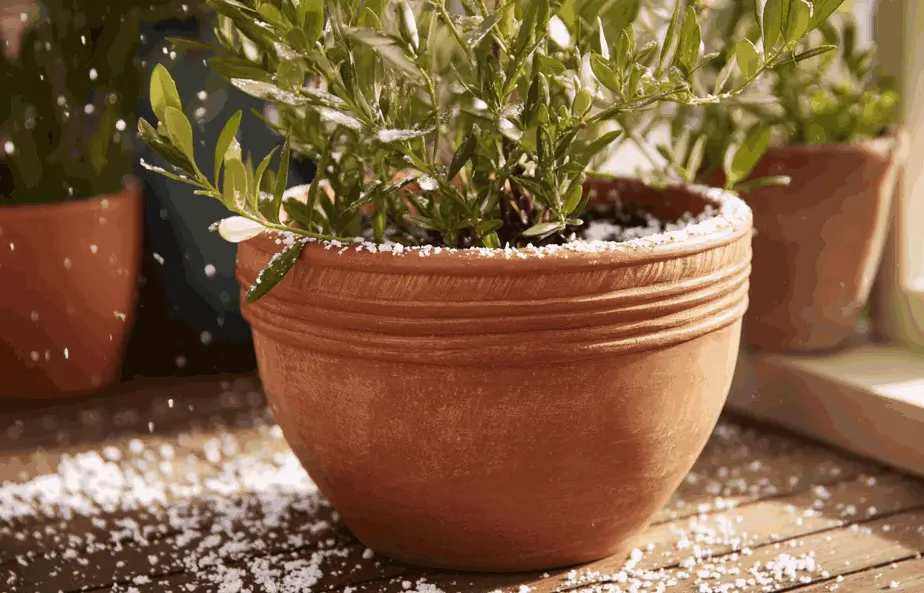
Salt buildup in containers is a common problem that can quietly harm your plants over time. When minerals from fertilizers and hard water accumulate in the soil, they can block nutrient absorption, damage roots, and slow plant growth. Understanding what causes salt buildup, how to recognize early warning signs, and the best ways to prevent and fix it will help you keep your container plants thriving and productive.
This guide is for home gardeners growing fruit trees, berries, herbs, or vegetables in pots—especially on balconies, patios, rooftops, and small spaces. You’ll learn what causes salt buildup, how to recognize it early, and practical, beginner-friendly solutions to fix and prevent it.
If your potted plants look stressed despite regular watering and feeding, salt buildup may be the real issue.
What Causes Salt Buildup in Containers?
Salt buildup happens when dissolved mineral salts accumulate in potting soil faster than they can be flushed out. Containers are especially vulnerable because they are closed systems.
1. Overuse of Fertilizers
Most fertilizers contain soluble salts. When used too often or at high strength:
- Salts remain after water evaporates
- Roots absorb water less efficiently
- Soil chemistry becomes unbalanced
Liquid fertilizers are especially prone to causing buildup if applied frequently.
2. Hard or Salty Water
Tap water often contains dissolved minerals such as calcium, magnesium, and sodium.
- Repeated watering adds minerals to the soil
- Containers lack natural flushing from rainfall
- Salt levels rise over time
This is common in dry or urban areas.
3. Poor Drainage
Without proper drainage:
- Excess water cannot escape
- Salts stay trapped in the root zone
- Roots sit in concentrated salt solutions
Drainage holes are essential for healthy containers.
4. Infrequent Deep Watering
Light, shallow watering causes:
- Salts to move upward as water evaporates
- Concentration near the soil surface
- Root stress and dehydration
Deep watering helps push salts out of the pot.
5. Reused or Low-Quality Potting Mix
Old or compacted soil may already contain:
- Residual fertilizer salts
- Poor structure that traps minerals
- Reduced ability to flush excess salts
Signs and Symptoms of Salt Buildup
Salt buildup doesn’t always show up immediately. Knowing early warning signs can save your plants.
Visual Signs
- White or yellow crust on soil surface
- Chalky residue on pot rims
- Crusty layers on drainage holes
Plant Health Symptoms
- Leaf tips turning brown or crispy
- Yellowing leaves despite feeding
- Slow growth or weak flowering
- Wilting even when soil is moist
Root-Level Damage
- Roots appear dry or burned
- Reduced water absorption
- Increased risk of root rot
These symptoms are often mistaken for nutrient deficiency, leading gardeners to add more fertilizer—making the problem worse.
Step-by-Step Solutions to Fix Salt Buildup in Containers
Fixing salt buildup is possible, even for beginners. Follow these steps carefully.
1. Flush the Soil (Leaching)
This is the fastest and safest method.
How to do it:
- Move the pot to a sink or outdoor area
- Slowly pour clean water over the soil
- Use 3–4 times the pot’s volume in water
- Allow water to drain completely
Why it works:
It dissolves and washes excess salts out through drainage holes.
2. Switch to Clean, Low-Salt Water
If possible:
- Use filtered water
- Use collected rainwater
- Let tap water sit overnight before use
This reduces ongoing mineral accumulation.
3. Reduce Fertilizer Strength
Instead of frequent strong feeding:
- Use half-strength fertilizer
- Fertilize less often
- Follow plant growth stages
Plants absorb nutrients better with lower salt stress.
4. Repot with Fresh Potting Mix (If Severe)
Repotting is necessary when:
- Soil crust returns quickly
- Roots show visible damage
- Plant growth has stalled
Steps:
- Gently remove the plant
- Shake off old soil
- Trim damaged roots
- Replant in fresh, well-draining mix
5. Improve Drainage Immediately
Make sure:
- Pots have drainage holes
- No standing water remains in saucers
- Soil is loose and airy
Good drainage prevents future salt buildup.
Common Beginner Mistakes That Make Salt Buildup Worse
Many gardeners unknowingly increase salt problems.
Mistake 1: Adding More Fertilizer
Yellow leaves are often blamed on nutrient deficiency, but salt buildup blocks nutrient uptake.
Mistake 2: Watering Lightly and Often
This keeps salts near the surface instead of flushing them out.
Mistake 3: Ignoring Drainage Holes
Decorative pots without drainage are a major cause of salt accumulation.
Mistake 4: Reusing Old Potting Soil
Old soil often contains hidden salt residues and poor structure.
Mistake 5: Letting Pots Sit in Runoff Water
Salts collect in saucers and get reabsorbed into the soil.
Best Practices for Preventing Salt Buildup
Prevention is easier than fixing the problem later.
Watering Best Practices
- Water deeply until runoff appears
- Empty saucers after watering
- Flush containers monthly
Fertilizing Smartly
- Use slow-release fertilizers when possible
- Apply only during active growth
- Avoid feeding stressed plants
Soil and Pot Selection
- Choose well-draining potting mixes
- Avoid garden soil in containers
- Use pots with multiple drainage holes
Regular Monitoring
- Inspect soil surface monthly
- Watch for leaf tip burn
- Check drainage after watering
Quick Fix Summary
- Flush soil with clean water
- Reduce fertilizer strength
- Improve pot drainage
- Repot with fresh mix if needed
- Use better water sources
- Avoid shallow watering
Frequently Asked Questions
Can salt buildup kill container plants?
Yes. Severe salt buildup damages roots, blocks water absorption, and can eventually kill plants if not corrected.
Is white crust on soil always salt?
In most container gardens, white crust is mineral salt residue. Mold is usually fuzzy, gray, or green rather than chalky.
How often should I flush container soil?
For most potted fruit plants:
- Once every 4–6 weeks
- More often if fertilizing frequently
Does organic fertilizer prevent salt buildup?
Organic fertilizers generally release nutrients more slowly, reducing risk—but overuse can still cause buildup.
Can salt buildup affect fruit production?
Yes. Salt stress reduces flowering, fruit set, and overall plant energy.
Conclusion: Take Control of Salt Buildup Before It Damages Your Plants
Salt buildup in containers is common, but it’s completely manageable with the right habits. By watering deeply, fertilizing wisely, and maintaining proper drainage, you protect your plants’ roots and ensure healthy growth.
Start today by checking your pots for white crusts, flushing the soil if needed, and adjusting your care routine. Healthy soil means stronger plants, better harvests, and more success in small-space gardening.