
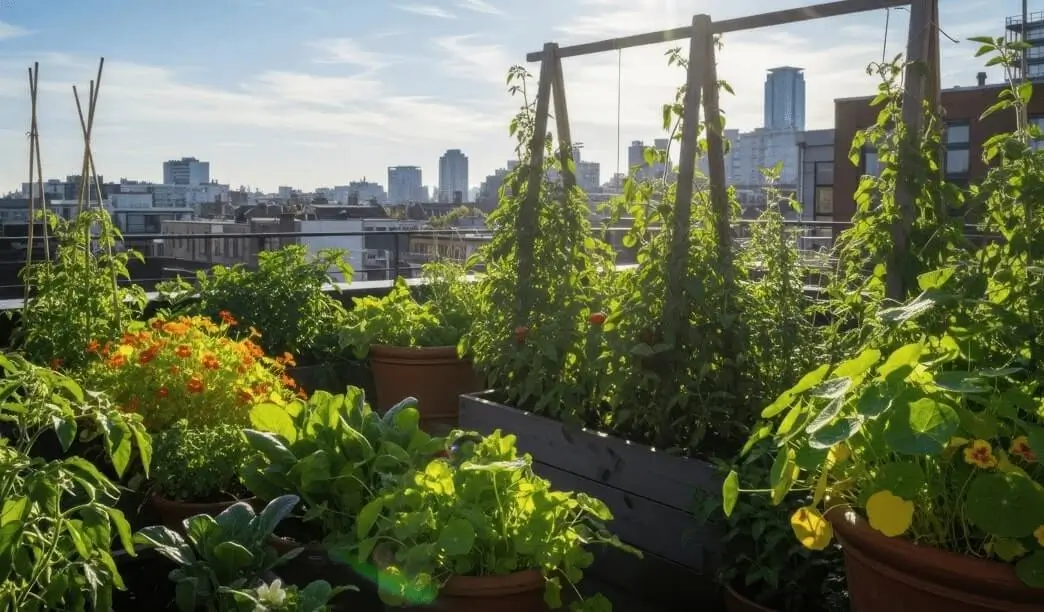
Rooftop fruit gardening is becoming one of the smartest ways to grow fresh food in crowded cities and limited spaces. Whether you live in an apartment, townhouse, or urban home, your rooftop can become a productive mini orchard filled with healthy fruit trees. With the right containers, sunlight, soil, and care techniques, even beginners can successfully grow delicious fruits above the city streets. This complete guide explains everything you need to know to start growing fruit trees on rooftops safely and successfully.
Why Growing Fruit Trees on Rooftops Matters for Container Gardening
Rooftop fruit gardening is more than a trend—it’s a practical solution for urban growers with limited space.
Rooftops Offer Unique Advantages
- Maximum sunlight (often 6–8+ hours daily)
- Improved air circulation reduces fungal diseases.
- Isolation from ground pests
- Efficient use of unused space
Unlike balconies, rooftops can support more containers and larger pots, allowing you to grow semi-dwarf fruit trees that would never fit indoors.
Ideal for Small-Space & Urban Living
If you’re gardening in the city, rooftops make it possible to grow:
- Apples, figs, citrus, peaches, and cherries
- Berry bushes and dwarf fruit varieties
- A diverse edible garden without land ownership
This approach fits perfectly with modern container gardening for fruit, especially for renters and apartment dwellers.
Best Fruit Trees for Rooftop Growing
Choosing the right fruit trees is the foundation of rooftop success.
Top Fruit Trees for Rooftop Containers
- Dwarf apple trees – cold-hardy, productive, compact
- Fig trees – heat-tolerant, shallow-rooted
- Citrus trees – ideal for warm climates and sunny rooftops
- Peach & nectarine (dwarf) – excellent for pots with proper pruning
- Cherry trees (dwarf) – great for temperate regions
If you’re unsure which varieties stay compact, this guide on the best fruit trees for small containers can help you avoid overcrowding and root stress.
Step-by-Step: How to Grow Fruit Trees on Rooftops Successfully
1. Check Rooftop Safety & Weight Limits
Before placing containers, confirm:
- The roof can handle the weight of the wet soil.
- Containers are positioned away from the edges.
- Wind exposure is assessed.
If you’re growing fruit trees above ground level, follow essential balcony and rooftop fruit gardening safety tips to prevent accidents and structural issues.
2. Choose the Right Containers
Rooftop fruit trees need stable, insulated containers.
Best options include:
- Thick plastic or resin pots
- Fabric grow bags (with wind protection)
- Wooden planters with liners
Avoid thin ceramic or unglazed clay—they crack easily and dry out fast. For deeper guidance, see this article on choosing the right container material for fruit trees.
3. Use Proper Container Size & Depth
Container size directly affects:
- Root health
- Water retention
- Long-term productivity
General guidelines:
- Minimum 40–60 cm (16–24 inches) deep
- Wider pots improve stability against the wind.
If you want precise measurements, this resource on how deep containers should be for fruit trees explains sizing by fruit type.
4. Select the Right Soil Mix
Never use garden soil on rooftops—it’s too heavy.
Ideal rooftop fruit tree soil mix:
- 40% high-quality potting soil
- 30% compost
- 20% coco coir or peat
- 10% perlite or pumice
This keeps containers lightweight, well-draining, and nutrient-rich.
5. Manage Wind & Heat Exposure
Rooftops amplify weather extremes.
To reduce wind damage:
- Place pots near walls or railings
- Group containers together
- Use wind screens or lattice panels.
To control heat stress:
- Mulch soil surfaces
- Choose light-colored containers
- Water early morning
Self-watering systems are especially useful in hot rooftop conditions—consider using self-watering containers for fruit trees to maintain consistent moisture.
6. Watering & Feeding Rooftop Fruit Trees
Rooftop containers dry out faster than ground gardens.
Watering tips:
- Check the soil daily in summer.
- Water deeply until runoff appears
- Reduce watering slightly in winter.
Fertilizing basics:
- Use slow-release organic fertilizer.
- Supplement with liquid feed during active growth.
- Avoid overfeeding, as it can lead to weak growth.
Common Mistakes Beginners Make on Rooftops
❌ Underestimating Wind Stress
Wind can snap branches, dry soil, and topple pots. Always plan wind protection.
❌ Using Containers That Are Too Small
Small pots restrict roots and reduce fruiting. Bigger containers = healthier trees.
❌ Overwatering or Poor Drainage
Waterlogged roots are a top killer of container fruit trees. Drainage holes are non-negotiable.
❌ Ignoring Seasonal Adjustments
Rooftop trees need different care in summer vs. winter—watering, feeding, and protection must be adjusted accordingly.
Tools & Care Essentials for Rooftop Fruit Gardening
Must-Have Tools
- Moisture meter
- Lightweight watering can or hose
- Pruning shears
- Mulch (wood chips or straw)
Optional but Helpful
- Shade cloth for heatwaves
- Rolling plant caddies for repositioning
- Drip irrigation kits
Investing in the right tools saves time and prevents stress-related plant issues.
FAQs: Growing Fruit Trees on Rooftops
Can fruit trees survive strong rooftop winds?
Yes, with proper wind barriers, heavy containers, and strategic placement, fruit trees can thrive even in windy locations.
How many fruit trees can I grow on a rooftop?
It depends on roof size and weight limits. Most rooftops comfortably support 4–10 container fruit trees with spacing.
Do rooftop fruit trees need more water?
Yes. Increased sun and wind mean faster evaporation, especially in summer.
Are rooftop fruit trees safe for buildings?
When weight limits are observed and containers are properly positioned, rooftop fruit gardening is safe.
Can I grow fruit trees organically on rooftops?
Absolutely. Container growing actually makes organic pest control easier.
Conclusion: Start Your Rooftop Fruit Garden with Confidence
Growing fruit trees on rooftops is one of the most rewarding ways to produce fresh fruit in small urban spaces. With the right containers, soil, wind protection, and care routine, rooftops can outperform traditional gardens in sunlight and productivity.
Start small—choose one or two dwarf fruit trees, invest in proper containers, and fine-tune your watering habits. As your confidence grows, gradually expand your rooftop orchard. With smart planning, your rooftop can become a thriving, productive fruit garden that delivers year-round harvests.