
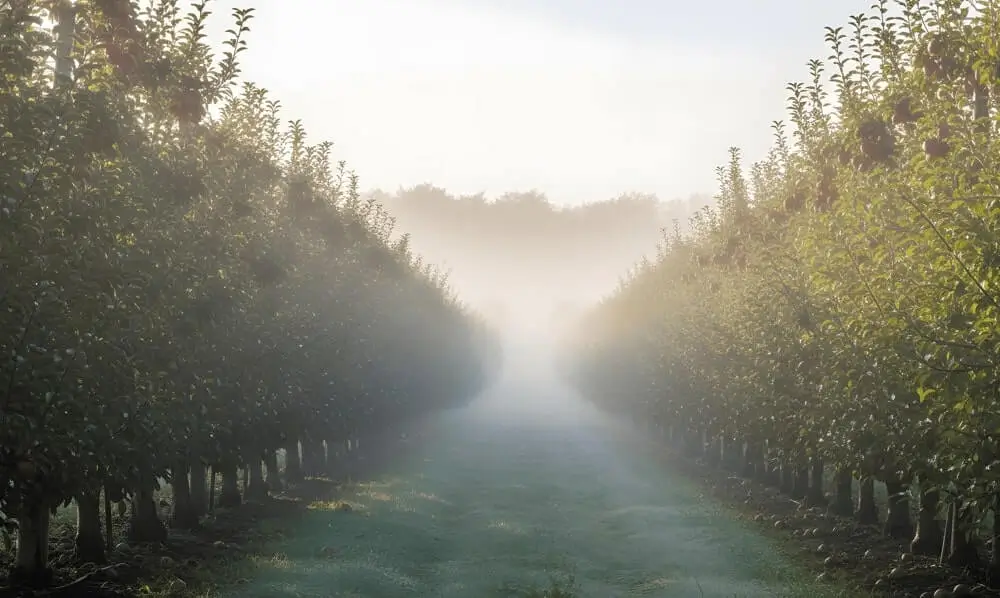
Misting fruit trees is often misunderstood, especially for beginners growing in containers. While it can help boost humidity and reduce stress in certain climates, improper misting may lead to fungal issues or wasted effort. Understanding how often to mist fruit trees—and when it actually benefits them—is key to maintaining healthy foliage, preventing pests, and supporting strong growth in container environments.
Why Misting Matters for Container Fruit Gardening
Container-grown fruit trees live in a very different environment than trees planted in the ground. Understanding those differences explains why misting sometimes helps—and why it’s often misunderstood.
1) Containers dry out faster
Pots heat up quickly and hold limited moisture. In hot or windy conditions, leaves lose water faster through transpiration. Light misting can temporarily increase local humidity around foliage, easing short-term stress.
2) Urban and balcony microclimates
Balconies and rooftops often experience reflected heat and stronger winds. If you’ve noticed leaves curling or looking dull by midday, that’s a sign the air is too dry—not always that the soil lacks water.
3) Leaf health vs. root hydration
Here’s the key point beginners miss: misting does not replace watering. Roots—not leaves—supply the tree’s real water needs. Misting is a supportive practice, not a primary one. Pair it with proper root-zone watering for best results.
If you’re still refining your base watering routine, start with this in-depth guide on checking soil moisture accurately in containers:
How Often to Mist Fruit Trees (Clear, Practical Rules)
The short answer
Most container fruit trees only need misting 2–4 times per week during hot, dry weather—and not at all in cool or humid conditions.
The long answer (what actually works)
✔ Mist fruit trees when:
- Daytime temperatures are consistently above 30°C / 86°F
- Air is very dry (low humidity)
- Trees are young, newly transplanted, or recovering from stress
- Leaves look slightly dull by midday but soil is still moist
✖ Do NOT mist when:
- Weather is cool or humid
- Leaves stay wet for hours
- You already see fungal issues (spots, mildew)
- It’s evening or nighttime
Seasonal misting guide
Spring
- Misting: 0–1× per week
- Focus on root watering as growth resumes
Summer
- Misting: 2–4× per week during heatwaves
- Best time: early morning (7–9 a.m.)
Autumn
- Misting: Rarely
- Reduce as temperatures drop
Winter
- Misting: Never
- Excess moisture increases disease risk
Step-by-Step: The Right Way to Mist Fruit Trees
Step 1: Use the right tool
Choose a fine-mist sprayer, not a hose or heavy spray bottle. Leaves should look refreshed, not dripping.
Step 2: Pick the correct time
- Early morning only
- Never mist in the evening (leaves stay wet overnight)
Step 3: Target leaves—not flowers
- Lightly mist the top and underside of leaves
- Avoid flowers and fruit to reduce disease risk
Step 4: Keep it light and brief
- 10–20 seconds per tree is enough
- Stop before water runs off the leaves
Step 5: Always check soil moisture
If the soil is dry, water the pot first.
Misting dry roots does nothing.
Does Misting Replace Watering? (Important Clarification)
No—and this can’t be stressed enough.
- Misting cools and humidifies
- Watering hydrates roots
If your tree wilts because the soil is dry, misting will only delay the problem. Always prioritize deep, thorough watering until water drains from the bottom of the pot.
Windy locations increase water loss dramatically. If your balcony is exposed, adjust both watering and misting using these tips:
Common Misting Mistakes Beginners Make
❌ Misting every day “just in case”
This keeps leaves constantly wet—perfect conditions for fungal disease.
❌ Misting at night
Leaves don’t dry fast enough. This is one of the top causes of leaf problems in container fruit trees.
❌ Using misting instead of watering
Your tree may look better for an hour, then decline further.
❌ Heavy spraying instead of fine mist
Large droplets do more harm than good and don’t raise humidity effectively.
❌ Ignoring airflow
If your trees are crowded, misting increases disease risk. Ensure good spacing.
Tools, Containers & Care Tips That Reduce the Need for Misting
1) Choose moisture-stable containers
- Light-colored pots reflect heat
- Fabric grow bags increase airflow but may require more frequent watering
2) Improve your soil mix
A quality mix with compost and water-retentive components reduces stress. Healthy roots mean less leaf stress.
3) Use mulch on the soil surface
Organic mulch:
- Slows evaporation
- Keeps roots cooler
- Reduces how often misting is needed
4) Create wind protection
Temporary screens or strategic placement can reduce moisture loss more effectively than extra misting.
FAQ: How Often to Mist Fruit Trees
1) How often should I mist fruit trees in summer?
Usually 2–4 times per week during extreme heat. Always adjust based on humidity and soil moisture.
2) Is misting good for citrus trees in pots?
Yes, occasionally—especially during hot, dry weather. Citrus leaves benefit from brief morning misting.
3) Can misting cause leaf disease?
Yes, if done too often, too late in the day, or without airflow.
4) Should I mist fruit trees indoors or in greenhouses?
Only if humidity is very low. Ventilation matters more than frequent misting.
5) Do fruit trees need misting every day?
No. Daily misting is unnecessary and often harmful.
Conclusion: A Smarter Way to Use Misting
So, how often to mist fruit trees?
For most container fruit trees, misting is a support tool, not a daily task. Use it sparingly, only in hot, dry conditions, and always in the morning. Focus first on proper watering, good soil, and smart placement. When those basics are right, misting becomes an occasional boost—not a crutch.
Next steps:
- Check your soil moisture today
- Adjust watering before adding misting
- Observe leaf response over 7–10 days
With these habits, your container fruit trees will stay healthier, greener, and more productive—without unnecessary effort. 🌱
[…] Reduce heat stress […]