
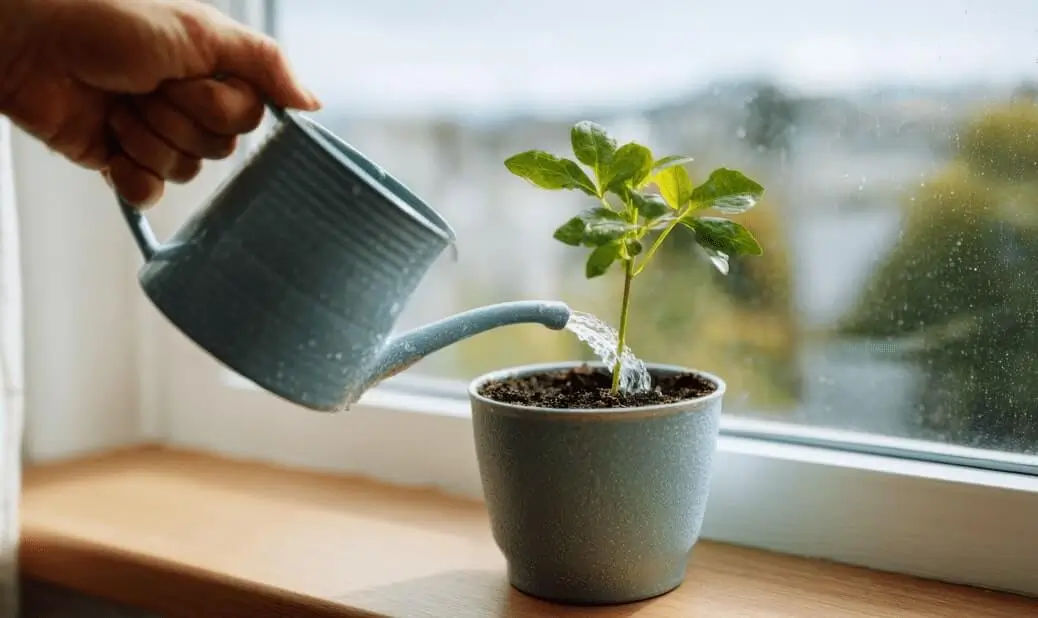
Growing fruit trees indoors can be rewarding, but proper watering is one of the biggest challenges for beginners. Indoor environments have different humidity levels, airflow, and light conditions compared to outdoor gardens, which means fruit trees require a more careful watering routine. Understanding how often to water, how much moisture indoor fruit trees need, and how to avoid common mistakes like overwatering can help your plants stay healthy, productive, and disease-free. This guide explains everything you need to know about watering indoor fruit trees successfully.
Why Watering Indoor Fruit Trees Matters So Much
Indoor fruit trees grow in a controlled but challenging environment. Unlike outdoor trees, they rely entirely on you for water timing, drainage, and consistency.
Key reasons watering is critical indoors:
- Limited root space: Containers hold less soil, so moisture levels change quickly.
- Reduced airflow: Indoor air dries soil slowly, increasing the risk of overwatering.
- Artificial light & heating: These affect evaporation and plant transpiration.
- No natural rainfall cycle: There’s no automatic flushing of excess salts.
Incorrect watering is the #1 cause of indoor fruit tree failure—even more than pests or poor light. Understanding this balance is essential for long-term success.
Understanding Indoor Watering vs Outdoor Watering
Many beginners water indoor fruit trees the same way they would outdoor plants. This is a mistake.
Key Differences You Must Account For
| Factor | Indoor Fruit Trees | Outdoor Fruit Trees |
|---|---|---|
| Rainfall | None | Natural & unpredictable |
| Drainage | Fully dependent on pot | Natural soil systems |
| Evaporation | Slower | Faster |
| Root temperature | Stable | Seasonal fluctuations |
If you’ve previously grown fruit trees outside, adjust your expectations. Indoor watering must be more intentional and observation-based.
Step-by-Step: How to Water Indoor Fruit Trees Correctly
Step 1: Choose the Right Container and Drainage
Before watering even begins, your setup matters.
- Always use pots with multiple drainage holes
- Avoid decorative cache pots without drainage unless used correctly
- Elevate pots slightly to prevent water from pooling underneath
If you’re unsure whether your containers are suitable, review this guide on choosing the best pots for container fruit trees to avoid drainage-related problems early on.
Step 2: Use the “Soil Check” Method (Not a Schedule)
Never water on a fixed calendar. Instead:
- Insert your finger 2–3 inches into the soil
- If the soil feels dry → water
- If it feels cool and moist → wait
This simple habit prevents overwatering more effectively than any schedule.
For deeper insight into volume and timing, see how much water fruit trees actually need in containers.
Step 3: Water Deeply, Not Lightly
When watering indoor fruit trees:
- Water slowly until excess drains from the bottom
- Empty saucers after 10–15 minutes
- Avoid small, frequent “sips” of water
Deep watering encourages strong root growth and prevents shallow root systems that dry out quickly.
Step 4: Adjust Watering by Season
Indoor fruit trees don’t stop growing entirely, but their water needs change throughout the year.
- Spring & summer: Water more frequently as growth increases
- Fall: Gradually reduce watering
- Winter: Water sparingly—roots absorb less moisture
Overwatering during winter is a leading cause of indoor tree decline. If your tree shows yellowing leaves, review this guide on avoiding root rot in container fruit trees.
Best Water Types for Indoor Fruit Trees
Water quality affects nutrient uptake and soil health.
Tap Water vs Rainwater
- Tap water may contain chlorine or high mineral content
- Rainwater is naturally soft and preferred when available
- Let tap water sit 12–24 hours before use to reduce chlorine
For a full comparison, read rainwater vs tap water for fruit trees and decide what works best for your home.
Tools That Make Watering Indoor Fruit Trees Easier
You don’t need many tools—but the right ones help.
Recommended Tools
- Moisture meter (for beginners learning soil cues)
- Watering can with narrow spout for controlled flow
- Self-watering containers (for busy gardeners)
If consistency is a challenge, explore self-watering systems for container fruit trees to reduce guesswork.
Common Mistakes Beginners Make (And How to Fix Them)
1. Watering Too Often
Fix: Check soil moisture first—always.
2. Ignoring Drainage
Fix: Repot into a well-draining container immediately.
3. Using Cold Water
Fix: Use room-temperature water to avoid root shock.
4. Watering Only the Surface
Fix: Always water deeply until runoff appears.
5. Confusing Dry Air with Dry Soil
Fix: Increase humidity without increasing watering frequency.
Soil Mix Matters More Than You Think
Watering success depends on soil structure.
Ideal indoor fruit tree soil should:
- Drain quickly
- Retain light moisture
- Contain organic matter and aeration components
Avoid heavy garden soil. Use a container mix designed for fruit trees or citrus, amended with perlite or bark.
FAQ: Watering Indoor Fruit Trees
How often should I water indoor fruit trees?
There is no fixed schedule. Water only when the top 2–3 inches of soil are dry.
Can indoor fruit trees survive underwatering?
Short-term dryness is less harmful than constant overwatering. Chronic dryness, however, reduces fruiting.
Should I mist indoor fruit trees instead of watering?
Misting helps humidity, not root hydration. Always water soil properly.
Do indoor fruit trees need less water in winter?
Yes. Growth slows, and excess water can cause root rot.
Is bottom watering good for indoor fruit trees?
Occasionally, yes—but it should not replace deep top watering.
Conclusion: Build a Simple, Reliable Watering Routine
Watering indoor fruit trees doesn’t have to be complicated—but it does require attention and consistency. Focus on soil moisture, proper drainage, seasonal adjustment, and water quality, and your trees will reward you with healthy growth and better fruiting.
Next steps:
- Check your container drainage today
- Adjust your watering based on soil feel, not habit
- Upgrade tools if watering feels inconsistent
Master this one skill, and you’ll be well on your way to long-term success with indoor fruit trees 🌱