
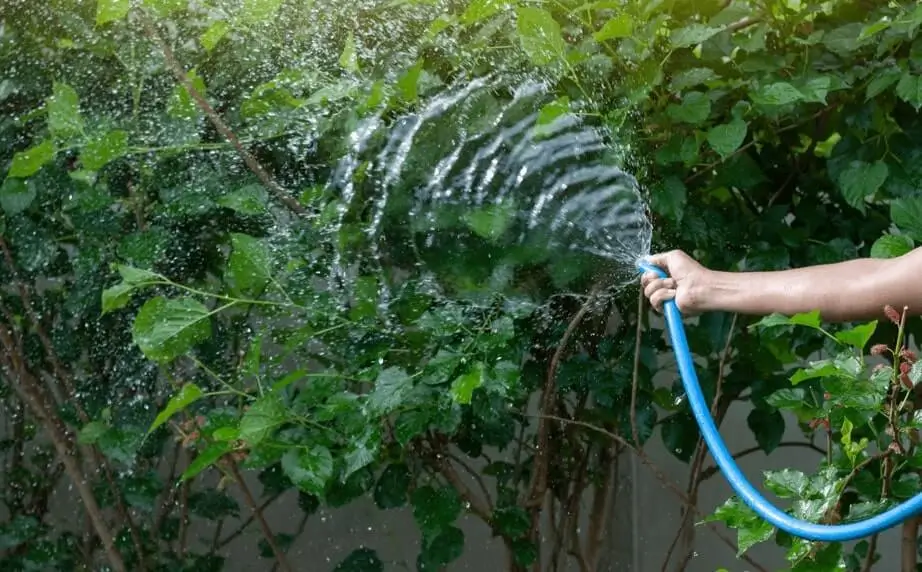
Underwatering is one of the most common yet overlooked problems in container fruit gardening, often leading to weak growth, leaf drop, and reduced fruit production. When fruit trees don’t receive enough consistent moisture, their roots struggle to absorb nutrients, causing stress that can quickly affect overall health. Understanding the signs of underwatering and learning how to correct it can make the difference between a struggling plant and a thriving, productive tree.
Why Watering Fruit Trees Not Enough Is a Big Problem in Containers
Underwatering hits container fruit trees harder than in-ground trees for a few key reasons:
- Limited soil volume: Pots hold less water and heat up quickly, especially on sunny patios.
- Root crowding: As roots fill the pot, water runs along the edges and exits the drainage holes before soaking the core.
- Fast evaporation: Wind and sun strip moisture from exposed potting mix.
- Inconsistent watering habits: Small misses add up fast in containers.
When watering fruit trees not enough becomes chronic, roots shrink back, nutrient uptake drops, and the tree enters survival mode. You may see symptoms similar to disease or nutrient deficiency—even though the real issue is moisture stress. If you’re unsure whether stress is from drought or the opposite problem, compare symptoms with our guide on how to recognize water stress in potted fruit trees to pinpoint the cause early.
How to Tell If Your Fruit Tree Isn’t Getting Enough Water
Early Warning Signs (Often Missed)
- Slight leaf droop in the afternoon that doesn’t recover by evening
- Dry, light-colored potting mix pulling away from pot edges
- New leaves smaller than normal
Advanced Symptoms
- Leaf scorch or crispy edges
- Flower and fruit drop
- Stunted growth despite feeding
If you’re seeing sudden wilting after watering, double-check that the soil is actually wet below the surface. Many gardeners pour water that never reaches the root ball, especially in compacted or peat-heavy mixes. Our troubleshooting guide on fixing dry soil in containers walks through simple tests to confirm moisture where roots live.
Step-by-Step: Fix Watering Fruit Trees Not Enough (Container Edition)
1) Rehydrate the Root Ball Properly
If soil has become hydrophobic (water-repelling), quick pours won’t help.
Do this instead:
- Place the pot in a basin or tray.
- Fill with water halfway up the pot’s height.
- Let it soak 30–60 minutes until bubbles stop.
- Remove and allow excess to drain fully.
This resets the moisture profile so future watering actually penetrates.
2) Water Deeply—Not Lightly
Light, frequent sips encourage shallow roots. Deep watering trains roots to explore the full pot.
Best practice:
- Water slowly until you see steady drainage.
- Pause 2–3 minutes.
- Water again to ensure saturation.
If you’re unsure how much is enough, our article on underwatering fruit trees in pots explains exact cues to watch for across seasons.
3) Upgrade Your Potting Mix
A mix that drains too fast can cause chronic drought.
Aim for a balanced blend:
- 40–50% quality potting soil
- 20–30% compost
- 20–30% moisture-retentive material (coco coir or aged bark)
Avoid pure garden soil—it compacts and worsens runoff.
4) Match Pot Size to Tree Size
A rootbound tree dries out far faster.
Rule of thumb:
- Young trees: minimum 10–15 gallons
- Dwarf fruit trees: 15–25 gallons
- Semi-dwarf: 25–30+ gallons
If roots circle tightly, repotting alone can solve watering fruit trees not enough.
5) Adjust for Weather (Daily in Summer)
Containers can need daily watering in hot weather—even twice a day during heat waves.
- Morning: deep soak
- Late afternoon: check moisture 2–3 inches down
Windy balconies dry pots faster than ground-level patios.
Common Beginner Mistakes That Lead to Underwatering
“The Soil Looks Wet”
Surface moisture is misleading. Always check below the top inch.
Watering on a Schedule, Not by Need
Trees don’t follow calendars. They follow heat, wind, and growth stage.
Tiny Pots With Large Trees
Small containers create a constant moisture deficit—no technique can fully compensate.
Confusing Drainage Problems With Drought
Yellowing leaves can also mean too much water. If soil stays soggy, review how to fix waterlogged soil in pots before increasing watering.
Tools, Containers, and Care Tips That Make Watering Easier
Moisture Meters (Used Correctly)
Insert near the root zone—not just the edge. Use as a guide, not a rule.
Self-Watering Containers
Excellent for balconies and busy gardeners, but still check weekly to avoid salt buildup.
Mulch for Pots
A 2–3 cm layer of bark or straw:
- Reduces evaporation
- Stabilizes soil temperature
- Improves watering efficiency
Group Pots Together
Creates a humid microclimate and reduces wind exposure.
Seasonal Watering Adjustments You Shouldn’t Skip
- Spring: Increase frequency as growth resumes.
- Summer: Peak demand—monitor daily.
- Fall: Gradually reduce as growth slows.
- Winter: Water sparingly, but never let roots fully dry.
Dormant trees still need moisture; drought stress over winter weakens spring growth.
FAQ: Watering Fruit Trees Not Enough
How often should I water fruit trees in pots?
It depends on pot size, weather, and tree size. In summer, daily checks are essential. Water when the top 2–3 inches are dry.
Can underwatering cause fruit drop?
Yes. Water stress is a major cause of flower and fruit drop, especially during bloom and early fruit set.
Is morning or evening watering better?
Morning is best. It allows leaves to dry and reduces evaporation loss.
Should I mist leaves if the tree looks dry?
Misting helps humidity but does not replace root watering. Focus on soil moisture first.
Can I overcorrect and cause root rot?
Yes. If soil stays soggy for days, you risk rot. Learn the balance by comparing symptoms with signs of root rot in fruit trees to avoid swinging too far.
Conclusion: A Simple Plan to End Underwatering for Good
Watering fruit trees not enough is rarely about neglect—it’s usually about technique, soil, and container choice. By rehydrating the root ball, watering deeply, improving your potting mix, and adjusting to weather, you can reverse stress quickly and set your tree up for steady growth.
Your next steps:
- Check moisture 2–3 inches deep today.
- Soak any hydrophobic pots.
- Upgrade one container or mix this week.
- Adjust watering frequency for the season.
Consistent, thoughtful watering turns struggling container trees into productive, resilient plants—no guesswork required.