
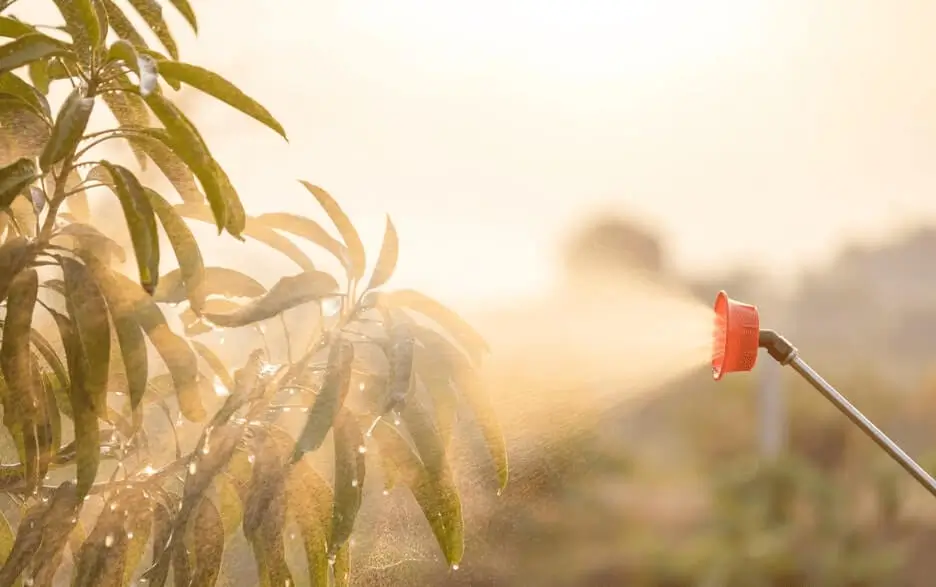
Watering fruit trees in summer is one of the most important tasks for keeping container trees healthy, productive, and stress-free during hot weather. Fruit trees grown in pots dry out much faster than those planted in the ground, especially on balconies, patios, and small-space gardens exposed to direct sun. Without proper watering, trees may develop yellow leaves, flower drop, small fruits, or even stop growing altogether. In this guide, you’ll learn how to water fruit trees in summer correctly, how often to water containers, common mistakes to avoid, and practical tips to help your trees thrive through the hottest months of the year.
Why Watering Fruit Trees in Summer Matters (Especially in Containers)
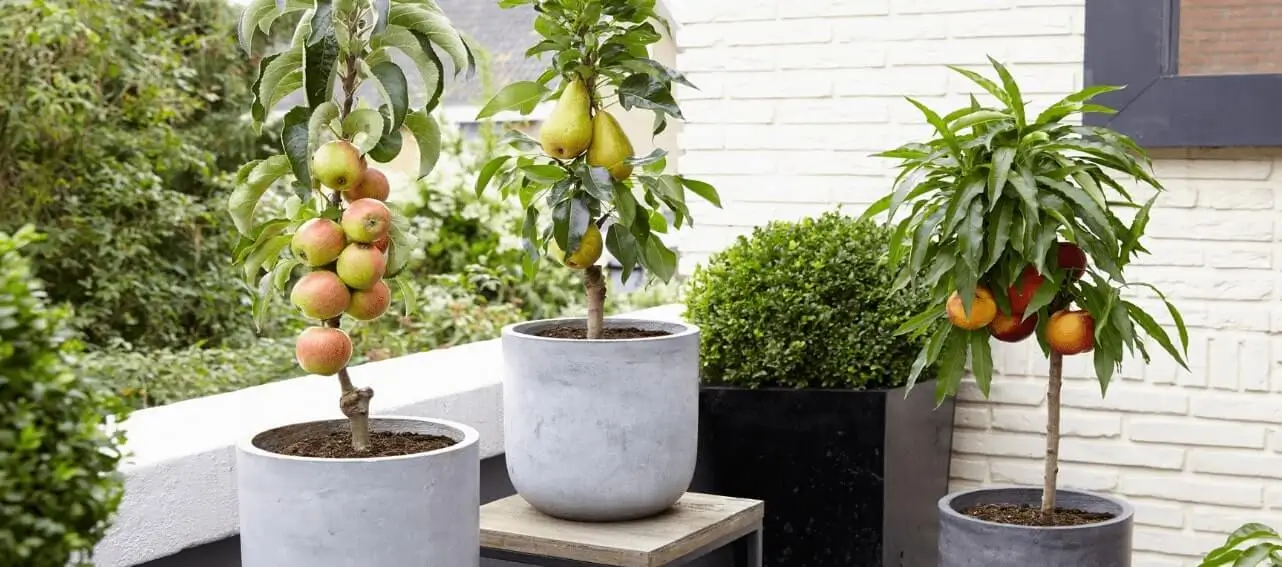
Summer is the most demanding season for fruit trees. During this period, trees are actively growing, developing fruit, and transpiring large amounts of water through their leaves. In containers, the challenge is amplified.
Container trees dry out faster.
- Pots hold a limited soil volume.
- Heat penetrates from all sides.
- Wind and sun accelerate evaporation.
Unlike in-ground trees, container fruit trees cannot access deeper moisture reserves. A single missed watering during a heatwave can cause leaf drop, fruit cracking, or root damage.
Water stress affects fruit quality.
Inconsistent watering in summer can lead to:
- Small or misshapen fruit
- Bitter taste (especially in citrus)
- Premature fruit drop
- Split skins on figs, tomatoes, and stone fruits
If you’re growing fruit trees on a balcony or patio, understanding proper summer watering is just as important as choosing the right container or soil.
How Often to Water Fruit Trees in Summer (Step-by-Step)
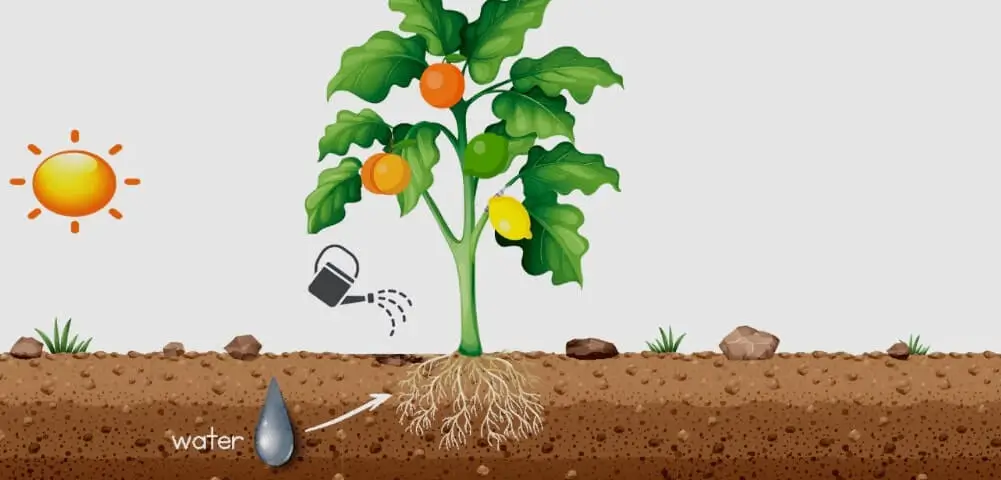
There is no single schedule that works for everyone. Instead, successful summer watering follows a decision-based system.
Step 1: Check soil moisture correctly
Do not rely on surface appearance alone.
- Insert your finger 5–7 cm (2–3 inches) into the soil.
- If dry at that depth → water
- If slightly moist → wait.
- If soggy → improve drainage before watering again.
For larger containers, moisture meters can be helpful, but hands-on testing remains the best approach.
Step 2: Adjust frequency based on container size
As a general summer guideline:
- Small pots (10–20 L): daily in hot weather
- Medium pots (30–50 L): every 1–2 days
- Large pots (60 L+): every 2–3 days
This aligns well with guidance in our detailed post on how often to water fruit trees in containers, which explains seasonal adjustments in depth.
Step 3: Water deeply, not lightly
Shallow watering encourages weak surface roots. Always:
- Water slowly
- Continue until water drains from the bottom.
- Empty saucers after 10–15 minutes
Deep watering promotes strong root systems that better handle heat.
Best Time of Day to Water Fruit Trees in Summer
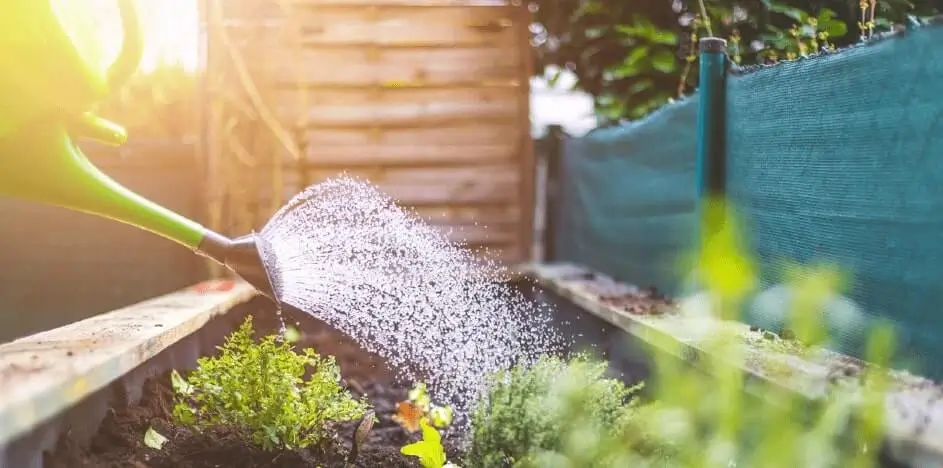
Timing matters as much as quantity.
Early morning (best option)
- Reduces evaporation
- Prepares the tree for heat stress
- Lowers disease risk
Evening (second-best)
- Acceptable in very hot climates
- Avoid wetting leaves overnight.
Avoid midday watering
- Water evaporates quickly
- Can shock roots
- Inefficient and wasteful
For a deeper breakdown, see our guide on the best time of day to water fruit trees for summer-specific scenarios.
Summer Watering Techniques That Actually Work
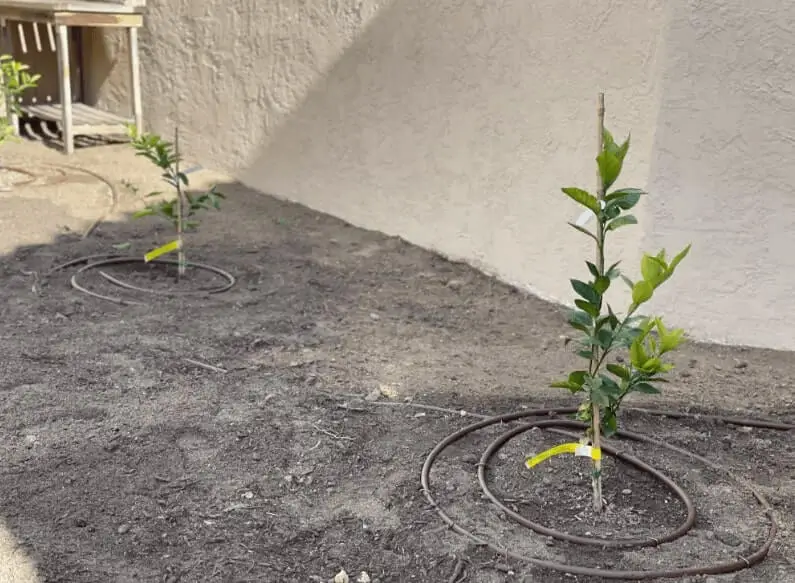
Hand watering (most control)
Ideal for beginners and balconies:
- Use a long-spout watering can.
- Water in stages (pause between pours)
- Observe drainage response
Drip irrigation (best for consistency)
Excellent for hot summers and busy gardeners:
- Maintains even moisture
- Reduces water waste
- Works well with large containers
Self-watering containers (with caution)
Helpful but must be monitored:
- Check reservoir levels daily.
- Avoid waterlogging roots
Choosing the right container makes all these methods more effective. Large, well-draining pots are covered in our article on the best containers for balcony fruit trees.
Soil, Mulch, and Drainage: The Hidden Watering Factors
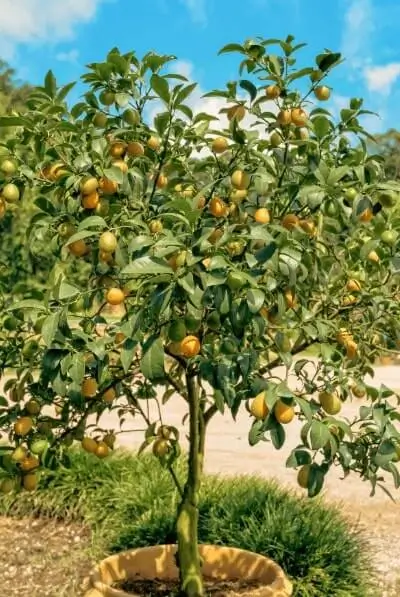
Watering success isn’t just about water—it’s about how soil holds it.
Use a fast-draining but moisture-retentive mix.
Avoid garden soil. Instead, use:
- High-quality potting mix
- Added compost or coco coir
- Perlite or pumice for drainage
This topic is explained in detail in our comparison of potting mix vs garden soil for fruit trees.
Mulch your containers
Apply 3–5 cm of:
- Straw
- Wood chips
- Bark mulch
Mulch:
- Reduces evaporation
- Stabilizes soil temperature
- Improves watering efficiency
Never block drainage holes.
- Elevate pots slightly
- Ensure free water flow.
- Root health depends on oxygen.
Common Summer Watering Mistakes Beginners Make
Watering on a fixed schedule
Summer weather changes daily. Always respond to:
- Heat waves
- Wind exposure
- Container size
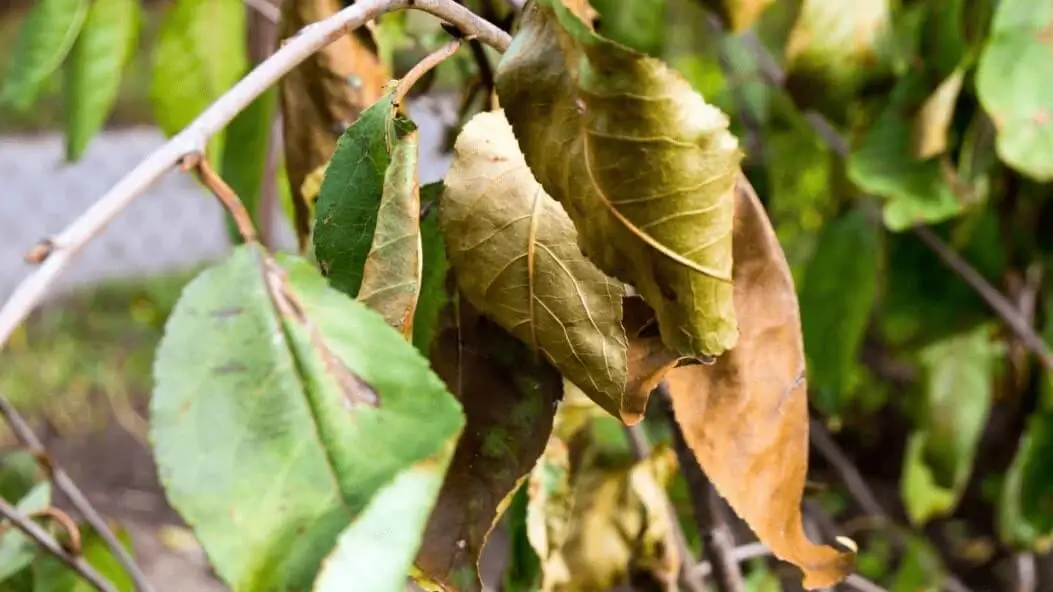
Confusing underwatering with overwatering
Both cause:
- Wilting
- Yellow leaves
- Leaf drop
The difference? Check soil moisture before reacting.
Ignoring tree size and fruit load
Larger trees and fruiting trees need more water, especially during fruit swelling.
Using cold water on hot roots
Let water sit briefly to warm up before applying during extreme heat.
Special Summer Tips for Balcony & Small-Space Gardeners
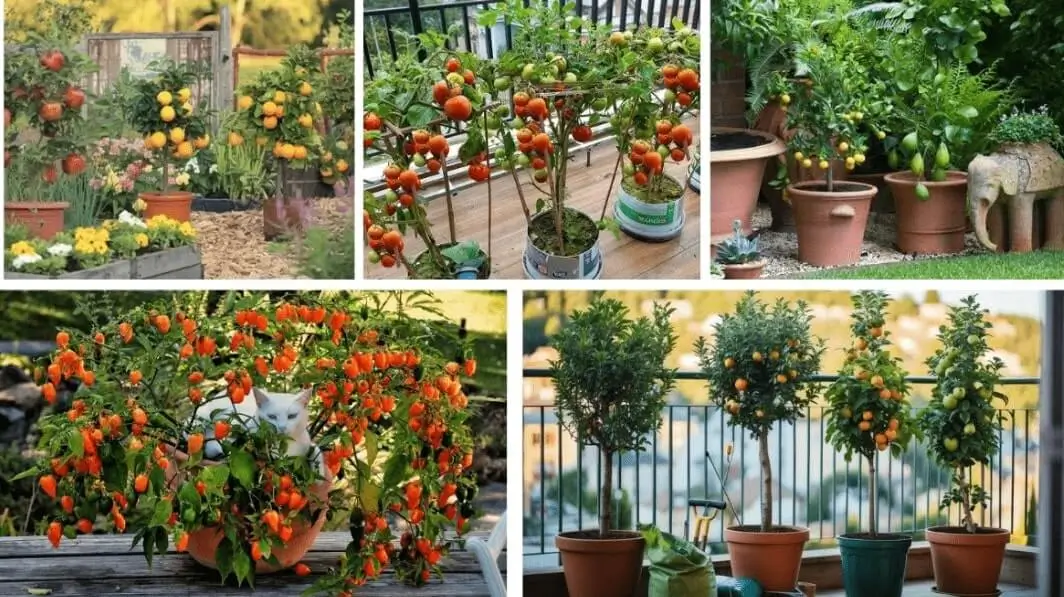
- Group pots together to reduce evaporation
- Use light-colored or fabric pots to lower root temperature.
- Provide temporary afternoon shade during heatwaves.
- Rotate pots weekly for even sun exposure.
Balcony growers often combine these techniques with the smart watering routines discussed in the fruit gardening on a balcony step-by-step guide.
FAQ: Watering Fruit Trees in Summer
How much water do fruit trees need in summer?
Enough to fully saturate the root zone. For containers, this usually means watering until excess drains out.
Can I water fruit trees every day in summer?
Yes—if the soil dries out daily. Small pots in hot weather often need daily watering.
Should I mist fruit trees in summer?
Misting does little for roots. Focus on deep soil watering instead.
Is afternoon watering bad for fruit trees?
It’s less efficient but acceptable during extreme heat if trees are wilting.
How do I know if I’m overwatering?
Persistent soggy soil, sour smell, and yellow leaves despite moist soil are warning signs.
Conclusion: A Smarter Way to Water Fruit Trees in Summer
Watering fruit trees in summer doesn’t require guesswork—it requires observation, timing, and the right setup. By checking soil moisture, watering deeply, choosing proper containers and soil, and adjusting for heat, you can keep your trees thriving even during the hottest months.
Your next steps:
- Upgrade soil and drainage if needed.
- Add mulch to every container.
- Adjust watering frequency during heatwaves.
- Monitor trees weekly, not just daily.
With these strategies, your container fruit trees won’t just survive summer—they’ll reward you with healthier growth and better fruit.