
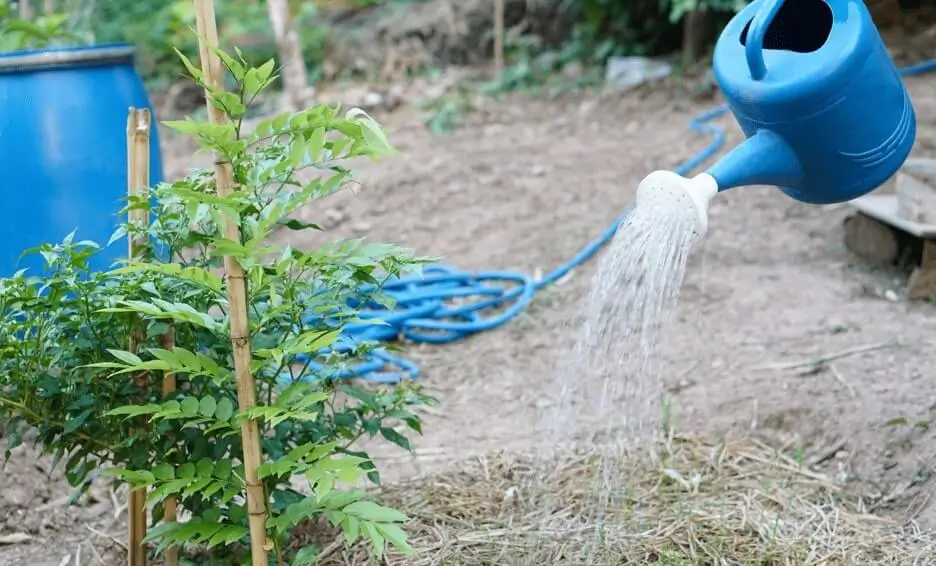
Maintaining consistent moisture in large containers can be surprisingly challenging for fruit growers. Uneven watering often leads to dry pockets, over-saturated zones, and stressed plants that struggle to grow and produce fruit. Understanding why this happens—and how to fix it—is essential for keeping your container fruit trees healthy, balanced, and productive. In this guide, you’ll discover the main causes of uneven watering and practical, proven solutions to ensure your plants receive the right amount of moisture every time.
Why Uneven Watering in Large Containers Matters for Fruit Gardening
Uneven watering isn’t just an inconvenience—it directly affects root health, nutrient uptake, and fruit quality.
Roots Don’t Grow Where Conditions Are Poor
Fruit tree roots grow toward moisture and oxygen. When water pools in one area and leaves another dry:
- Roots cluster only in wet zones
- Dry zones become inactive
- Root systems stay shallow and weak
This imbalance makes trees more sensitive to heat, drought, and nutrient deficiencies.
Nutrients Become Unavailable
Water carries nutrients through the soil. Uneven watering causes:
- Nutrient leaching in wet pockets
- Salt buildup in dry areas
- Inconsistent feeding, even with regular fertilizing
If you’ve noticed leaf yellowing despite feeding, uneven watering may be the real culprit. This often overlaps with issues discussed in our guide on salt buildup in container fruit trees, where poor water distribution worsens mineral accumulation.
Fruit Quality and Yield Suffer
Inconsistent moisture leads to:
- Blossom drop
- Misshapen or cracked fruit
- Reduced sugar development
For container-grown fruit, even moisture is one of the biggest predictors of success.
What Causes Uneven Watering in Large Containers?
Understanding the cause is the first step toward fixing uneven watering in large containers.
1. Hydrophobic (Water-Repellent) Potting Mix
When potting mix dries too much, it can repel water. Instead of soaking in, water:
- Runs down the sides of the pot
- Channels straight through drainage holes
- Misses the root zone entirely
This is common in peat-based mixes and explains why the surface looks wet while the center stays dry.
2. Poor Soil Structure or Compaction
Over time, gravity and watering compress the mix:
- Top layers compact and shed water
- Lower layers stay constantly wet
- Air pockets disappear
Compacted soil prevents even moisture distribution and root oxygenation.
3. Large Containers with Small Root Balls
When a young fruit tree sits in a very large pot:
- Roots occupy only a small central zone
- Outer soil stays unused and poorly hydrated
- Water bypasses the root zone
This mismatch is a frequent beginner mistake.
4. Inconsistent Watering Technique
Quick, shallow watering:
- Moistens only the top few inches
- Leaves the middle and bottom dry
- Encourages shallow roots
This problem is common in hot climates and balconies where evaporation is rapid.
Step-by-Step Solutions for Uneven Watering in Large Containers
Step 1: Rehydrate Dry Potting Mix Properly
If water runs straight through, your mix is likely hydrophobic.
How to fix it:
- Water slowly until runoff begins
- Wait 10–15 minutes
- Water again slowly
This two-stage watering allows dry particles to absorb moisture gradually. For severely dry soil, bottom-watering the container for 30–60 minutes can fully rehydrate the mix.
This technique pairs well with the strategies explained in our article on watering fruit trees in containers during hot weather, where slow saturation is critical.
Step 2: Improve Soil Structure
Healthy container soil should hold moisture and drain well.
Ideal components for large containers:
- High-quality potting mix (not garden soil)
- Compost or worm castings (10–20%)
- Perlite or pumice for aeration
Avoid letting soil break down into fine particles over time. If your tree has been in the same pot for years, refreshing the mix may be necessary.
Step 3: Water Deeply and Evenly
Deep watering encourages roots to grow throughout the container.
Best practice:
- Water until 10–20% drains from the bottom
- Ensure the entire surface is wetted
- Rotate the watering direction
A moisture meter can help confirm that the center and lower layers are actually moist.
Step 4: Use Mulch to Stabilize Moisture
Mulching isn’t just for in-ground trees.
Good mulch options for containers:
- Pine bark fines
- Straw or shredded leaves
- Coconut coir chips
Mulch:
- Reduces evaporation
- Prevents surface crusting
- Helps distribute moisture evenly
Step 5: Match Container Size to Root Mass
Oversized containers cause uneven watering.
If your fruit tree is small:
- Use a container only 2–4 inches wider than the root ball
- Gradually upsize as roots fill the pot
This principle is covered in detail in our beginner-friendly guide on choosing the right container size for fruit trees, where proper scaling prevents water imbalance.
Best Tools and Container Choices for Even Watering
Self-Watering Containers
Self-watering systems provide consistent moisture from below, reducing dry pockets. They’re especially useful for busy gardeners but require good soil selection to avoid waterlogging.
If you’re considering this option, see our in-depth comparison of self-watering pots for fruit trees to understand their pros and limitations.
Fabric Grow Bags
Fabric pots:
- Improve air pruning
- Reduce water channeling
- Encourage even root distribution
They dry out faster, but watering is more uniform compared to rigid plastic pots.
Drip Irrigation or Soaker Rings
Slow, controlled delivery ensures water penetrates evenly. Drip systems are ideal for balconies and patios with multiple containers.
Containers with Multiple Drainage Holes
Single-hole containers encourage channeling. Multiple drainage holes:
- Improve airflow
- Reduce soggy zones
- Promote uniform moisture
Common Beginner Mistakes That Cause Uneven Watering
- Watering too fast
Water needs time to soak in—rushing leads to runoff and dry cores. - Letting containers dry completely
This creates hydrophobic soil that’s hard to rewet. - Using garden soil in pots
It compacts quickly and prevents even moisture movement. - Ignoring seasonal changes
Watering needs change between cool spring weather and hot summer days. - Assuming the surface tells the whole story
The top may look moist while roots below are bone dry.
FAQ: Uneven Watering in Large Containers
Why is the top of my container wet but the bottom dry?
Water is likely channeling down the sides or evaporating before soaking deeply. Slow, repeated watering solves this.
Can uneven watering kill container fruit trees?
Yes. Chronic uneven watering damages roots, reduces nutrient uptake, and can eventually kill the plant.
How often should I water large container fruit trees?
There’s no fixed schedule. Water when the top 2–3 inches are dry, ensuring deep saturation each time.
Is bottom watering good for large containers?
Occasionally, yes—especially for rehydrating dry soil. It shouldn’t replace regular top watering long-term.
Do moisture meters really help?
They’re useful tools, especially for beginners, but should be combined with visual and weight checks.
Conclusion: Create Even Moisture for Healthier Container Fruit Trees
Uneven watering in large containers is one of the most common—and most fixable—problems in container fruit gardening. By understanding how water moves through potting mix, choosing the right container and soil, and adopting slow, deep watering habits, you can eliminate dry pockets and soggy zones for good.
Start by rehydrating your soil properly, improve structure with quality materials, and adjust your watering technique. With consistent care, your fruit trees will develop stronger roots, healthier growth, and better harvests—even in small spaces.
Your next step? Check your containers today, test moisture at different depths, and apply one improvement from this guide. Your plants will show the difference faster than you expect. 🍎🌱