

Choosing the best soil for fruit trees in containers is one of the most important steps for healthy growth, strong roots, and bigger harvests. Container-grown fruit trees depend entirely on the soil mix you provide, so using the right blend can improve drainage, nutrient availability, moisture retention, and overall tree health. Whether you’re growing citrus, figs, apples, or dwarf fruit trees on a balcony or patio, understanding the ideal potting soil helps prevent common problems like root rot, compacted soil, and poor fruit production.
Why Soil Choice Matters More in Containers
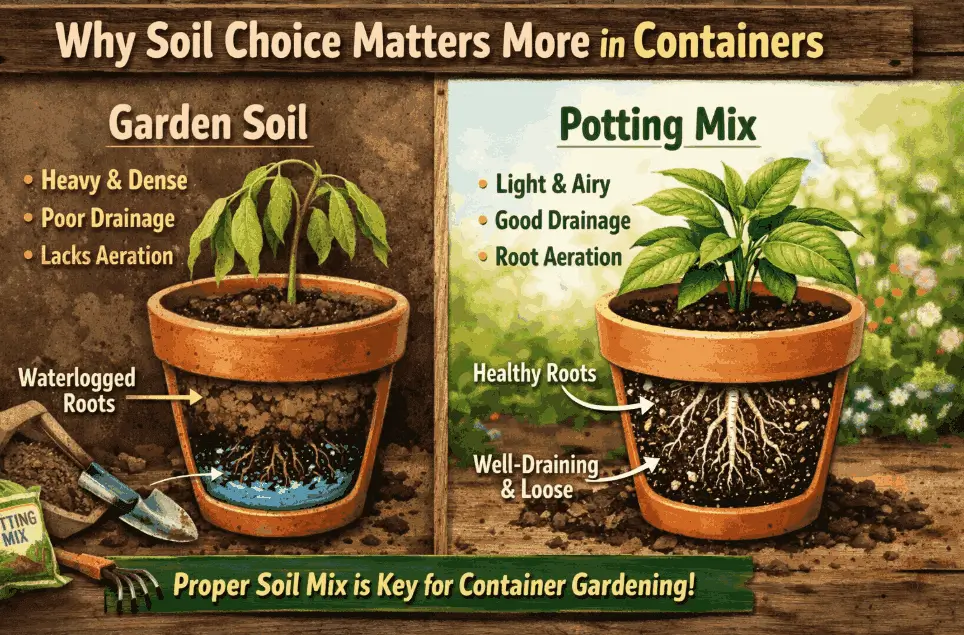
Fruit trees grown in the ground can spread their roots widely to find water, air, and nutrients. Container-grown trees don’t have that luxury.
In pots, soil is the entire ecosystem.
A poor mix can:
- Hold too much water and suffocate roots
- Compact over time and block oxygen
- Wash nutrients out too quickly
- Cause root rot and fungal diseases
A high-quality container soil, on the other hand:
- Balances drainage and moisture retention
- Allows oxygen to reach the roots
- Supports beneficial microbes
- Provides steady nutrients for growth and fruiting
This is why soil selection is even more critical for container fruit gardening for beginners than for traditional garden beds.
What Is the Best Soil for Fruit Trees in Containers?

The Ideal Soil Profile
The best soil for container fruit trees is not garden soil. It’s a lightweight, well-draining, nutrient-rich mix designed for long-term pot use.
An ideal mix should be:
- Loose and airy (never dense or muddy)
- Fast-draining but moisture-retentive
- Rich in organic matter
- Stable over time (doesn’t collapse or compact)
Key Soil Characteristics Explained
| Property | Why It Matters |
| Drainage | Prevents root rot and fungal issues |
| Aeration | Roots need oxygen to absorb nutrients |
| Water retention | Keeps roots hydrated between watering |
| Nutrient holding | Supports consistent feeding |
| pH balance | Ensures nutrient availability |
Most fruit trees prefer a slightly acidic to neutral pH (6.0–6.8), which quality container mixes naturally support.
Best Soil Components for Container Fruit Trees
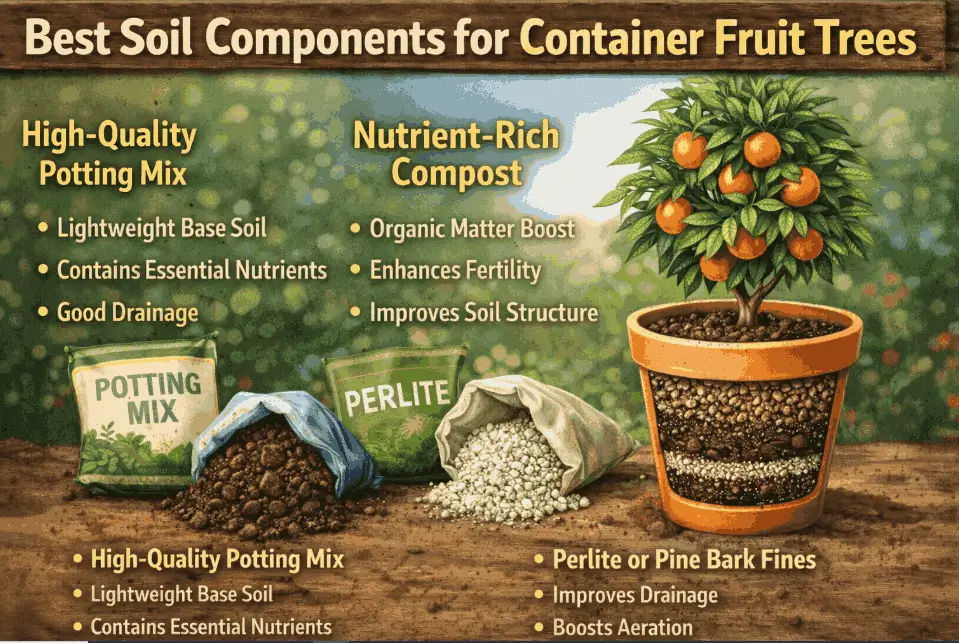
1. Base Material (Structure)
These materials create airflow and prevent compaction:
- Pine bark fines
- Coco coir
- Peat moss (sustainably sourced if possible)
They form the backbone of the soil and control moisture balance.
2. Drainage & Aeration Additives
Essential for healthy roots in containers:
- Perlite
- Pumice
- Coarse sand (used sparingly)
Without these, even good soil can become waterlogged over time.
3. Nutrient-Rich Organic Matter
These provide slow-release nutrition:
- Finished compost
- Worm castings
- Well-aged manure
Organic matter also supports beneficial microbes that help roots absorb nutrients.
DIY Soil Mix vs Store-Bought: Which Is Better?
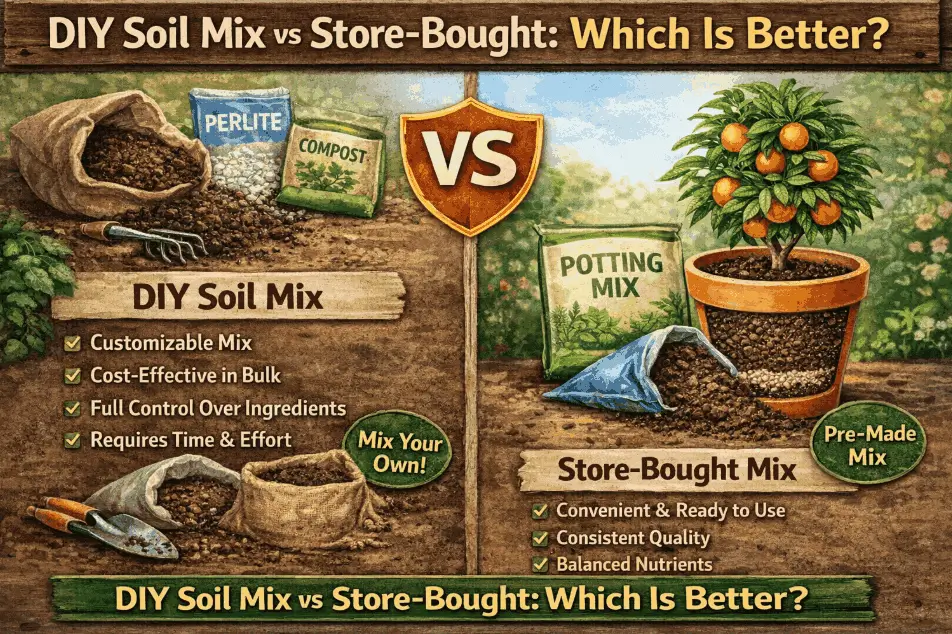
DIY Soil Mix (Best Control)
A proven recipe for most fruit trees:
- 40% high-quality potting mix
- 30% pine bark fines or coco coir
- 20% compost
- 10% perlite or pumice
Pros
- Customizable
- Excellent drainage
- Cost-effective long-term
Cons
- Requires sourcing materials
- Slight learning curve
Store-Bought Potting Mix (Convenient Option)
Look for:
- Labeled for containers or fruit trees
- No added chemical fertilizers
- Chunky texture (not fine or dusty)
Avoid mixes labeled only as “topsoil” or “garden soil”—these compact quickly in pots.
For beginners, combining a quality potting mix with extra perlite and compost is a safe starting point and pairs well with guides like best soil for fruit in pots when expanding your setup.
Best Soil by Fruit Tree Type
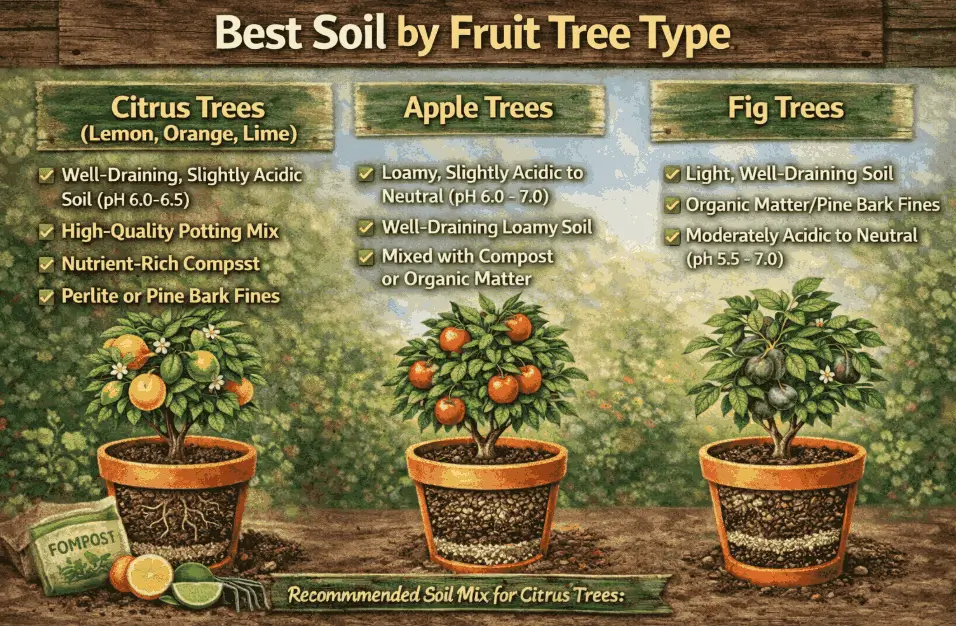
Citrus Trees (Lemon, Orange, Lime)
- Excellent drainage is critical
- Slightly acidic soil preferred
- Extra perlite or pumice recommended
Apple, Pear & Stone Fruits
- Balanced moisture retention
- Compost-rich soil works well
- Avoid overly sandy mixes
Tropical & Subtropical Trees (Fig, Guava)
- Light, airy soil
- Consistent moisture without sogginess
- Coco coir works especially well
Step-by-Step: How to Prepare Soil for Container Fruit Trees
Step 1: Choose the Right Container
- Drainage holes are non-negotiable
- Avoid decorative pots without holes
- Larger pots stabilize soil moisture
Step 2 : Pre-Mix Your Soil
- Combine all ingredients before planting
- Moisten lightly so the mix is damp, not wet
Step 3 : Plant at the Correct Depth
- Root flare should be just above soil level.
- Never bury the trunk
Step 4: Water Thoroughly
- Water until it drains from the bottom
- This settles soil and removes air pockets.
Once planted, adjust care based on a proper watering schedule for potted fruit, since even perfect soil fails without correct irrigation timing.
Best Practices for Long-Term Soil Health

Refresh Soil Annually
Container soil degrades over time. Each year:
- Remove top 2–3 inches.
- Replace with a fresh compost-based mix.
Mulch the Surface
- Use bark chips or straw
- Reduces evaporation
- Protects soil structure
Feed the Soil, Not Just the Tree
Healthy soil supports better nutrient uptake. Combine good soil with proper fertilizing fruit trees in containers to avoid deficiencies and overfeeding.
Common Soil Mistakes to Avoid
Using Garden Soil
- Compacts quickly
- Poor drainage
- Often carries pests
Overloading Compost
Too much organic matter:
- Holds excess water
- Reduces aeration
Ignoring Drainage
Even premium soil fails in pots without proper drainage holes.
Reusing Old, Exhausted Soil
Old soil lacks structure and nutrients, even if it looks fine.
Signs Your Container Soil Needs Improvement
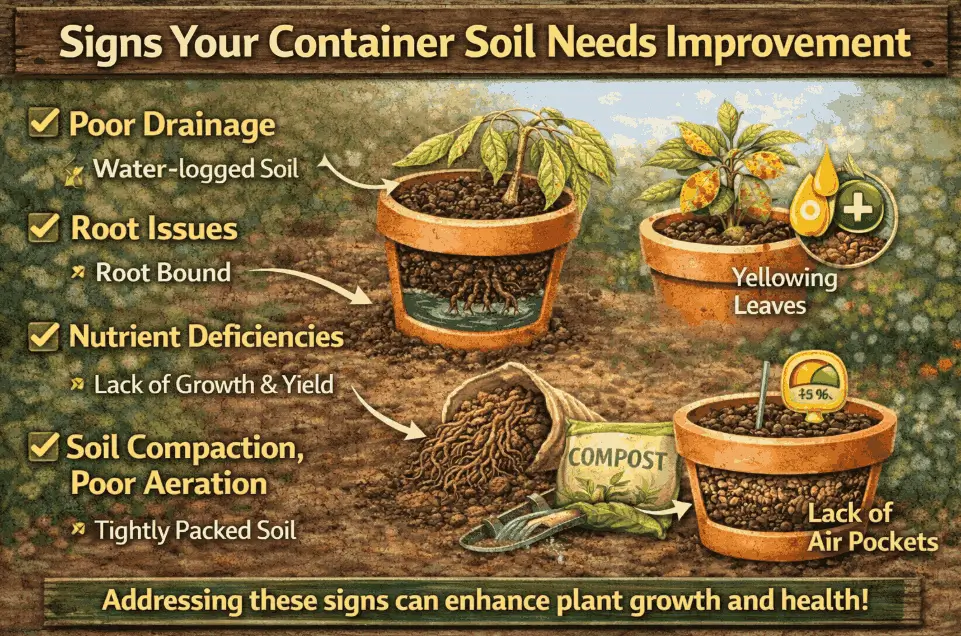
- Water pools on the surface
- Soil dries too fast or stays wet too long.
- Yellowing leaves despite feeding
- Slow or stunted growth
These symptoms often indicate soil imbalance—not watering or fertilizer issues.
FAQ: Best Soil for Fruit Trees in Containers
What is the best soil mix for fruit trees in containers?
A loose, well-draining mix with potting soil, compost, and aeration materials like perlite is ideal. It should hold moisture without becoming soggy.
Can I use regular potting soil for fruit trees?
Yes, but improve it with added perlite and compost for better drainage and long-term structure.
How often should I change container soil?
Refresh annually and completely replace every 2–3 years for optimal results.
Is sandy soil good for potted fruit trees?
Pure sand drains too fast and lacks nutrients. It should only be a minor component.
Do fruit trees need special soil to produce fruit?
They need balanced soil plus proper feeding and watering. Soil alone won’t guarantee fruit, but poor soil will prevent it.
Outward Resource (Optional)
For deeper insight into soil structure and drainage principles, the Royal Horticultural Society (RHS) provides excellent non-commercial guidance on container soil science.
Conclusion: The Foundation of Healthy Container Fruit Trees
Choosing the best soil for fruit trees in containers is the single most important step in successful small-space fruit growing. The right mix supports roots, balances moisture, and delivers nutrients steadily—setting your tree up for years of healthy growth and reliable harvests.
If you’re building a long-term container garden, start with soil done right. Explore more practical guides on GrowFruitly to refine your setup, improve feeding, and master container fruit growing with confidence. 🌱