
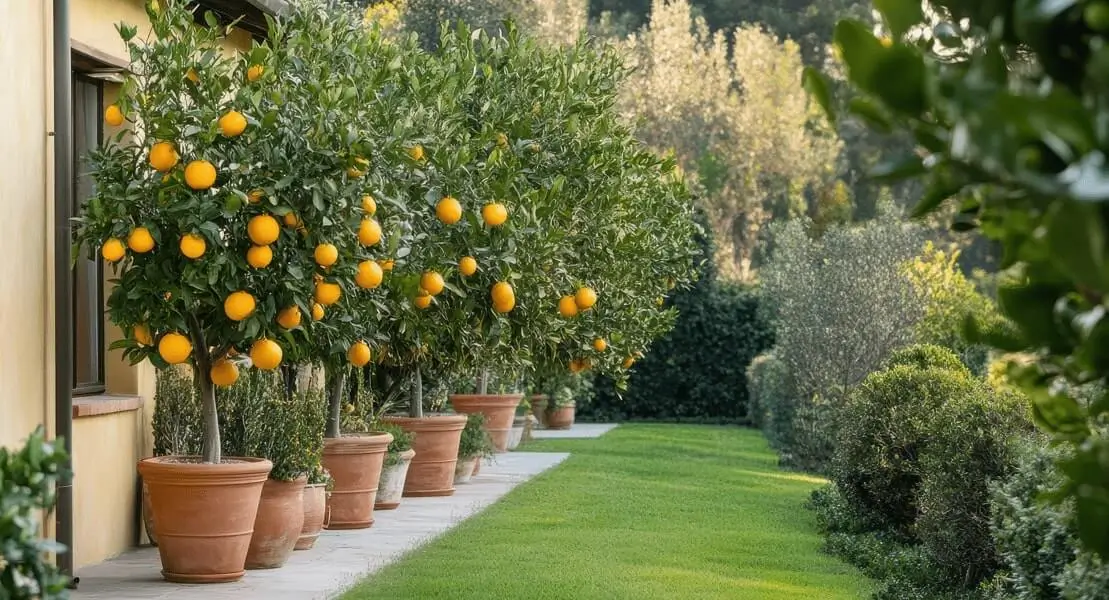
Choosing the right pot size for your lemon tree is one of the most important steps for healthy growth, strong roots, and consistent fruit production. A container that is too small can limit root development, dry out quickly, and reduce fruiting, while an oversized pot may cause drainage issues and root rot. In this beginner-friendly guide, you’ll learn how to select the best pot size for lemon trees at every growth stage, along with practical tips for container gardening success.
Why Pot Size Matters for Lemon Trees in Containers

Lemon trees are vigorous growers with active root systems. In the ground, their roots can spread wide and deep. In containers, however, the pot becomes the entire world for the tree’s roots.
Here’s why the right pot size is critical:
- Root health = fruit production: Healthy, well-spaced roots absorb water and nutrients efficiently, directly affecting flowering and fruiting.
- Water balance: Small pots dry out too fast, while oversized pots can stay wet too long.
- Tree stability: Lemon trees can become top-heavy, especially when fruiting. A properly sized pot prevents tipping.
- Longevity: A lemon tree can live and produce fruit for decades in a container—if it has room to grow.
If you’re also growing citrus in limited space, this guide pairs well with our detailed article on growing lemon trees in pots successfully, which covers light, temperature, and pruning essentials.
Best Pot Size for Lemon Trees by Growth Stage
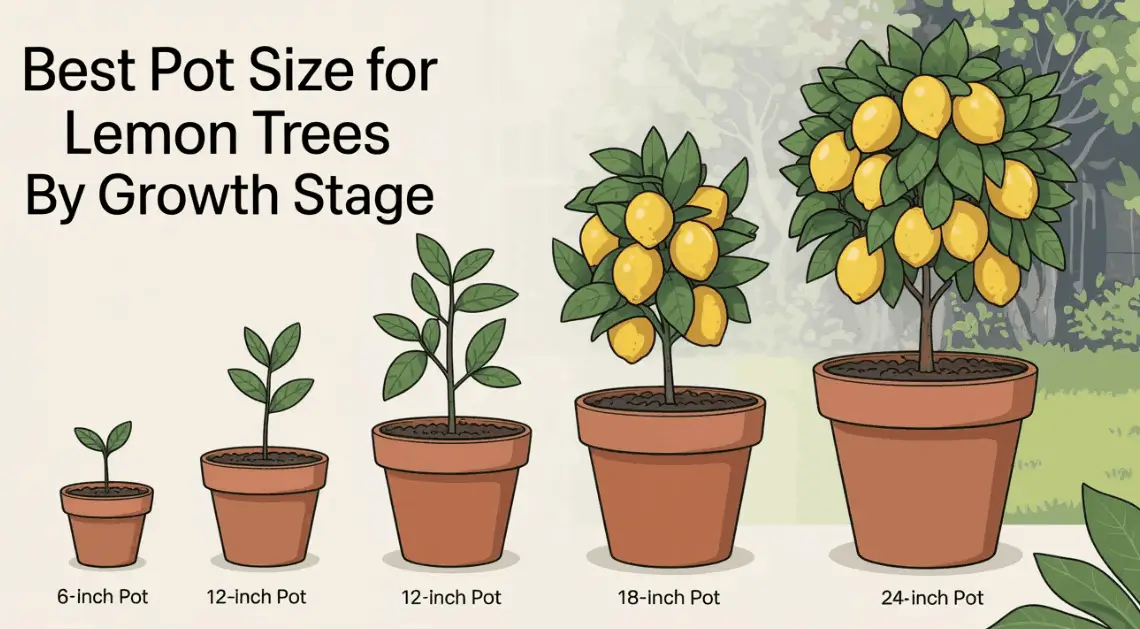
There’s no single “one-size-fits-all” container. The best pot size depends on the age and size of your lemon tree.
Small or Young Lemon Trees (Nursery Size)
Ideal pot size: 10–14 inches wide (3–7 gallons)
This is suitable for:
- Newly purchased nursery lemon trees
- Young grafted plants
- Rooted lemon cuttings
Why this works:
- Prevents excess moisture around small root systems
- Encourages roots to grow outward before going deeper
- Easier to manage watering for beginners
👉 Tip: Never jump straight to a huge pot. Gradual pot upgrades lead to healthier roots.
Medium Lemon Trees (1–3 Years Old)
Ideal pot size: 16–20 inches wide (10–15 gallons)
At this stage:
- The tree grows faster.
- Branching increases
- Flowering may begin
A medium container gives roots enough space without overwhelming them with too much soil. This is also a good stage to focus on balanced watering habits, which you can refine using our guide on how often to water fruit trees in pots.
Mature & Fruiting Lemon Trees

Best pot size for lemon trees long-term: 20–24 inches wide (20–25 gallons)
This is the ideal permanent container size for most dwarf and semi-dwarf lemon varieties.
Benefits include:
- Enough root room for consistent fruiting
- Improved moisture stability
- Better nutrient retention
- Strong anchoring for heavy fruit loads
Most home gardeners never need to go larger than this unless growing an unusually vigorous variety.
Pot Depth vs Width: What Matters More?

When choosing the best pot size for lemon trees, width matters slightly more than depth.
- Lemon roots spread laterally more than vertically.
- Wider pots encourage balanced root development.
- Shallow but wide containers outperform tall, narrow ones.
Minimum depth recommendation:
At least 14–16 inches deep for mature trees.
At least 14–16 inches deep for mature trees.
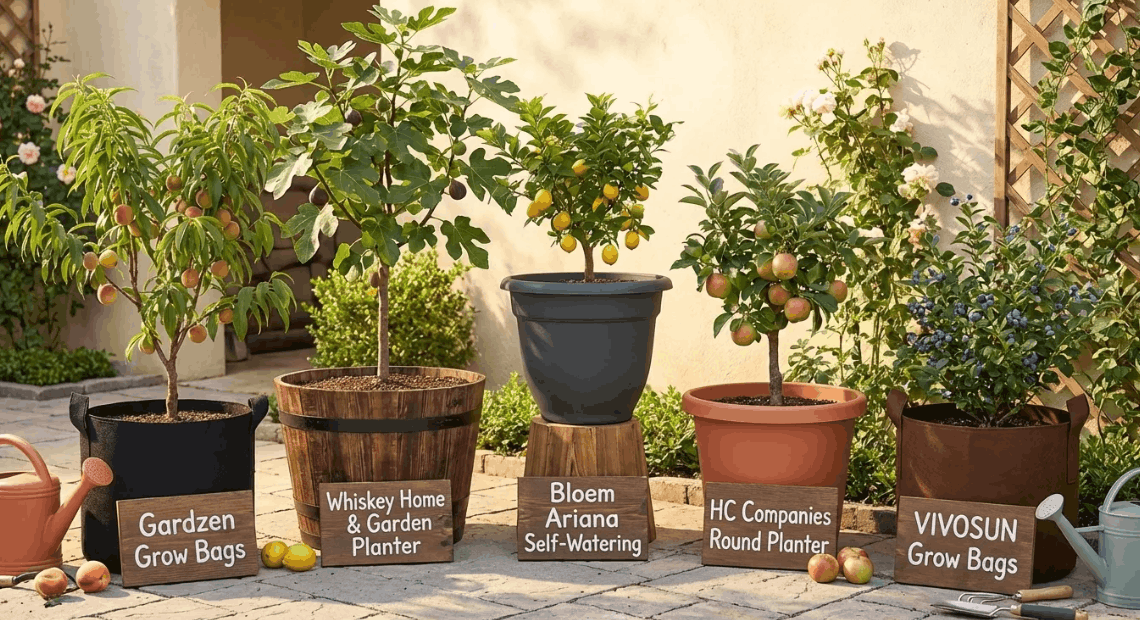
Best Container Types for Lemon Trees
Pot size is only half the equation. The container material also affects root health.
Terracotta Pots
Pros
- Excellent airflow
- Prevents overwatering
- Classic look
Cons
- Heavy
- Dries out quickly
- Can crack in freezing temperatures
Plastic Pots
Pros
- Lightweight
- Affordable
- Retains moisture longer
Cons
- Less breathable
- Can overheat in direct sun
Fabric Grow Bags
Pros
- Excellent drainage
- Prevent root circling
- Easy to store
Cons
- Dry out faster
- Less stable for tall trees
👉 Regardless of material, always ensure multiple drainage holes. Pairing the right pot with the best soil for fruit trees in containers makes a huge difference in long-term success.
Step-by-Step: How to Pot or Repot a Lemon Tree Correctly
1. Choose the Next Pot Size (Not the Biggest)
Increase pot diameter by 2–4 inches at a time.
2. Use Fresh, Well-Draining Soil
Avoid garden soil. A light, airy mix prevents compaction and root rot.
3. Check Root Condition
- Trim circling or damaged roots.
- Loosen the root ball gently.
4. Position Correctly
- Keep the graft union above soil level.
- Plant at the same depth as before
5. Water Deeply
Water until it drains freely from the bottom.
For fertilizing after repotting, follow a gentle schedule like the one outlined in our guide on how often to fertilize fruit trees in pots.
Common Mistakes Beginners Make with Lemon Tree Pot Size
1. Starting with a Pot That’s Too Large
This leads to:
- Waterlogged soil
- Root rot
- Slow or stalled growth
2. Never Repotting
A root-bound lemon tree shows:
- Yellow leaves
- Poor flowering
- Small fruit
3. Using Decorative Pots Without Drainage
Always use a functional inner pot or drill drainage holes into it.
4. Ignoring Tree Balance
As trees grow taller, heavier pots are essential to prevent tipping—especially on balconies.
If you’re gardening in tight spaces, our step-by-step guide to balcony fruit gardening offers practical stability and layout tips.
Signs Your Lemon Tree Needs a Bigger Pot
Watch for these clear signals:
- Roots growing out of drainage holes.
- Soil dries out within a day.
- Reduced leaf size
- Poor fruit set despite good care
- The tree is becoming unstable or top-heavy.
Repotting at the right time often leads to visible improvement within weeks.
Tools & Supplies That Make Container Growing Easier
- Measuring tape (to size pots accurately)
- Pot feet or risers (improve drainage)
- Slow-release citrus fertilizer
- Moisture meter (optional, beginner-friendly)
- Rolling plant caddy for heavy pots
Using the right tools saves time and prevents costly mistakes—especially with large containers.
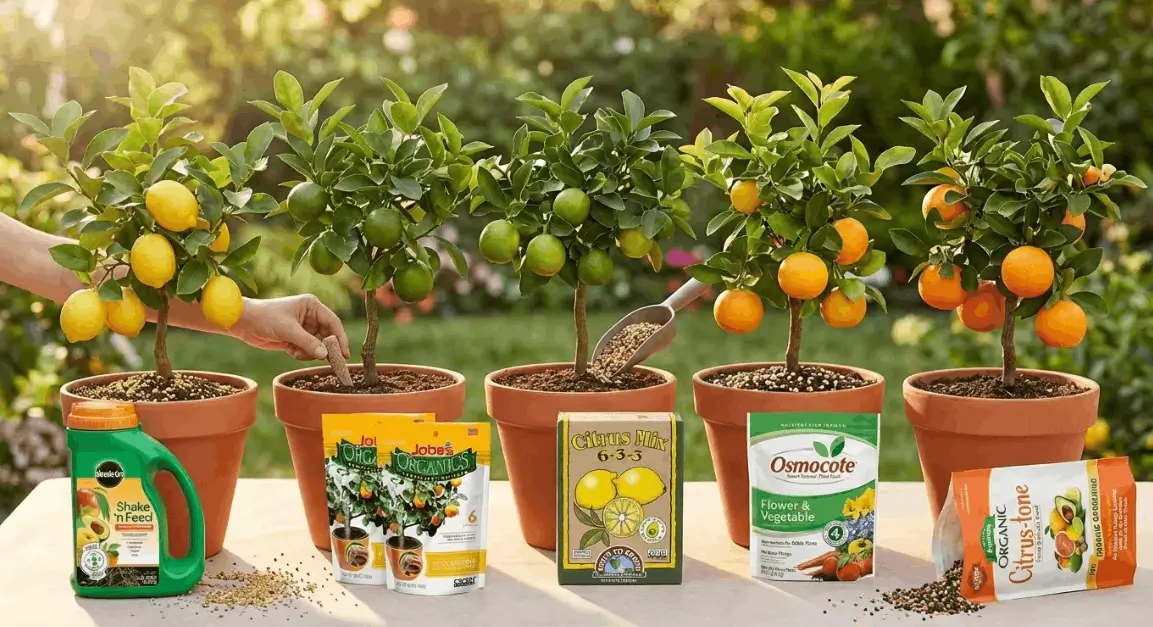
Best Fertilizer for Potted Fruit Trees (Top Picks for Healthy Container Harvests)
FAQ: Best Pot Size for Lemon Trees
What is the minimum pot size for a lemon tree?
A young lemon tree can start in a 10–14-inch pot, but it will need to be upgraded as it grows.
Can lemon trees grow in 5-gallon pots?
Only temporarily. A 5-gallon pot is too small for long-term growth and fruiting.
How big should a pot be for a dwarf lemon tree?
Most dwarf lemon trees thrive in 15–20 gallon containers long-term.
Is it okay to keep lemon trees in pots permanently?
Yes. With the right pot size, soil, and care, lemon trees can live and fruit for decades in containers.
Should I repot every year?
Not necessarily. Repot every 1–2 years, or when the tree shows signs of being root-bound.
Conclusion: Choosing the Best Pot Size for Lemon Trees
Selecting the best pot size for lemon trees isn’t complicated—but it is crucial. Start small, upgrade gradually, and aim for a 20–25 gallon container as your lemon tree’s long-term home. Combine the right pot size with proper soil, watering, and feeding, and you’ll be rewarded with a healthy tree and generous harvests—even in small spaces.
Next steps:
- Check your current pot size.
- Look for root-bound signs.
- Plan your next container upgrade.
- Pair proper pot sizing with smart watering and feeding.
With the right foundation, your potted lemon tree can thrive for years to come. 🌱🍋
If you have a nice pot outside and you’re planning to bring the tree inside for the winter, how do you deal with the drainage holes, to protect your nice hardwood floors?
Thanks!