
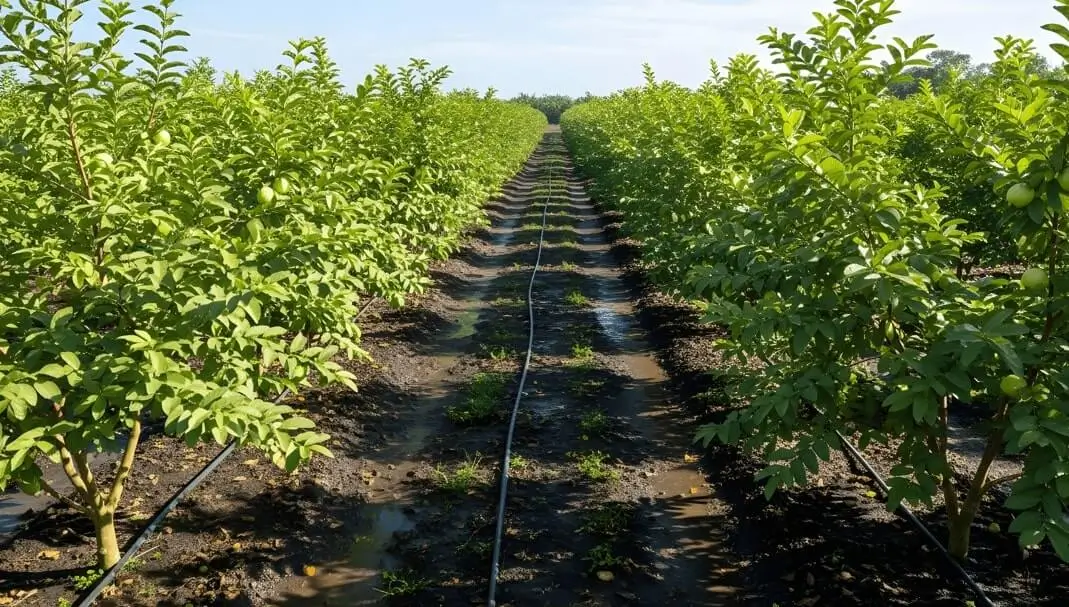
Watering fruit trees correctly is one of the most important skills for successful home gardening. However, young fruit trees and mature fruit trees have very different watering needs. Young trees require frequent and careful watering to establish strong roots, while mature trees need deeper and less frequent watering to support healthy growth and fruit production. Understanding these differences helps prevent common problems like root rot, dehydration, weak growth, and poor harvests. In this beginner-friendly guide, you’ll learn how to water young vs mature fruit trees properly, how often to water them, and the best techniques to keep your trees healthy in containers, balconies, patios, and small garden spaces.
Why Watering Young vs Mature Fruit Trees Matters in Container Gardening
Container fruit trees live in a very different environment than trees planted in the ground. Limited soil volume, faster drying, and restricted root growth all magnify watering mistakes.
Young Fruit Trees: High Risk, High Sensitivity
Young fruit trees (typically 0–3 years old) are still building their root systems. In containers:
- Roots are shallow and fine
- Soil dries quickly from sun and wind
- Even one missed watering can cause stress
Because of this, young trees depend almost entirely on you for consistent moisture.
Mature Fruit Trees: More Forgiving, But Not Carefree
Mature fruit trees (3+ years):
- Have denser, more established roots
- Store more water in roots and woody tissue
- Handle short dry periods better
However, in pots, even mature trees can suffer if watering is irregular—especially during flowering and fruiting.
If you’re unsure how seasonal changes affect watering, this guide on watering fruit trees in summer heat explains how container trees respond to high temperatures.
Understanding Root Development: Young vs Mature Trees
Before adjusting your watering routine, it helps to understand what’s happening below the soil surface.
Root Systems of Young Fruit Trees
- Mostly located in the top 10–20 cm of soil
- Extremely sensitive to drying out
- Poor at accessing deeper moisture
This means frequent, lighter watering is usually necessary.
Root Systems of Mature Fruit Trees
- Roots fill most of the container
- Better at absorbing and storing water
- More tolerant of uneven moisture
Mature trees benefit more from deep, thorough watering with longer gaps between sessions.
Step-by-Step: How to Water Young Fruit Trees (Containers & Small Spaces)
Step 1: Check Moisture Daily
For young fruit trees, daily checks are essential.
- Insert your finger 3–5 cm into the soil
- If it feels dry, water
- If slightly moist, wait until later in the day
For a more accurate method, see this guide on how to check soil moisture properly.
Step 2: Water Slowly and Evenly
Avoid dumping water all at once.
- Use a watering can or low-pressure hose
- Water until you see runoff from drainage holes
- Pause, then water again to fully soak the root zone
Step 3: Frequency Guidelines (Young Trees)
- Spring: Every 2–3 days
- Summer: Daily or every other day
- Autumn: Every 3–5 days
- Winter: Only when soil is dry (much less often)
If your climate has hot summers, adjust based on tree size and pot material (plastic dries slower than terracotta).
Step-by-Step: How to Water Mature Fruit Trees in Containers
Step 1: Water Deeply, Not Frequently
Mature trees prefer deeper watering.
- Water until soil is fully saturated
- Ensure excess drains freely
- Let the top few centimeters dry before watering again
Step 2: Adjust by Growth Stage
Water needs change throughout the year:
- Flowering & fruiting: Increased demand
- After harvest: Moderate watering
- Dormant period: Minimal watering
This seasonal approach is explained further in watering fruit trees during winter dormancy.
Step 3: Frequency Guidelines (Mature Trees)
- Spring: Every 4–6 days
- Summer: Every 2–4 days
- Autumn: Every 5–7 days
- Winter: Only when soil is clearly dry
Key Differences at a Glance
| Factor | Young Fruit Trees | Mature Fruit Trees |
|---|---|---|
| Root depth | Shallow | Deep, established |
| Water frequency | High | Moderate |
| Drought tolerance | Low | Medium |
| Overwatering risk | Medium | High |
| Best method | Frequent, light-deep watering | Deep, spaced watering |
Understanding these differences is the foundation of correct watering young vs mature fruit trees in containers.
Common Watering Mistakes Beginners Make
1. Watering on a Fixed Schedule
Plants don’t follow calendars. Weather, pot size, and growth stage all matter.
Instead of fixed days, water based on soil moisture and plant signals.
2. Overwatering Mature Trees
Many gardeners assume bigger trees need more water every day. In reality, mature trees often suffer from root rot due to excess moisture.
If leaves turn yellow or drop unexpectedly, check for signs of overwatering in these common overwatering symptoms in fruit trees.
3. Underwatering Young Trees
Wilting, slow growth, and leaf curl are common signs of underwatering.
This detailed guide on signs of underwatering in fruit trees helps you catch problems early.
4. Poor Drainage
No drainage holes = guaranteed root problems.
Always ensure:
- Containers have multiple drainage holes
- Soil drains freely within minutes
Best Soil and Container Choices for Proper Watering
Ideal Soil Mix for Container Fruit Trees
A good mix balances moisture retention and drainage:
- 40% high-quality potting mix
- 30% compost
- 20% coco coir or peat
- 10% perlite or pumice
This mix works for both young and mature trees, with minor adjustments.
Container Size Matters
- Young trees: 15–25 liters
- Mature trees: 40–60+ liters
Undersized pots dry too fast; oversized pots stay wet too long.
Helpful Tools to Improve Watering Accuracy
Moisture Meters
- Useful for beginners
- Best used as a guide, not a rule
Drip Irrigation for Containers
Drip systems provide slow, consistent moisture and reduce mistakes—especially on balconies.
If space is limited, this setup guide on drip irrigation for balcony fruit trees is ideal.
Mulch for Containers
Adding organic mulch:
- Reduces evaporation
- Stabilizes soil temperature
- Protects surface roots
FAQ: Watering Young vs Mature Fruit Trees
How often should I water a newly planted fruit tree in a pot?
Most young fruit trees need watering every 1–3 days in warm weather, depending on pot size and climate.
Can mature fruit trees be overwatered in containers?
Yes. Mature trees in pots are more prone to root rot if soil stays constantly wet.
Is morning or evening watering better?
Morning is best. It allows moisture to reach roots before heat increases and reduces fungal risk.
Should young and mature fruit trees use the same soil mix?
Yes, but young trees benefit from slightly higher moisture retention, while mature trees need excellent drainage.
How do I know if I’m watering too much?
Persistent wet soil, yellow leaves, and leaf drop are classic warning signs.
Conclusion: Smarter Watering for Healthier Fruit Trees
Mastering watering young vs mature fruit trees is one of the most powerful skills a home gardener can learn—especially when growing fruit in containers or small spaces. Young trees thrive on consistent, frequent moisture, while mature trees prefer deeper, less frequent watering. Treating them the same leads to stress, disease, and poor harvests.
Your next steps:
- Adjust watering based on tree age
- Check soil moisture regularly
- Improve drainage and container size
- Use simple tools like mulch or drip irrigation
With these practices, your fruit trees will grow stronger, fruit more reliably, and reward you season after season. 🌱🍎