
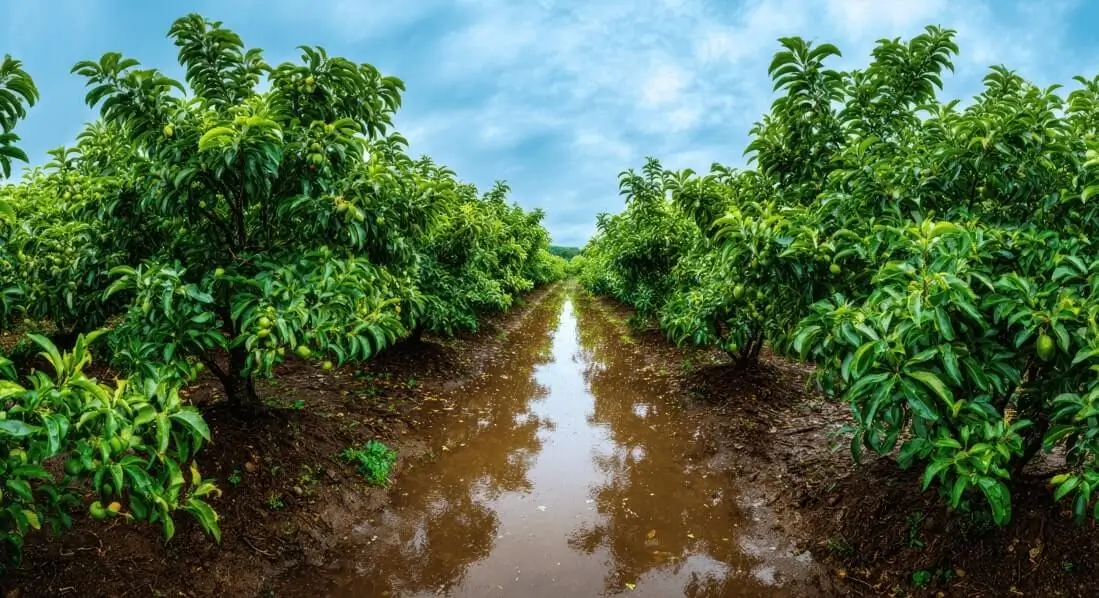
Fruit trees in containers and small gardens depend on consistent watering to stay healthy, productive, and stress-free. When watering is missed or inconsistent, trees quickly show warning signs that should never be ignored. Learning the signs of underwatering fruit trees helps gardeners take action before leaves drop, fruit shrivels, or growth slows down permanently. In this guide, you’ll discover the most common symptoms of underwatered fruit trees and the fastest ways to restore healthy growth and protect your harvest.
Why Underwatering Matters in Container Fruit Gardening
Fruit trees need water not just to survive, but to transport nutrients, regulate temperature, and produce healthy growth and fruit. In containers, this balance is far more fragile.
Container trees dry out faster.
- Pots have limited soil volume.
- Sun and wind increase evaporation
- Roots can’t search deeper for moisture.
This is why many gardeners who follow general in-ground watering advice still see stressed trees in pots. If you’ve ever wondered why a tree looks unhealthy even though you “watered recently,” inconsistent moisture is often the cause.
If you’re unsure how often container trees actually need water, see our in-depth guide on how often to water fruit trees in containers, which explains seasonal and climate-based schedules.
Clear Signs of Underwatering Fruit Trees
1. Wilting or Drooping Leaves
Wilting is usually the first and most visible sign of underwatering.
- Leaves look limp or soft.
- Drooping often worsens in the afternoon heat.
- Leaves may recover slightly at night, then droop again.
This happens because the tree lacks enough water pressure (turgor) to keep leaves firm.
Key tip: If leaves droop but the soil is dry several inches down, underwatering is the likely cause.
2. Dry, Crumbly, or Pulling-Away Soil
Check the soil surface and sides of the pot:
- Soil looks pale and dusty.
- It shrinks away from the container edges.
- Water runs straight through without soaking in.
This is common in lightweight potting mixes that have dried too much. Our guide on potting mix vs garden soil for fruit trees explains why proper soil choice is crucial for moisture retention.
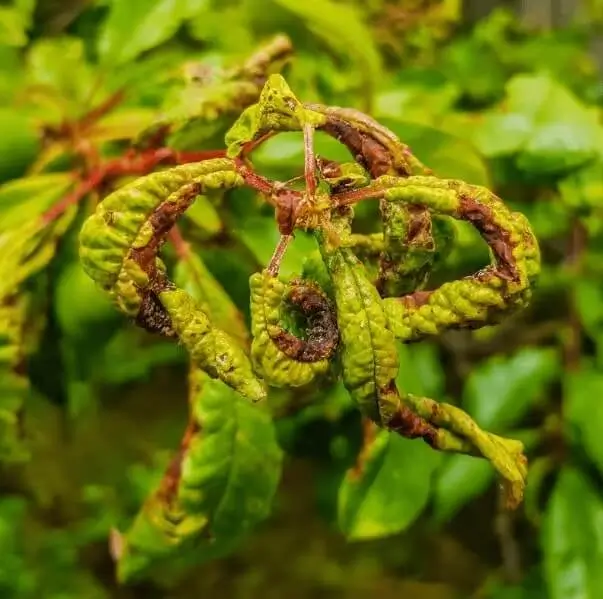
3. Leaf Curling and Edge Burn
Underwatered fruit trees often curl their leaves inward to reduce water loss.
Symptoms include:
- Curled or folded leaves
- Brown, crispy leaf edges
- Tips drying out first
This is especially common in citrus, peach, and fig trees grown in full sun.
4. Yellowing Leaves That Drop Prematurely
Many beginners assume yellow leaves always mean overwatering—but underwatering can cause this too.
- Leaves turn yellow starting from the bottom.
- Drop suddenly, even when green veins remain.
- New growth slows or stops.
The difference is in the soil: dry soil combined with yellow leaves points to underwatering.
5. Small, Hard, or Dropping Fruit
When water is limited, fruit trees go into survival mode.
You may notice:
- Fruit is staying unusually small.
- Hard or bitter fruit
- Young fruit dropping before ripening.
Consistent watering is critical during the flowering and fruit development stages.
6. Stunted Growth and Weak New Shoots
Long-term underwatering leads to:
- Short internodes
- Thin, weak branches
- Minimal new leaf growth
If your tree hasn’t grown much all season, review both your watering habits and soil quality. Improving moisture-holding capacity with a better mix, as described in how to make a homemade soil mix for fruit trees, can make a major difference.
Step-by-Step: How to Fix an Underwatered Fruit Tree
Step 1: Rehydrate the Soil Properly
If the soil has become hydrophobic (repelling water):
- Water slowly and deeply
- Pause for 5–10 minutes.
- Water again until moisture reaches the root zone
For severely dry pots, bottom watering (placing the pot in a shallow tray of water) can help rehydrate evenly.
Step 2: Adjust Your Watering Schedule
Instead of watering by habit, water based on:
- Pot size
- Tree age
- Temperature and wind
- Growth stage
A practical rule:
- Water when the top 2–3 inches of soil feel dry
- Always water until excess drains from the bottom
Our detailed article on how often to water fruit plants in pots provides a beginner-friendly breakdown by season.
Step 3: Improve Soil Moisture Retention
If your tree dries out too fast:
- Add compost or coco coir.
- Use mulch on the soil surface.
- Avoid pure peat-based mixes without amendments.
Healthy soil holds moisture and drains well—both are essential for container fruit trees.
Step 4: Check Container Size and Drainage
Small pots dry out extremely fast.
Make sure:
- The container matches the tree’s size.
- Drainage holes are present (but not excessive)
- Roots aren’t severely root-bound
If needed, upgrading to a larger container can dramatically stabilize moisture levels. Our guide on the best containers for balcony fruit trees explains ideal sizes and materials.
Common Watering Mistakes Beginners Make
Watering too lightly
Quick surface watering doesn’t reach deep roots. Always water thoroughly.
Watering on a fixed schedule
The weather changes daily. Hot, windy days may require more frequent watering.
Ignoring afternoon stress
Temporary wilting in extreme heat is normal—but repeated daily wilting means the tree isn’t getting enough water overall.
Confusing symptoms with nutrient problems
Yellow leaves caused by dry soil won’t improve with fertilizer alone.
Helpful Tools and Care Tips for Consistent Watering
Moisture meters (use wisely)
They can help beginners, but always confirm by hand-checking soil.
Mulch for containers
A 2–3 cm layer of:
- Bark chips
- Straw
- Coco husk
reduces evaporation significantly.
Drip irrigation or watering spikes
Ideal for:
- Busy gardeners
- Vacation periods
- Hot climates
These tools provide slow, consistent moisture without overdoing it.
FAQ: Signs of Underwatering Fruit Trees
How can I tell if my fruit tree is underwatered or overwatered?
Check the soil. Dry, crumbly soil with wilting leaves indicates underwatering, while soggy soil with yellowing leaves often points to overwatering.
Can underwatered fruit trees recover?
Yes—if caught early. Once proper watering is restored, most trees recover within 1–2 weeks.
Do fruit trees need more water in containers than in the ground?
Yes. Container-grown trees dry out much more quickly and require closer monitoring.
Is it better to water fruit trees in the morning or evening?
Early morning is best. It reduces evaporation and prepares the tree for daytime heat.
Can underwatering affect fruit taste?
Absolutely. Inconsistent watering often leads to small, dry, or bitter fruit.
Conclusion: Protect Your Fruit Trees With Smarter Watering
Recognizing the signs of underwatering in fruit trees early can help your plants avoid stress, poor growth, and disappointing harvests. Wilting leaves, dry soil, leaf curl, and fruit drop are all warning signals that shouldn’t be ignored—especially in container gardening.
The solution isn’t complicated: water deeply, adjust based on weather, improve soil moisture retention, and choose the right container size. By combining observation with simple tools and good habits, you’ll keep your fruit trees healthy, productive, and resilient—even in small spaces.
If you want to take the next step, review your current watering routine and soil setup today—your trees will show the difference within weeks. 🌱